
Roasting a whole cauliflower is one of the easiest ways to make a stunning, hands-off center dish that feels special but is wildly simple to execute.
It’s a great weeknight shortcut and a showstopper at dinner parties.
This method turns a humble vegetable into something caramelized, nutty, and deeply savory with minimal effort.
Follow the steps below for predictable results and simple tweaks for flavor.
Why You’ll Love This Whole Roasted Cauliflower
- Effortless impressive presentation — one head does the work for you.
- Hands-off roasting develops deep caramelized flavor.
- Low-ingredient technique highlights natural cauliflower taste.
- Flexible for diets: vegetarian, vegan, low-carb, Whole30 compatible.
- Easy to scale up for guests or down for two people.
- Perfect blank canvas for sauces, herbs, or spices.
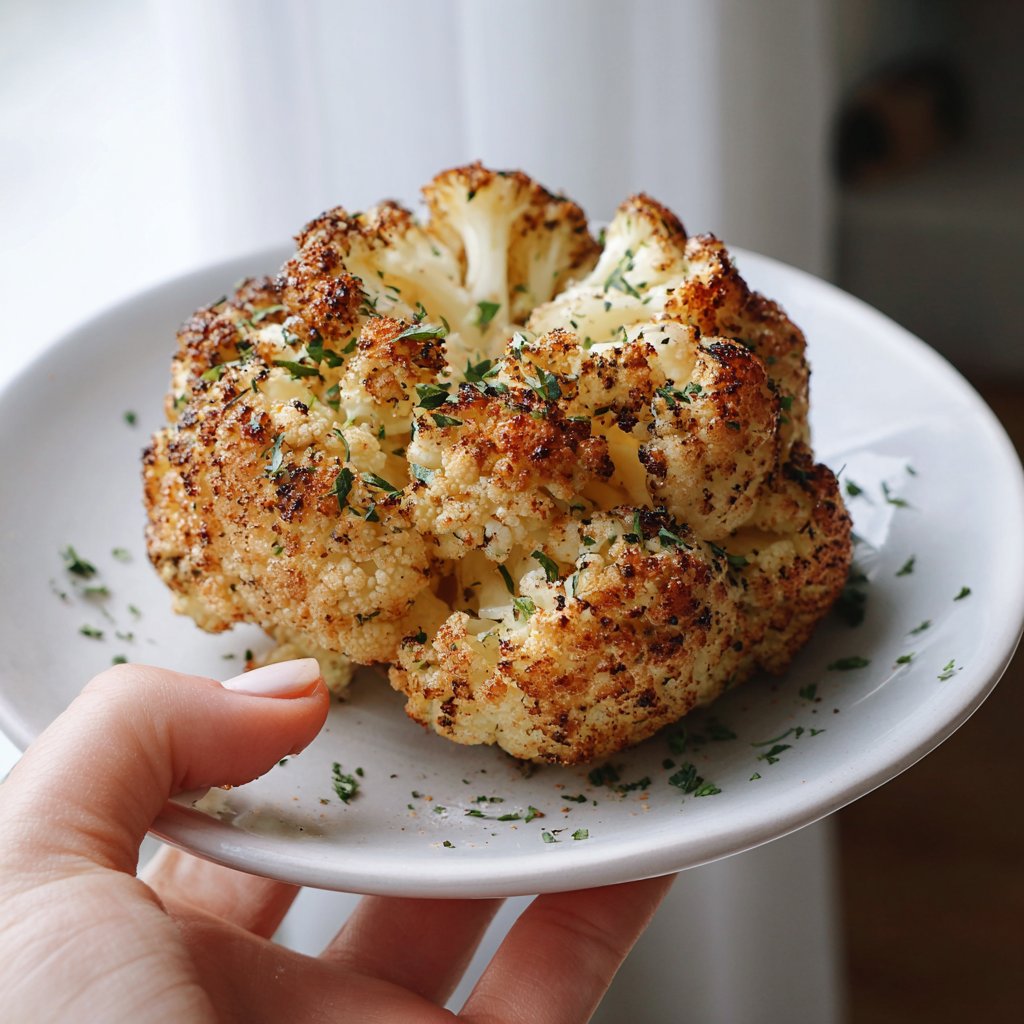
This Whole Roasted Cauliflower has a tender, almost buttery interior and a golden, slightly crisp exterior from the oven’s dry heat. The spices form a light savory crust while the core stays moist and sliceable. Every bite balances roasted sweetness with earthy depth.
“I served this for guests and everyone asked for the recipe — perfectly golden outside and meltingly tender inside. Five stars!” — Rachel, home cook
Key Ingredients for Whole Roasted Cauliflower
Below are the three most critical ingredients and why they matter to the final result. Each one influences caramelization, texture, or flavor in a meaningful way.
Cauliflower
The head is the star: choose a firm, heavy cauliflower with compact florets and no brown spots. Freshness matters because older heads can be watery and won’t caramelize as well. If you substitute with florets you’ll cut the roasting time and lose the dramatic whole-head presentation.
Olive oil
Olive oil conducts heat, encourages Maillard browning, and carries the spices onto the surface. Use a good quality extra-virgin olive oil for flavor, but a neutral oil like avocado can be used if you prefer a milder taste. Skimping on oil will produce a drier surface and paler color.
Salt (and black pepper)
Salt is essential for drawing out moisture and concentrating flavor in the cauliflower as it roasts. Use flaky sea salt for better distribution and texture; freshly cracked black pepper adds a subtle sharpness. Reducing salt will leave the roast tasting flat, while over-salting can overpower the vegetable’s natural sweetness.
Full Ingredient List for Whole Roasted Cauliflower
- 1 whole cauliflower
- 2 tablespoons olive oil
- Salt to taste
- Black pepper to taste
- 1 teaspoon garlic powder
- 1 teaspoon paprika
- Fresh herbs (optional, for garnish)
Step-by-Step Instructions for Whole Roasted Cauliflower
The following steps rewrite the numbered recipe into a smooth narrative so you can follow the flow easily. Each step includes a quick visual cue to confirm success.
Step 1: Preheat your oven to 425°F (220°C).
Set the oven early so it reaches full temperature before the cauliflower goes in. A fully heated oven is essential for immediate surface browning. If your oven runs hot or cold, use an oven thermometer for accuracy.
Pro Tip: It should feel reliably hot when you open the door; the air should look dry and you’ll get a quick burst of heat on your face.
Step 2: Remove the leaves from the cauliflower and trim the bottom to create a flat surface.
Strip any green leaves and slice a thin layer from the stem base so the head sits level. Keeping the stem intact helps the head hold together while roasting. If it wobbles, shave a little more off the base for stability.
Pro Tip: The cauliflower should sit flat in the dish without tipping; the cut base will show a clean white core.
Step 3: In a small bowl, mix olive oil, salt, pepper, garlic powder, and paprika.
Whisk until the spices are evenly suspended. This mixture coats the surface and seasons both the crust and the upper layers. Taste a tiny smear on your finger to check seasoning before applying.
Pro Tip: The oil should look glossy and the spices evenly distributed — no dry clumps.
Step 4: Brush the cauliflower with the oil mixture, ensuring it’s well coated.
Use a pastry brush or your hands to rub the oil mixture all over the head, working the seasoning into the florets and crevices. Don’t be afraid to get the seasoning into the base around the stem. A thorough coating ensures even browning and flavor penetration.
Pro Tip: The surface should glisten and feel slightly tacky, not soaked or dripping.
Step 5: Place the cauliflower in a baking dish and roast in the preheated oven for about 40-50 minutes or until tender and golden brown.
Roast on the middle rack for balanced heat. Start checking at 35 minutes if your oven runs hot. The exact time depends on size; larger heads take longer. If the top is browning too quickly, tent loosely with foil to prevent burning while the center cooks.
Pro Tip: The exterior should be deep golden with darker caramelized spots; a knife inserted at the core should slide in with slight resistance but no raw crunch.
Step 6: Remove from the oven and let cool slightly before slicing.
Resting lets steam redistribute and the interior firm a bit for clean slices. Use a sharp knife to cut wedges. Rest for 5–10 minutes depending on retailer heat and your preference for warm versus hot serving temperature.
Pro Tip: The cauliflower should yield to the knife but still hold shape; steam will rise gently when you slice.
Step 7: Garnish with fresh herbs if desired, and serve warm.
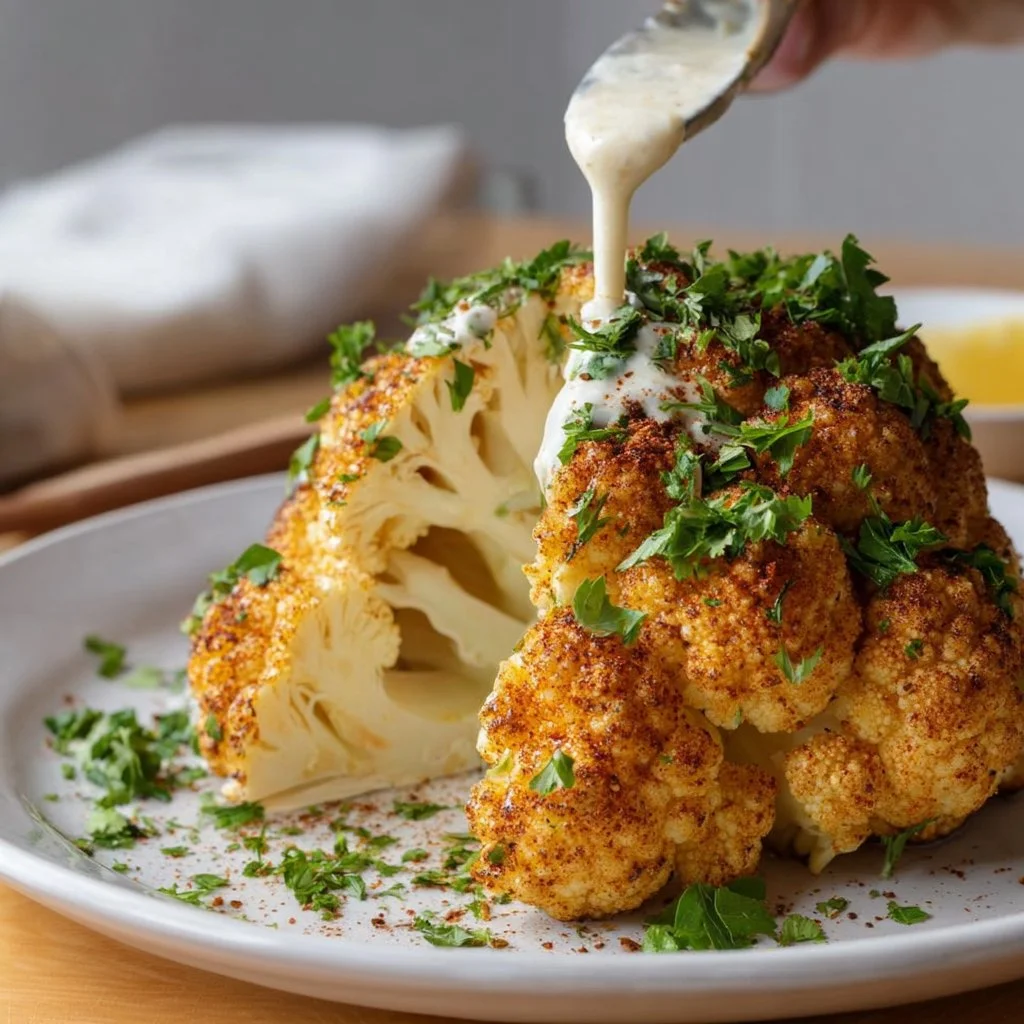
Scatter chopped parsley, dill, or cilantro for brightness. Serve immediately as the contrast between the warm interior and crisp crust is best fresh. Offer sauces—tahini, chimichurri, or yogurt-based—on the side for added richness.
Pro Tip: Fresh herbs should look bright and not wilted; a quick scatter gives visual contrast and fresh aroma.
Expert Tips for Whole Roasted Cauliflower
- Temperature tip: Roast at 425°F (220°C) for optimal browning without drying the core. Lower temps produce less color and longer times.
- Preheat thoroughly: A fully preheated oven accelerates surface browning and seals in juices.
- Texture troubleshooting: If the center is undercooked, reduce top browning by tenting with foil and continue roasting until a skewer goes through easily.
- Equipment tip: Use a shallow baking dish or rimmed sheet to allow even air circulation around the head; a cast-iron skillet gives excellent crust.
- Seasoning tip: Rub spices into the crevices and under any loose florets for even flavor; flaky salt sprinkled after roasting adds a punch.
- Common mistakes: Don’t wash the head excessively; excess water prevents browning. Also, avoid over-trimming the stem, or the head will fall apart.
- Caramelization tip: For deeper color, finish under the broiler for 1–2 minutes watching closely to avoid burning.
- Serving tip: Let it rest briefly; hot steam makes slicing messy and can collapse the structure if cut too early.
Storage & Freezing for Whole Roasted Cauliflower
Store leftovers in an airtight container in the refrigerator for up to 4 days. Use a shallow container to cool the slices quickly before sealing.
To freeze, cool completely then wrap tightly in plastic wrap and place in a freezer bag or vacuum seal; freeze for up to 3 months. Label with the date to track freshness.
Thaw overnight in the refrigerator for best texture. Reheat gently in a 350°F (175°C) oven until warmed through to refresh the crust. Avoid microwaving if you want to preserve crispness; it makes the cauliflower mushy.
Variations & Substitutions for Whole Roasted Cauliflower
Here are simple ways to change flavor profiles and textures while keeping the same method.
1) Tahini and lemon: After roasting, drizzle a tahini-lemon sauce over the sliced head. The sauce adds nutty richness and bright acidity, turning it into a Mediterranean-style centerpiece.
2) Smoky harissa glaze: Mix harissa paste with the olive oil and brush before roasting. This produces a spicy, smoky crust and a deeper red color that pairs well with yogurt on the side.
3) Herb-roasted with garlic: Insert thin garlic slices into small slits across the cauliflower and roast with a mix of thyme and rosemary. The garlic steams into the interior and the herbs infuse aromatic complexity.
4) Curry-roasted: Swap paprika and garlic powder for curry powder and a pinch of turmeric in the oil. The result is golden-hued, warmly spiced, and pairs well with coconut yogurt or chutney.
Frequently Asked Questions About Whole Roasted Cauliflower
Below are five questions people commonly search for, answered with practical detail.
Q1: How do I know when a whole roasted cauliflower is done?
A1: Insert a knife or skewer into the thickest part of the stem; it should slide in with slight resistance but without a raw crunch. The exterior will be deeply golden with caramelized spots. If the top is browned but the center resists, tent the head with foil and roast a bit longer.
Q2: Can I roast a cauliflower whole in an air fryer?
A2: Large whole heads usually won’t fit in most air fryers. For smaller heads or halved cauliflowers, air fry at 375°F (190°C) and check often; cooking times are shorter and circulation gives quick browning. You may need to flip once for even color.
Q3: Should I steam or par-cook a cauliflower before roasting?
A3: Par-cooking isn’t necessary for most medium heads if oven temperature is high. Par-cook only if the head is exceptionally large or dense; briefly steaming makes the center tender but reduces surface dryness and may limit caramelization.
Q4: What sauces pair best with whole roasted cauliflower?
A4: Creamy tahini sauce, herby chimichurri, lemon yogurt, or spicy harissa are classic complements. Choose based on region: tahini for Middle Eastern, chimichurri for South American flavors, and yogurt for cooling contrast to spice.
Q5: Can I prep the cauliflower ahead of time?
A5: You can trim leaves and mix the oil-spice paste up to a day ahead and keep them separate in the fridge. Coat the head just before roasting for best browning. Pre-coating and refrigerating for long periods can lead to moisture pooling and less crispness.
Final Thoughts on Whole Roasted Cauliflower
This Whole Roasted Cauliflower is a simple technique that elevates a humble vegetable into a centerpiece with minimal fuss. Small adjustments in seasoning, oven time, and finishing touches let you customize texture and flavor for any meal.
Please leave a star rating in the recipe card below and pin this Whole Roasted Cauliflower to your Pinterest boards.
For inspiration on different sauces and presentations, see this detailed version with gravy from Best Whole Roasted Cauliflower with Gravy – Karissa’s Vegan Kitchen. If you want a Whole30, keto, or vegan approach with slightly different seasoning, check out the helpful technique notes at Whole Roasted Cauliflower (Whole30, Keto, Vegan) – Nom Nom Paleo. To try a tahini sauce pairing, this recipe has a great approach and serving idea: Whole Roasted Cauliflower with Tahini Sauce.
Whole Roasted Cauliflower
Ingredients
Method
- Preheat your oven to 425°F (220°C).
- Remove the leaves from the cauliflower and trim the bottom to create a flat surface.
- In a small bowl, mix olive oil, salt, pepper, garlic powder, and paprika.
- Brush the cauliflower with the oil mixture, ensuring it's well coated.
- Place the cauliflower in a baking dish and roast in the preheated oven for about 40-50 minutes or until tender and golden brown.
- Remove from the oven and let cool slightly before slicing.
- Garnish with fresh herbs if desired, and serve warm.