
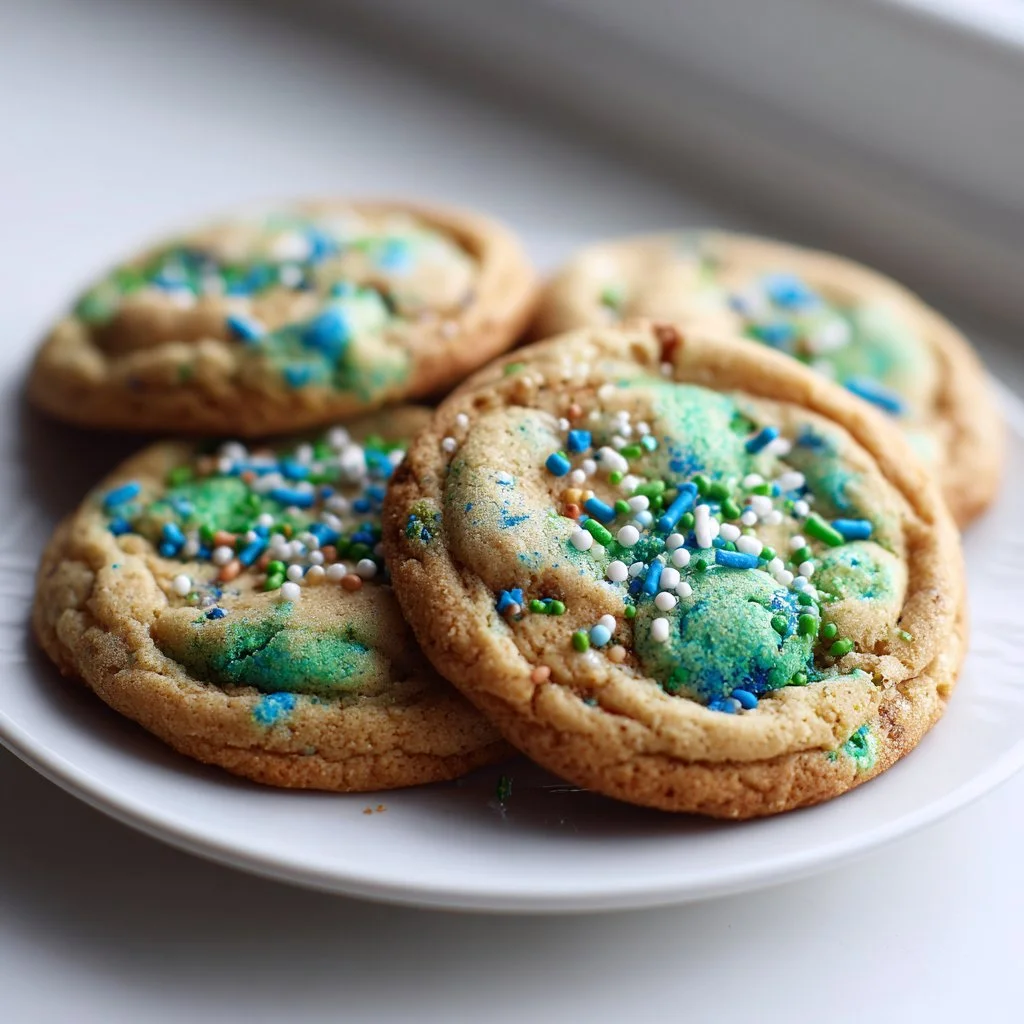
Bright, swirled cookies shaped like the planet are a simple, joyful way to celebrate Earth Day with kids or a classroom bake sale. These Earth Day Cookies use a classic sugar-cookie base, split and tinted into blue and green dough, making a stunning two-tone cookie with minimal fuss.
They bake quickly, store well, and are easy to adapt for allergies or flavor twists. Try them when you want something festive that still tastes like a perfect, buttery sugar cookie.
If you enjoy themed baking, you might also like my take on Easy St. Patrick’s Day cookies for another quick holiday treat.
Why You’ll Love This Earth Day Cookies
– Fun two-toned look that’s great for kids and parties.
– Classic, buttery sugar-cookie flavor everyone recognizes.
– Simple pantry ingredients; no chill time needed.
– Fast bake time — on the table in under 30 minutes.
– Highly adaptable: sprinkles, extracts, or swaps are easy.
– Great project for teaching color mixing and baking basics.
The taste is rich and buttery with a tender crumb and slightly crisp edges. The split-dye dough gives a playful visual contrast while remaining soft and chewy inside when baked just right.
"★★★★★ These were a hit at our classroom Earth Day party — easy to make and the kids loved the colors. The cookies stayed soft and buttery for days!"
Key Ingredients for Earth Day Cookies
Butter (1 cup, softened). Butter is the backbone of texture and flavor in these cookies. Use unsalted, high-quality butter for the cleanest taste and to control salt levels; European-style butter adds richness if you want a deeper flavor. Substituting margarine will change texture and flavor — cookies may spread more and lose that buttery depth.
Brown sugar (1 cup, packed). Brown sugar adds moisture and a subtle caramel note that keeps these cookies chewy. Buy fresh, soft brown sugar and press firmly into the measuring cup; stale, hard brown sugar will affect texture. If you swap to all granulated sugar, expect a crisper, less moist cookie with less flavor complexity.
All-purpose flour (3 cups). AP flour gives structure while allowing tenderness; protein content balances chewiness and spread. Use spoon-and-level measuring or weigh for best consistency — too much flour yields dense cookies. Swapping to a lower-protein pastry flour gives a softer, cakier cookie; using bread flour will make them chewier and possibly tougher.
Eggs (2 large). Eggs emulsify the dough, add richness, and help with rise and structure. Use large eggs at room temperature for even mixing and consistent texture. Replacing eggs with flax or commercial egg replacers will alter texture and may require extra binding or moistening agents.
Full Ingredient List for Earth Day Cookies
– 1 cup butter, softened
– 1 cup granulated sugar
– 1 cup brown sugar
– 2 large eggs
– 2 teaspoons vanilla extract
– 3 cups all-purpose flour
– 1 teaspoon baking soda
– 1/2 teaspoon salt
– Green and blue food coloring
– Sprinkles (optional)
Step-by-Step Instructions for Earth Day Cookies
Step 1: Preheat and prepare
Preheat your oven to 350°F (175°C) and line baking sheets with parchment paper. This ensures even baking and easy cleanup, and prevents sticking without extra butter or oil.
Pro Tip: The oven should smell neutral and the parchment should lie flat; the room should feel warm but not too humid.
Step 2: Cream butter and sugars
Cream together the softened butter, granulated sugar, and brown sugar until light and smooth. Use a stand mixer or handheld electric mixer on medium speed and scrape the bowl occasionally for a uniform mix.
Pro Tip: The mixture should look pale and airy and feel slightly fluffy when you lift the beater.
Step 3: Add eggs and vanilla
Beat in the eggs one at a time, then mix in the vanilla extract. Add each egg fully before adding the next to prevent curdling and to maintain emulsion.
Pro Tip: The dough will smell richer and look glossy when the eggs are fully incorporated.
Step 4: Mix dry ingredients
In a separate bowl, whisk together the flour, baking soda, and salt; gradually blend into the wet mixture. Add the dry ingredients in two additions and mix until just combined to avoid overworking the dough.
Pro Tip: The dough should feel soft but not sticky; you should be able to scoop without the dough clinging to your hands.
Step 5: Divide and color the dough
Divide the dough and color one portion green and the other blue with food coloring. Knead or mix each portion until the color is even; gel food coloring gives vivid tones without much liquid.
Pro Tip: Wear gloves or use a silicone spatula to avoid stained fingers; the colored dough should be evenly tinted with no streaks.
Step 6: Scoop and shape
Scoop tablespoon-sized balls of dough onto the prepared baking sheet, flatten slightly, and add sprinkles if desired. Arrange cookies with about 2 inches between them to allow for spread.
Pro Tip: The cookie tops should look matte before baking and slightly flattened, not domed.
Step 7: Bake until golden
Bake for 10–12 minutes, watching for golden edges. Check at 10 minutes — remove when the edges are light golden and centers look set but still soft.
Pro Tip: The cookies should smell buttery with a faint caramel note, and the edges will be lightly browned while the centers remain pale.
Step 8: Cool and finish
Cool cookies on the baking sheet before transferring to a wire rack. Let them firm up for 5 minutes on the sheet to set their shape, then finish cooling fully on a rack to avoid sogginess.
Pro Tip: The bottoms should be set and not doughy; the cookie will firm as it cools.
Expert Tips for Earth Day Cookies
– Preheat accuracy: Use an oven thermometer to ensure a true 350°F, since 25°F off can change texture and spread.
– Dough temperature: If your kitchen is warm, chill the dough 10 minutes; too-warm dough spreads excessively.
– Measuring flour: Spoon flour into the cup and level it, or for best precision, weigh 3 cups as about 360–375g.
– Texture troubleshooting: If cookies are flat, add 1–2 tablespoons more flour next batch; if cakey, reduce flour slightly.
– Equipment tip: A cookie scoop gives uniform size and consistent bake times; use parchment or silicone mats for even bottoms.
– Mixing caution: Overmixing after adding flour develops gluten, yielding tough cookies; mix until just combined.
– Color technique: Use gel or paste food coloring for bright colors without thinning dough.
– Common mistakes: Skipping parchment, overcrowding the sheet, or baking from warm dough leads to uneven results; follow spacing and cooling steps.
In case you want a playful snack board with these cookies, pair them with other holiday bites like the creative St. Patrick’s Day popcorn recipe for a themed spread.
Storage & Freezing for Earth Day Cookies
Room fridge storage: Store baked cookies in an airtight container at room temperature for up to 4 days. For crisper edges keep a paper towel inside the container to absorb excess moisture; for softer cookies add a slice of bread to maintain chew.
Freezer storage: Cookies freeze well for up to 3 months. Layer cooled cookies between parchment in a freezer-safe container or freeze flat on a tray then transfer to a zip-top freezer bag to save space.
Dough freezing: Portion dough into tablespoon balls and freeze on a tray until solid, then transfer to a labeled bag; bake from frozen, adding 1–2 minutes to bake time. Thawing dough in the fridge overnight will produce a slightly softer spread.
Thawing and reheating: Thaw frozen baked cookies at room temperature for 30–60 minutes. Reheat briefly in a 300°F oven for 3–5 minutes for that just-baked warmth, or microwave a single cookie 8–10 seconds for a soft, warm bite.
If you like breakfast-themed green treats, the method pairs well with pancakes like these green buttermilk pancakes for a full holiday menu.
Variations & Substitutions for Earth Day Cookies
Chocolate chip Earth Day Cookies: Fold 1 cup mini chocolate chips into the dough before dividing and coloring. The chips add chocolate pockets and a pleasant texture contrast while keeping the planet look intact.
Citrus-scented Earth Day Cookies: Replace 1 teaspoon of vanilla with 1 teaspoon lemon or orange zest plus 1/2 teaspoon juice. This brightens the flavor and pairs surprisingly well with the buttery base, creating a fresher bite.
Vegan Earth Day Cookies: Use vegan butter, swap eggs for two flax eggs (2 tbsp ground flaxseed + 6 tbsp water), and ensure vegan sprinkles. Expect a slightly denser texture but still a tasty, colorful cookie that holds its shape.
Marbled Earth Day Cookies: Instead of separate scoops, gently press blue and green dough together with a few swirls for a marbled globe effect. The marbling yields unique patterns on each cookie and a slightly different bake due to mixed dough areas.
Frequently Asked Questions About Earth Day Cookies
Q: Can I make Earth Day Cookies without food coloring?
A: Yes. Skip the coloring for classic sugar cookies, or use natural colorants like spirulina for green and blueberry powder for blue. Natural colors may be subtler and can affect flavor slightly; test a small batch first.
Q: Why did my cookies spread too much?
A: Over-soft butter, warm dough, or too little flour are common causes. Chill the dough 10–20 minutes, check flour measurement, and ensure baking sheets aren’t preheated or warped.
Q: How can I keep cookies soft for longer?
A: Store in an airtight container with a slice of white bread or a damp paper towel sealed separately to retain moisture. Avoid refrigerating baked cookies unless you plan to eat them within a few days, as fridge air can dry them.
Q: Can I make the dough ahead?
A: Yes. Make the dough, wrap tightly, and refrigerate for up to 48 hours for deeper flavor, or freeze portions for up to 3 months. Thaw in the fridge overnight before scooping and baking.
Q: What’s the best way to get even coloring between dough halves?
A: Use gel food coloring and mix with a rubber spatula or paddle attachment, and knead briefly with clean hands until uniform. For stronger color, add tiny amounts gradually; over-coloring can stain and produce off-flavors.

Final Thoughts on Earth Day Cookies
These Earth Day Cookies are an easy, colorful way to celebrate while serving a reliably delicious sugar-cookie base. If you made them, please leave a star rating in the recipe card below and pin this to Pinterest to share the idea.
Find an inspired video version of Earth Day Cookies at Tammilee Tips’ Earth Day Cookies video, read another take at Sheri Silver’s Earth Day cookies post, or try a different tutorial at Three Little Ferns’ Easy Earth Day Sugar Cookies.

Earth Day Cookies
Ingredients
Method
- Preheat your oven to 350°F (175°C) and line baking sheets with parchment paper.
- Cream together the softened butter, granulated sugar, and brown sugar until light and smooth.
- Beat in the eggs one at a time, then mix in the vanilla extract.
- In a separate bowl, whisk together the flour, baking soda, and salt; gradually blend into the wet mixture.
- Divide the dough and color one portion green and the other blue with food coloring.
- Scoop tablespoon-sized balls of dough onto the prepared baking sheet, flatten slightly, and add sprinkles if desired.
- Bake for 10–12 minutes, watching for golden edges.
- Cool cookies on the baking sheet before transferring to a wire rack.