
A bright, playful cookie that looks like a tiny planet is a perfect way to celebrate Earth Day with kids or to add color to a spring cookie tray. These Planet Earth Cookies are chewy, buttery, and fun to decorate.
They’re simple enough for a weekend baking session and impressive enough for class parties or bake sales. Read on for science-backed tips, troubleshooting visuals, and pro tricks to make every cookie look like a mini globe.
Try these with an easy royal icing finish or pair with chocolate-dipped treats for variety. For more seasonal cookie ideas, see this festive recipe for fun shaped spring cookies.
Why You’ll Love This Celebrate Earth Day with these Planet Earth Cookies
– Vibrant planet-style look that’s kid-friendly and Instagram-ready.
– Simple ingredient list using pantry staples.
– Soft, tender texture that holds shape for decorating.
– Almond extract adds a delicate, sophisticated flavor.
– Great for classroom events, Earth Day parties, or eco-themed gift boxes.
– Easy to scale up for large batches without complex steps.
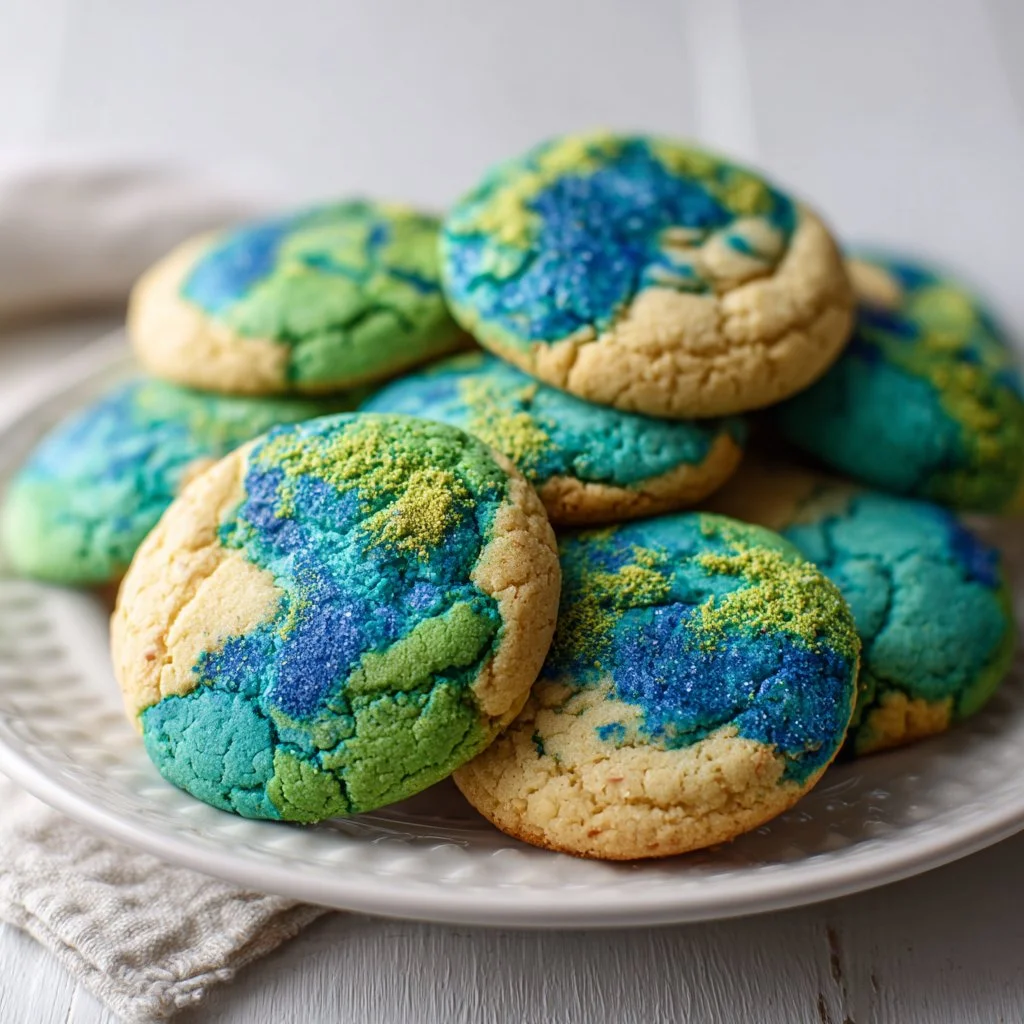
These cookies are buttery with a tender crumb and a slight chew at the center. The almond extract gives a soft, nutty floral note that complements the sugar-and-butter base without overpowering. The color contrast between blue “oceans” and green “continents” is vivid, and the dough holds its shape so your continents stay in place after baking.
“These turned out gorgeous! My kids loved making the continents and the cookies stayed soft for days — five stars!” — a happy reader
Key Ingredients for Celebrate Earth Day with these Planet Earth Cookies
Butter (3/4 cup softened salted butter)
Butter is the backbone of flavor and structure in these cookies. Use European-style or high-fat butter for a richer taste and slightly denser dough; stick butter will produce a lighter texture. If you substitute margarine or a plant-based spread, expect less flavor and a different spreading behavior; chilling time may need adjustment.
Granulated sugar (2/3 cup)
Sugar sweetens and also affects texture and spread. Granulated sugar creamed with butter traps air and lightens the dough, giving a tender, slightly crisp edge while keeping a soft center. Using brown sugar will add moisture and chew but will change the pale color that makes the blue and green dyes vivid.
All-purpose flour (2 cups)
Flour supplies the cookie’s framework; all-purpose is perfect for a balance between tenderness and hold. Overmixing after adding flour develops gluten and can make cookies tough; mix just until combined. Substituting cake flour yields a softer, more delicate cookie, while bread flour will make them chewier and denser.
Almond extract (1 tablespoon)
Almond extract is a concentrated flavor that brightens the buttery base and pairs beautifully with food coloring. Use pure almond extract when possible; imitation extract is fine but can taste artificial in larger quantities. If you prefer vanilla, use it sparingly (1 teaspoon) to avoid muting the almond-like lift.
Full Ingredient List for Celebrate Earth Day with these Planet Earth Cookies
– 3/4 cup softened salted butter
– 2/3 cup granulated sugar
– 1 tablespoon almond extract
– 1 egg
– 2 cups all-purpose flour
– Blue food coloring
– Green food coloring (or a mix of yellow + blue)
Step-by-Step Instructions for Celebrate Earth Day with these Planet Earth Cookies
Step 1: Preheat and prep your baking sheet
Preheat your oven to 325°F and line a cookie sheet with parchment paper to prevent sticking and promote even browning. Parchment also makes movement easier when transferring cookies.
Pro Tip: The sheet should be warm to the touch but not hot; the surface will look clean and matte once parchment is in place.
Step 2: Cream butter and sugar
Beat the softened butter and granulated sugar together until the mixture is light, pale, and fluffy. This step introduces air that helps lift and slightly leaven the cookies.
Pro Tip: When properly creamed, the mixture will have a pale color and a fluffy, billowy texture with ribbon-like trails when lifted.
Step 3: Add almond extract and egg
Mix in the almond extract and the egg until fully incorporated, stopping as soon as the wet ingredients are smooth. Overbeating once the egg is added can make the dough tough.
Pro Tip: The dough should look homogenous and glossy; you should not see separate streaks of egg.
Step 4: Combine flour into a soft dough
Slowly add the all-purpose flour to the mixture and mix until a soft dough forms, scraping the bowl to incorporate pockets of dry flour. The dough should be pliable but not sticky.
Pro Tip: The dough will feel slightly tacky but will hold together in a cohesive ball when pressed.
Step 5: Tint and divide the dough
Divide the dough and tint one portion blue and the other green, working in small amounts of gel or paste food coloring until you reach a vivid shade. Gel coloring is preferred because it imparts color without watering down the dough.
Pro Tip: Properly tinted dough will show uniform color when you knead a small piece and there will be no streaks; the blue should resemble deep ocean teal.
Step 6: Shape ocean and continents
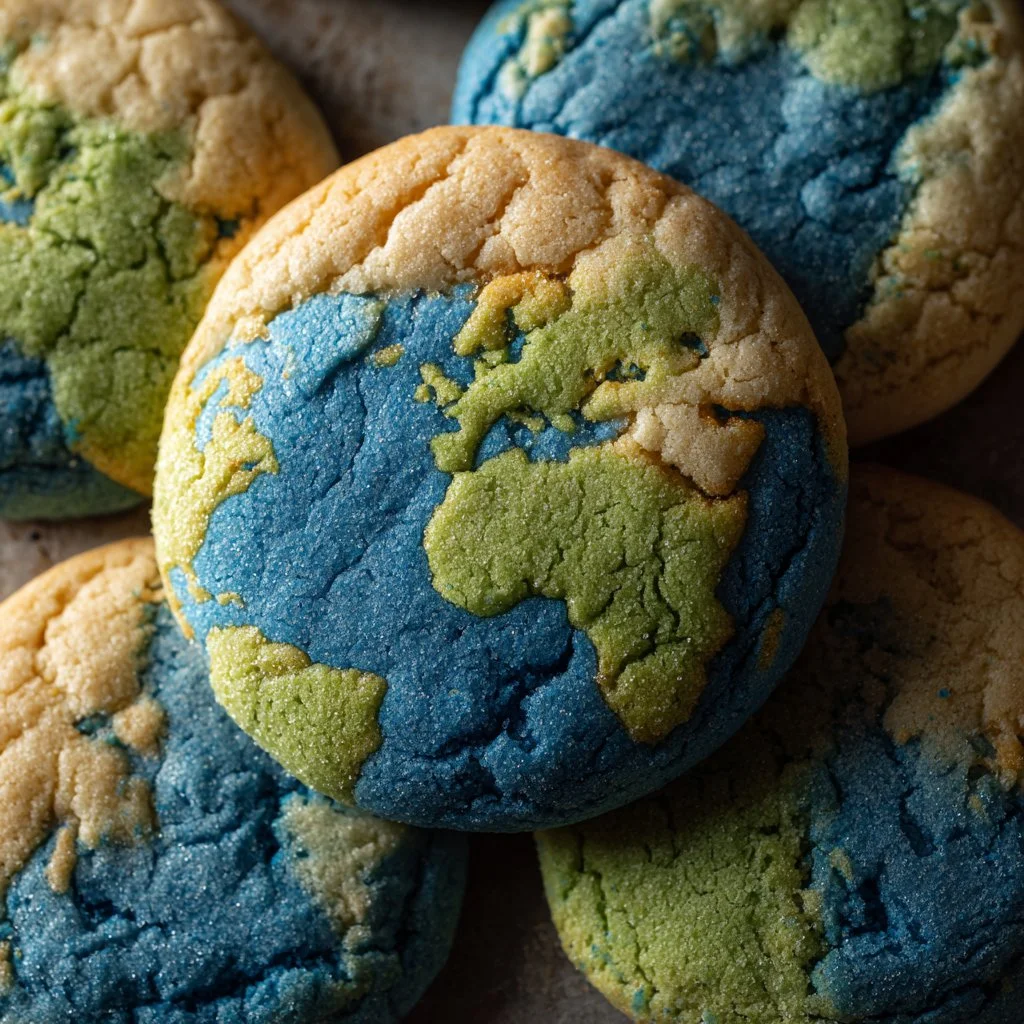
Roll out the blue dough to form the ocean base, about 1/4″ thick, then add flattened green pieces for continents, shaping them roughly by hand to create recognizable landmasses. Press gently to adhere without overworking.
Pro Tip: The continents should sit slightly pressed into the blue so edges are flush but still visible; they should not sink or leave large gaps.
Step 7: Cut and bake
Use a 4″ circle cookie cutter to cut out cookie shapes and arrange them on the prepared sheet. Bake at 325°F until the edges are golden, about 10–14 minutes depending on your oven. Allow cookies to cool on the sheet for a few minutes, then transfer to a rack to finish cooling.
Pro Tip: Properly baked cookies will have set edges and a pale golden rim; the center will still look slightly soft but not raw.
Pro Tip: For visual examples of shaped cookies and icing ideas, compare decorating approaches similar to these soft sugar cookies with professional royal icing.
Expert Tips for Celebrate Earth Day with these Planet Earth Cookies
– Temperature tips: Keep butter at room temperature (not melted). If it’s too soft, chill for 10–15 minutes; if too firm, let sit 5–10 minutes to reach proper consistency.
– Oven calibration: Use an oven thermometer to ensure 325°F is accurate; many ovens run hot and will brown edges too quickly.
– Dough texture troubleshooting: If your dough is crumbly, add 1 teaspoon of milk at a time until it holds. If too sticky, chill for 20–30 minutes.
– Coloring technique: Use gel food colors to maintain dough consistency; add a few drops at a time and knead with gloves to avoid staining hands.
– Equipment tips: A stand mixer with paddle attachment speeds creaming, but a hand mixer works well. Use silicone baking mats or parchment for best release.
– Common mistakes: Overworking the dough will develop gluten and toughen cookies, so mix just until combined and shape gently.
– Thickness control: Roll to an even 1/4″ thickness for consistent bake times; thicker cookies will remain softer in the center and require longer baking.
– Cooling tip: Let cookies rest on the tray for 3–5 minutes to set shape, then move to a wire rack to avoid soggy bottoms.
For a textural contrast or sandwich-style cookie suggestion, try inspiration from rich, baked treats like these hazelnut cookies with dark chocolate ganache.
Storage & Freezing for Celebrate Earth Day with these Planet Earth Cookies
Fridge storage: Store cooled cookies in an airtight container in the refrigerator for up to one week. Separate layers with parchment to protect the color and details.
Freezer storage: Freeze unbaked dough logs or shaped, unbaked cookies for up to 3 months. Wrap dough tightly in plastic and then place in a freezer bag to prevent freezer burn.
Thawing: Thaw in the refrigerator overnight for best texture. If frozen baked cookies are used, bring to room temperature for 30–45 minutes before serving to regain tenderness.
Reheating: Warm cookies for 6–8 seconds in the microwave to soften slightly, or place in a 300°F oven for 3–4 minutes for a just-baked texture. Use airtight containers and avoid condensation when thawing to preserve appearance.
Variations & Substitutions for Celebrate Earth Day with these Planet Earth Cookies
Swap extracts for flavor change
Replace almond extract with 1 teaspoon vanilla and 1/2 teaspoon lemon zest for a brighter, citrusy cookie. The result is fresher and pairs well with a light glaze.
Make them vegan
Substitute vegan butter and a flax egg (1 tablespoon ground flax + 3 tablespoons water) and use plant-based milk if needed. Texture will be slightly less rich but still tender; consider using a vegan recipe baseline like the approach in vegan Earth Day cookie guides for tips.
Add texture with sanding sugar
After shaping, lightly brush the blue ocean with a thin egg wash (or non-dairy milk) and sprinkle shimmering sanding sugar for a sparkly sea. This adds crunch and visual depth to the ocean surfaces.
Create sandwich cookies
Bake thinner rounds and sandwich with buttercream, jam, or salted caramel. The sandwich reveals a cross-section where the blue and green meet and delivers a richer bite reminiscent of cookie bars like brookie-style treats.
Frequently Asked Questions About Celebrate Earth Day with these Planet Earth Cookies
What food coloring should I use for the brightest blue and green?
Gel or paste food coloring provides the most vibrant hues without adding liquid that would change dough consistency. Start with small amounts and knead in until color is uniform; gel allows you to achieve deep ocean blue and vivid continental green with minimal alteration to texture.
Can I make the dough ahead of time?
Yes. Dough can be made and refrigerated up to 48 hours before shaping, or frozen for up to 3 months. Chilled dough is easier to roll and shape; if chilled, let sit 10 minutes at room temperature for easier handling.
How do I keep continents from separating during baking?
Press continents gently into the blue base so edges adhere, and chill shaped cookies for 10–15 minutes before baking to reduce movement. Using slightly thicker pieces for continents helps them stay connected once baked.
Why did my cookies spread too much in the oven?
Cookies spread when butter is too soft or the dough is overworked, or if the oven temperature is too low. Chill the dough, use an oven thermometer to confirm heat, and avoid over-creaming butter and sugar.
Can I make mini planet cookies instead of 4" rounds?
Absolutely. Use a smaller cutter and reduce bake time by 2–4 minutes. Smaller cookies will crisp faster at the edges and remain tender in the center; monitor closely to prevent overbrowning.

Final Thoughts on Celebrate Earth Day with these Planet Earth Cookies
These Planet Earth Cookies are a playful, flavorful way to mark Earth Day with family or community. If you enjoyed the recipe, please leave a star rating in the recipe card below and pin this to Pinterest for your next baking day.
Celebrate Earth Day with these Planet Earth Cookies – Conclusion
For a vegan take and gluten-free tips, see this thoughtful guide to Vegan Earth Day Cookies (Gluten-Free) – Nourishing Amy which offers alternative ingredient ideas.
If you’re planning an Earth Day event or looking for local celebrations, check the schedule at Earth Day At Seneca Park Zoo 2025 for inspiration.
For civic or city-organized Earth Day activities and resources, visit Earth Day – City of Spokane, Washington.
Planet Earth Cookies
Ingredients
Method
- Preheat your oven to 325°F and line a cookie sheet with parchment paper.
- Beat the softened butter and granulated sugar together until light and fluffy.
- Mix in the almond extract and the egg until fully incorporated.
- Slowly add the flour until a soft dough forms.
- Divide the dough and tint one portion blue and the other green.
- Roll out blue dough to form the ocean base and shape green pieces for continents, then press gently.
- Cut out cookie shapes using a 4” circle cutter and arrange them on the prepared sheet.
- Bake at 325°F for 10–14 minutes, then allow to cool.