
Bright, creamy, and impossibly comforting, this Spring Pea Risotto brings a taste of the season to your table in about 30 minutes of active cooking.
The dish is a lovely balance of sweet peas, nutty Parmesan, and the gentle chew of Arborio rice.
If you love simple pantry cooking that feels special, this is for you.
For a light starter or a satisfying main, it pairs well with crisp salads or a piece of grilled fish.
I often reach for bright, fresh flavors like this after colder months.
If you want a vibrant breakfast or snack idea while your risotto simmers, try my peanut butter banana oat smoothie for an energizing blend.
This recipe plays nicely with pantry staples and a few fresh herbs.
It’s a great weeknight upgrade with a dinner-party sheen.
Why You’ll Love This Spring Pea Risotto
- Bright spring flavor from fresh or frozen peas.
- Luxuriously creamy texture without cream.
- Simple ingredient list you can mostly keep on hand.
- Fast-ish technique for a risotto—18–20 minutes of stirring.
- Versatile: serve as a side or a light main course.
- Easy to scale up for guests.
- Garnish-ready for an elegant finish.
The taste is sweet and vegetal from the peas with a rich, savory backbone from Parmesan and white wine.
The texture should be creamy and slightly loose, the rice al dente with a gentle bite.
Each spoonful melts on the tongue but still has structure.
"Absolutely delicious — creamy, bright, and worth every stir. My guests asked for seconds!" — 5★ reader review
Key Ingredients for Spring Pea Risotto
Arborio rice
Arborio is a short-grain rice high in starch, which creates the silky creaminess risotto is known for.
Buy a fresh bag from a reputable brand and look for uniform, opaque grains.
If you use long-grain rice, the result will lack creaminess and feel more like pilaf.
Vegetable broth
A flavorful, warm broth is the backbone of the dish and directly affects taste.
Use low-sodium vegetable broth so you can control seasoning; homemade is ideal.
If you substitute water, add extra seasoning and a splash of white wine to compensate for depth.
Fresh or frozen peas
Peas give the risotto its bright green color and sweet pop.
Fresh peas are ideal in season; frozen are excellent year-round and often sweeter since they’re flash-frozen.
Replacing peas with other vegetables like asparagus will change texture and sweetness noticeably.
Parmesan cheese
Parmesan adds umami, saltiness, and helps emulsify the final risotto into a silky finish.
Buy a wedge and grate it yourself for superior flavor and melting quality.
Using pre-grated powder will reduce creaminess and leave a slightly grainy finish.
Full Ingredient List for Spring Pea Risotto
- 1 cup Arborio rice
- 4 cups vegetable broth
- 1 cup fresh or frozen peas
- 1 small onion, chopped
- 2 cloves garlic, minced
- 1/2 cup white wine
- 1/2 cup grated Parmesan cheese
- 2 tablespoons olive oil
- Salt and pepper to taste
- Fresh mint or parsley for garnish
Step-by-Step Instructions for Spring Pea Risotto
Step 1: Heat the vegetable broth and keep it warm over low heat.
Bring the broth to a gentle simmer in a saucepan and then reduce to low so it stays warm but not boiling.
Keeping it warm avoids shocking the rice and helps it cook evenly.
Pro Tip: The broth should steam lightly with tiny bubbles, not a rolling boil.
Step 2: Sauté the onion and garlic in olive oil until translucent.
Heat olive oil in a wide, heavy-bottomed skillet or shallow saucepan over medium heat.
Add the chopped onion and sauté until soft and translucent; add the garlic at the end so it doesn’t burn.
Pro Tip: The onions should look glossy and lose all raw whiteness but not brown.
Step 3: Toast the Arborio rice for 2–3 minutes.
Add the Arborio to the pan and stir to coat each grain in oil.
Toast for 2–3 minutes until edges of the rice become slightly translucent and you smell a toasty aroma.
Pro Tip: Rice should make a soft crackling sound and smell nutty, with no raw starchy scent.
Step 4: Pour in the white wine and stir until absorbed.
Pour the white wine in a steady stream and stir; cook until the wine has mostly evaporated and the pan is nearly dry.
This deglazes the pan and adds a bright acidity that balances the richness.
Pro Tip: The pan will shimmer and form tiny bubbles; the wine scent will fade as it absorbs.
Step 5: Add warm broth one ladle at a time, stirring frequently for 18–20 minutes.
Add a ladle of warm broth and stir until mostly absorbed. Repeat, adding one ladle at a time and stirring frequently.
Continue this process for about 18–20 minutes until the rice is al dente and the mixture is creamy.
Pro Tip: The risotto should slowly move like wet glue on the spoon, not be dry or soupy.
Step 6: Stir in the peas and Parmesan, season to taste.
When the rice is nearly done, stir in the peas and cook for 1–2 minutes if frozen, slightly longer for fresh.
Remove from heat and stir in grated Parmesan; taste and adjust salt and pepper.
Pro Tip: The peas should be bright green and the risotto glossy and slightly loose.
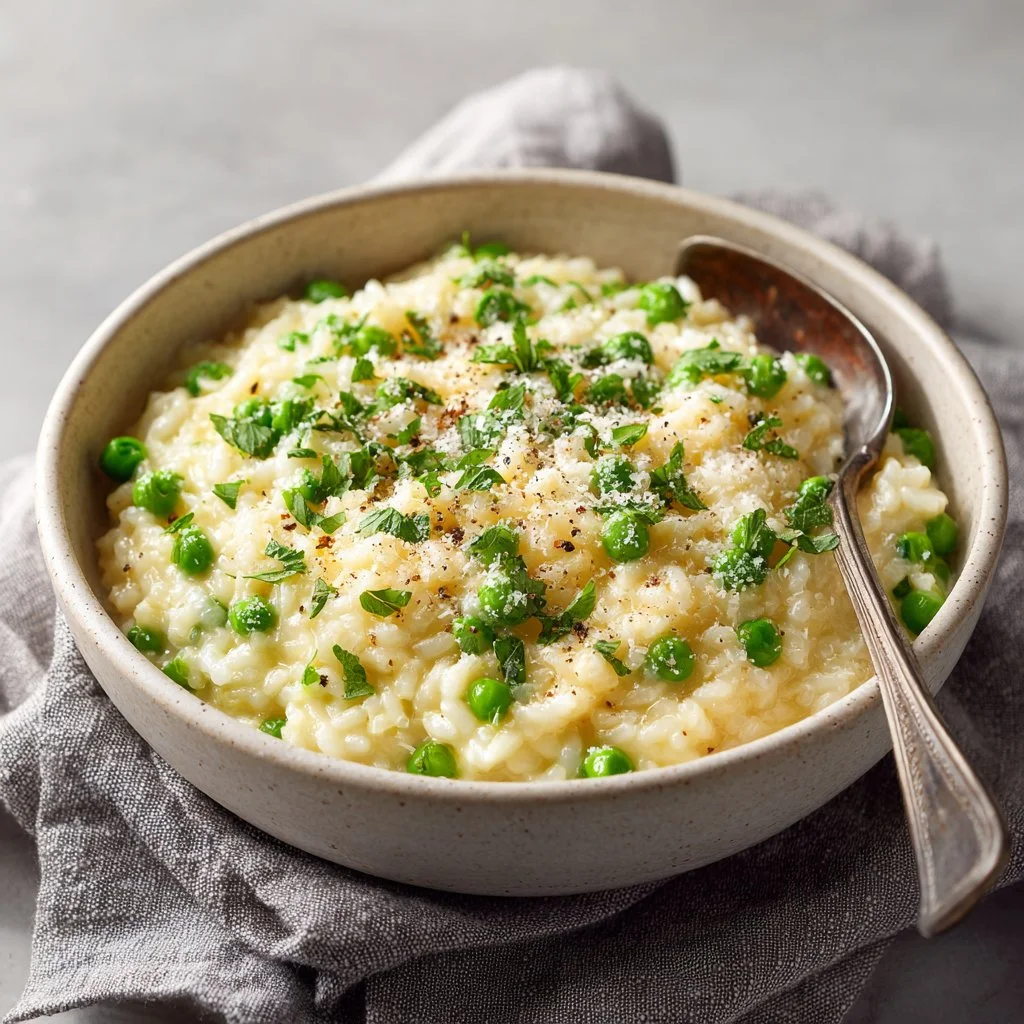
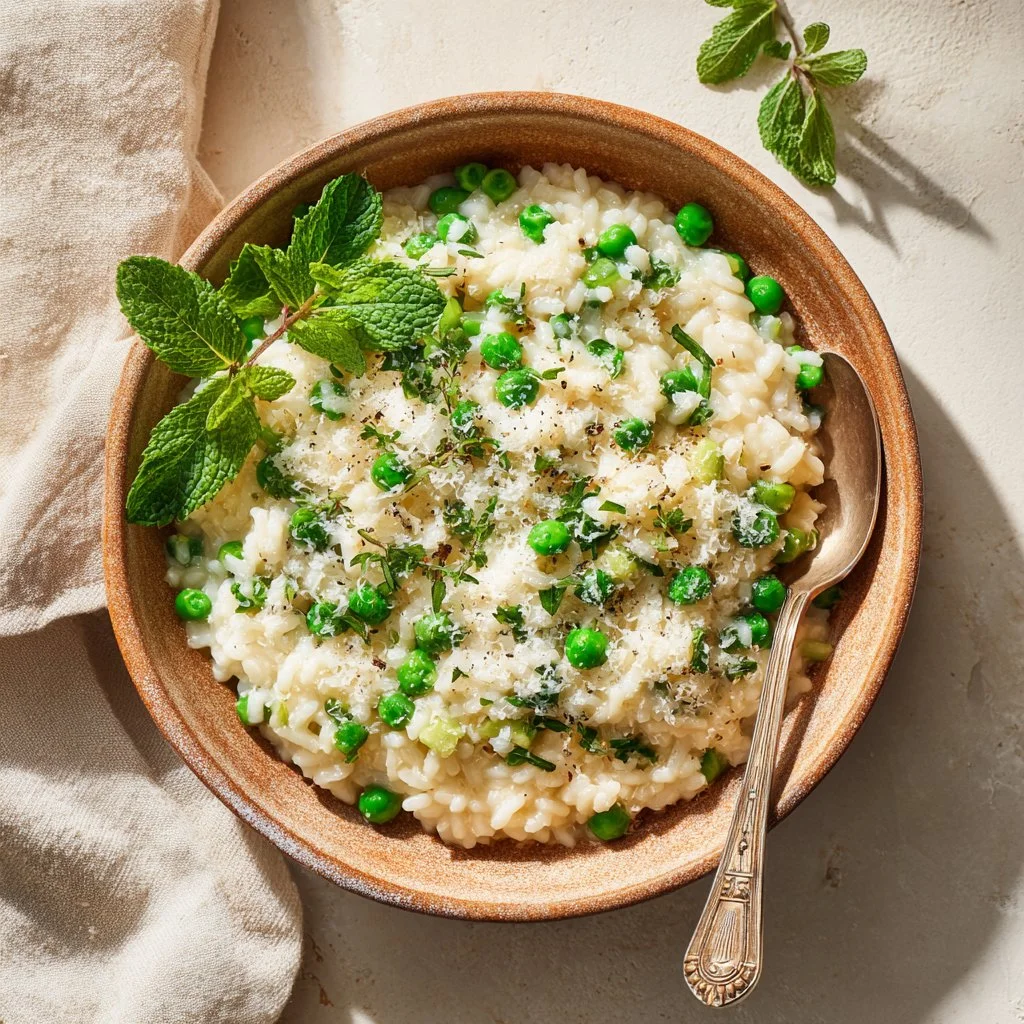
Step 7: Serve warm, garnished with fresh mint or parsley.
Plate the risotto immediately and finish with a sprinkle of herbs and an extra grating of Parmesan if desired.
Serve right away for best texture and temperature.
Pro Tip: The final plate should steam and hold its shape but spread slightly when nudged.
Expert Tips for Spring Pea Risotto
- Use a heavy-bottomed pan for even heat; thin pans scorch and cook unevenly.
- Keep the broth warm; adding cold stock will stall cooking and alter texture.
- Stir frequently but not constantly; steady stirring helps release starch but allows gentle cooling if overdone.
- If the risotto is too hard near the end, add hot broth and cook 2–3 minutes more; if too wet, cook uncovered a little longer.
- Use medium heat for the ladling stage—too high and the liquid evaporates before absorption.
- Invest in a good ladle and wooden spoon to control pour and stir rhythm.
- Avoid rinsing Arborio rice; rinsing removes surface starch that creates creaminess.
- Don’t over-salt before adding Parmesan; the cheese adds significant saltiness.
Storage & Freezing for Spring Pea Risotto
Refrigerator storage: Cool risotto quickly and transfer to an airtight container.
Store in the fridge for up to 3 days.
Use shallow containers to speed cooling.
Freezer storage: Freeze in shallow, freezer-safe containers for up to 2 months.
Label with the date and press plastic directly on the surface to prevent freezer burn.
The texture may change after thawing; expect a softer grain.
Thawing: Thaw overnight in the refrigerator for best results.
For quicker use, reheat from frozen on low heat with extra broth or water.
Reheating: Reheat gently in a saucepan with a splash of warm broth or water, stirring to loosen.
Microwave reheating works too; add liquid and heat in 30-second bursts, stirring in between.
Reheat only once for safety and texture quality.
Variations & Substitutions for Spring Pea Risotto
Pea and Mint Risotto
Add a handful of chopped fresh mint at the end and a squeeze of lemon.
The mint brightens the peas and adds an aromatic lift, making the dish more herbaceous.
Pea and Prosciutto Risotto
Toss in crisped prosciutto pieces before serving for salty, crunchy contrast.
This adds savory depth and a pleasant textural counterpoint to the creamy rice.
Asparagus and Pea Risotto
Replace half the peas with blanched asparagus tips added in the final minutes.
The result is a more vegetal flavor and slightly firmer bite from asparagus.
Mushroom and Pea Risotto (Vegetarian)
Sauté mushrooms first in the pan until golden, remove, and add back with the peas.
This yields an earthier, more robust version that still highlights the sweetness of peas.
Frequently Asked Questions About Spring Pea Risotto
Q: Can I make risotto ahead of time?
A: You can partially cook it and finish later. Stop when the rice is slightly underdone, cool quickly, refrigerate, and finish by reheating with hot broth for 5–7 minutes. This keeps the texture closer to freshly made risotto. Avoid fully cooking and storing if you want the ideal creamy al dente bite.
Q: What if my risotto is too thin or too thick?
A: If too thin, simmer gently without a lid to reduce liquid, stirring often. If too thick, stir in small amounts of hot broth or warm water until you reach a creamy, slightly loose consistency. Adjust seasoning after changing thickness.
Q: Can I use frozen peas and how should I add them?
A: Yes. Add frozen peas in the last 1–2 minutes of cooking so they heat through but retain color and texture. No need to thaw; adding them frozen shortens prep and avoids mush.
Q: Is white wine necessary?
A: Wine adds acidity and depth but can be omitted. Replace with an equal amount of warm broth and a squeeze of lemon or a teaspoon of white wine vinegar to mimic brightness.
Q: How do I get a restaurant-quality creamy finish without cream?
A: The creaminess comes from released rice starch and emulsifying with Parmesan and a finishing fat like butter or olive oil. Stirring during gradual stock addition and finishing off-heat with cheese creates the glossy, rich texture.
Final Thoughts on Spring Pea Risotto
This Spring Pea Risotto is an elegant, seasonal dish that feels indulgent but cooks from simple ingredients.
Please leave a star rating in the recipe card below and pin this to Pinterest if you enjoyed it.
Spring Pea Risotto – Conclusion
For another take on spring peas in risotto-style cooking, see this lovely Spring Pea Risotto Recipe – Barley & Sage, which offers a slightly different herb profile.
If you like risotto with seafood or additions, check this inspired version at Spring Pea Risotto | Feasting At Home for plating and pairing ideas.
For a Parmesan-forward, basil-accented riff, read Spring Pea Risotto with Parmesan & Basil – The Original Dish.
Spring Pea Risotto
Ingredients
Method
- Heat the vegetable broth and keep it warm over low heat.
- Sauté the onion and garlic in olive oil until translucent.
- Toast the Arborio rice for 2–3 minutes.
- Pour in the white wine and stir until absorbed.
- Add warm broth one ladle at a time, stirring frequently for 18–20 minutes.
- Stir in the peas and Parmesan, season to taste.
- Serve warm, garnished with fresh mint or parsley.