
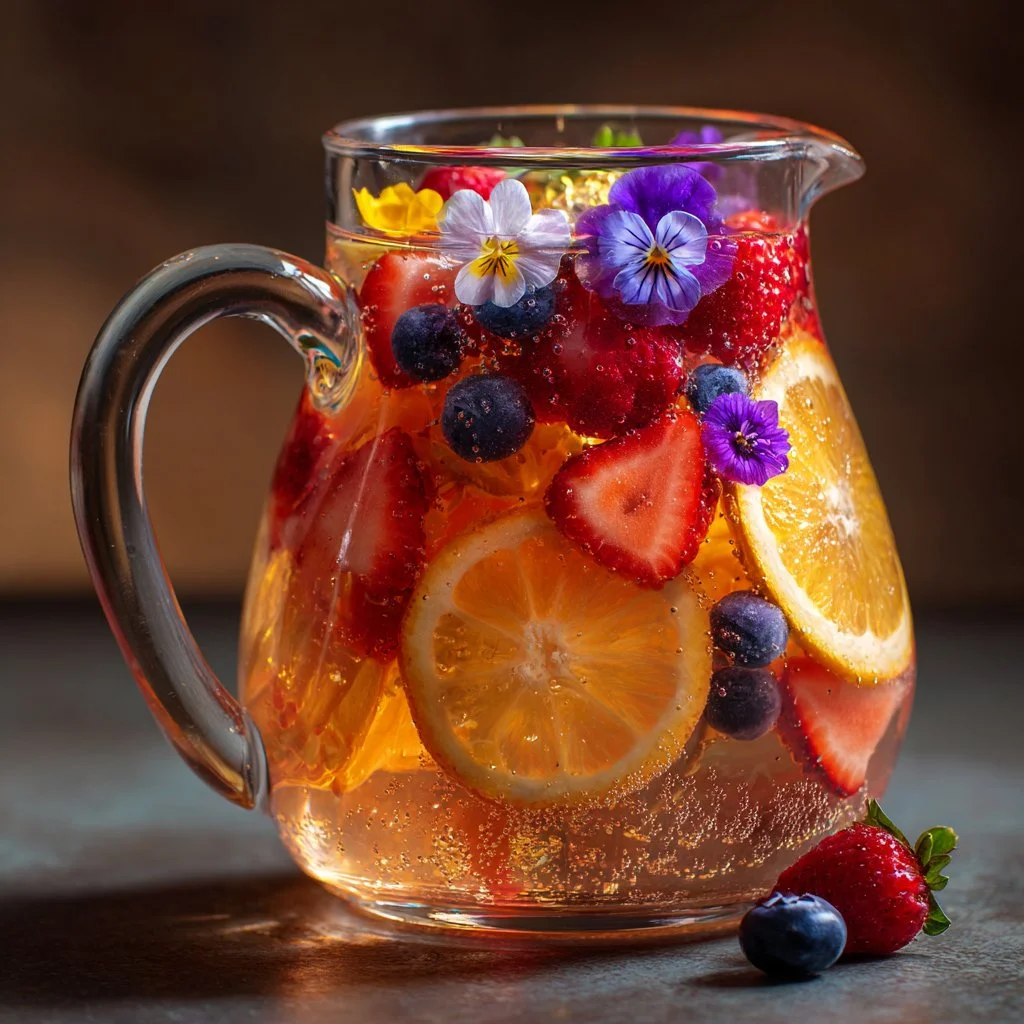
Bright, floral, and impossibly easy, this Spring Blossom Sangria is a showstopper for sunny afternoons.
It’s built around rosé and elderflower, with fresh berries and citrus to brighten each sip.
Make it a few hours ahead and it becomes a party-ready pitcher that looks as pretty as it tastes.
Serve over ice, float edible flowers on top, and watch people ask for the recipe.
Why You’ll Love This Spring Blossom Sangria
– Light, floral, and fruity — perfect for spring gatherings.
– Quick to assemble with ingredients you can buy at any grocery store.
– Refreshing fizz that’s easy to adjust for adults preferring subtler bubbles.
– Naturally pretty — edible flowers and berries make it photogenic.
– Flexible sweetness and alcohol level for different preferences.
– Makes a large-batch cocktail for entertaining without fuss.
The taste is bright and floral with a balancing citrus edge and a gentle effervescence.
Strawberries and raspberries give a soft berry jam note while orange and lemon provide citrus lift.
The elderflower liqueur layers in perfume and a hint of honeyed sweetness that complements the rosé body.
"5 stars — This sangria tasted like spring in a glass. Easy to make, gorgeous to serve, and everyone loved the floral notes." — A satisfied reader
Key Ingredients for Spring Blossom Sangria
Rosé wine matters because it’s the backbone of the sangria.
Choose a dry to off-dry rosé with bright acidity and strawberry or citrus notes.
If you substitute with white wine, the drink will be paler and less berry-driven; red wine will overwhelm the elderflower.
Elderflower liqueur adds the floral, slightly honeyed character that defines the recipe.
Look for St-Germain or a quality elderflower liqueur with a clean, aromatic profile.
Substituting with a different floral liqueur (like elderflower syrup) will change sweetness and complexity; reduce any added sweetener if you swap in syrup.
Fresh strawberries (sliced) are the primary fruit for texture and aroma.
Buy ripe but firm berries for the best balance of sweetness and structure.
Frozen berries can be used in a pinch but will release more juice and can make the sangria cloudier and slightly muddier in texture.
Orange slices bring citrus oil and visual appeal.
Use organic or unwaxed fruit if you plan to muddle the peel for extra oils.
If you skip the orange, the sangria loses some fragrant citrus lift and visual warmth.
Full Ingredient List for Spring Blossom Sangria
– 1 bottle rosé wine
– 1/3 cup elderflower liqueur
– 1/2 cup sliced strawberries
– 1/2 cup raspberries
– 1/4 cup blueberries
– 1 small orange, sliced
– 1 small lemon, sliced
– Sparkling water, to taste
– Edible flowers for garnish
Step-by-Step Instructions for Spring Blossom Sangria
Step 1: Add the fresh fruit to a pitcher
Place the sliced strawberries, raspberries, blueberries, orange slices, and lemon slices into a large glass pitcher.
Gently muddle a couple of the orange slices with a wooden spoon if you want extra citrus oil released.
Pro Tip: It should look colorful and fresh — berries floating, citrus slices partly submerged with a glossy sheen.
Step 2: Pour in the rosé and elderflower liqueur
Pour the full bottle of rosé wine over the fruit, then add the elderflower liqueur.
Stir once or twice to combine and wake up the fruit without bruising it.
Pro Tip: After stirring, the liquid should be a pale pink with fruit pieces suspended; you’ll notice a soft floral aroma.
Step 3: Refrigerate to let flavors meld
Cover the pitcher and refrigerate for at least one hour.
For best results refrigerate 3–4 hours or overnight to deepen flavor extraction.
Pro Tip: The sangria will look slightly darker as fruit releases juices; the aroma becomes more integrated and inviting.
Step 4: Add sparkling water when ready to serve
When you’re ready to serve, top the pitcher with sparkling water to taste for a gentle fizz.
Stir lightly to combine without flattening the bubbles.
Pro Tip: The surface should show a fine, steady stream of bubbles and a light effervescence on the rim of the pitcher.
Step 5: Garnish and serve chilled
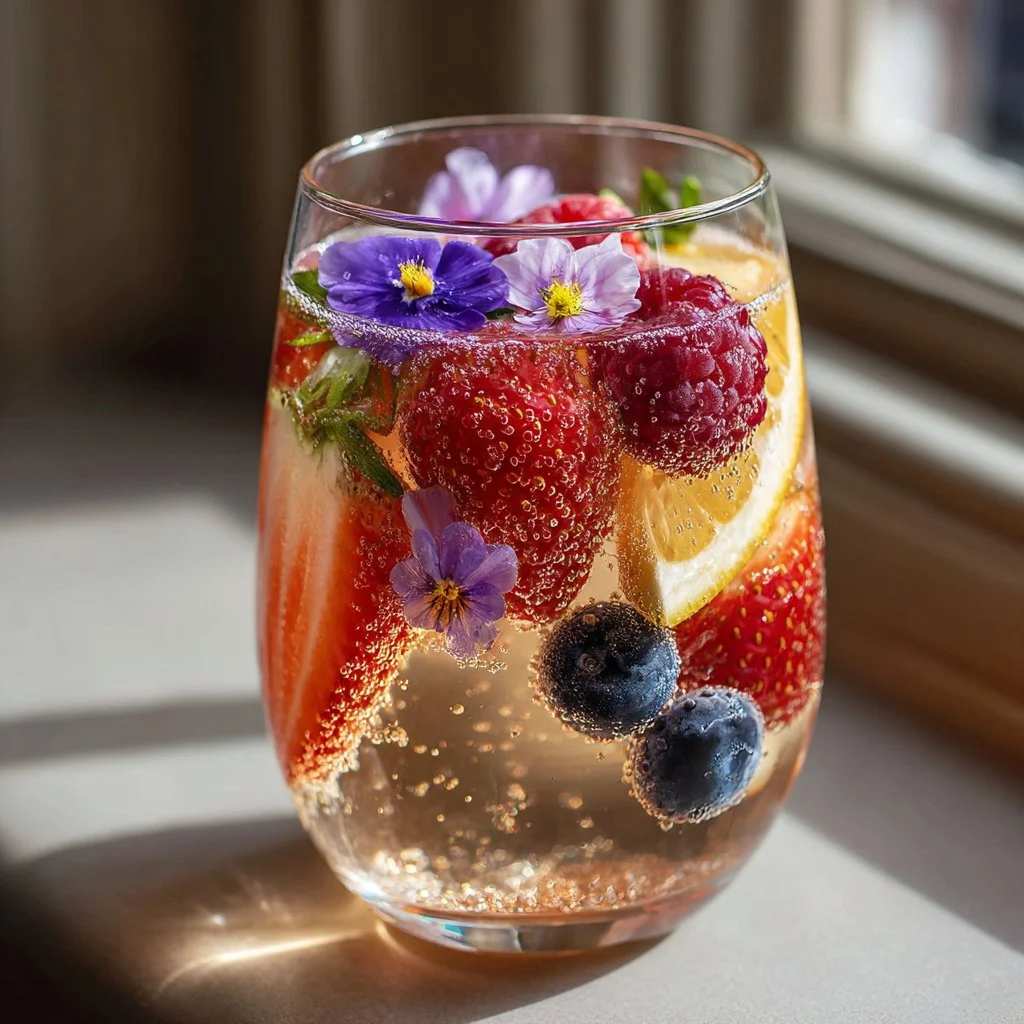
Serve over ice in glasses and float edible flowers on top for a floral finish.
Adjust sweetness or fizz per glass if needed.
Pro Tip: Each glass should look layered — ice, fruit pieces, and flowers floating on a sparkling blush liquid.
Expert Tips for Spring Blossom Sangria
– Temperature tip: Keep the sangria chilled below 50°F (10°C) for the best balance of aroma and refreshment.
– Texture troubleshooting: If the sangria gets too pulpy from muddled fruit, strain half through a fine mesh before adding sparkling water.
– Equipment tips: Use a clear glass pitcher to showcase the colors and a wooden muddler or spoon to gently press citrus oils.
– Common mistake: Adding sparkling water too early flattens the fizz; always top with bubbles right before serving.
– Aging tip: Letting the sangria rest overnight deepens flavor but reduces some berry brightness; refrigerate if you prefer fresher fruit notes.
– Sweetness control: If it tastes too tart, a splash of simple syrup per glass preserves bubbles better than sweetening the whole pitcher.
– Ice handling: Add fresh ice to each glass rather than the pitcher to avoid dilution and preserve appearance.
– Garnish advice: Use edible flowers with mild flavor like pansies or violets; avoid highly perfumed blooms that can clash with elderflower.
Storage & Freezing for Spring Blossom Sangria
Fridge storage: Keep leftover sangria in an airtight pitcher or sealed container.
Store for up to 48 hours in the refrigerator for best flavor and texture.
After 48 hours the fruit will be very soft and the tannins may become more pronounced.
Freezer storage: Sangria with alcohol can be partially frozen, but the alcohol prevents a full solid freeze.
If you want frozen sangria cubes for long-term cooling, freeze the fruit separately on a tray and freeze wine in an ice cube tray for up to two weeks.
Do not freeze whole assembled sangria in a sealed glass container — expansion can break the glass.
Thawing: Thaw frozen wine cubes in the fridge or at room temperature briefly, then mix with fresh sparkling water and a handful of fresh berries.
Thawed wine can lose some aromatics, so refresh with a splash of elderflower liqueur if needed.
Reheating: This sangria is served cold; do not reheat. Warm temperatures will flatten aromatics and alter texture.
Variations & Substitutions for Spring Blossom Sangria
Berry-Forward Spring Blossom Sangria: Increase strawberries to 1 cup and omit blueberries for a sweeter, jammy profile.
The sangria will be fruitier and deeper in color, great for berry lovers.
Citrus Blossom Spring Blossom Sangria: Add an extra sliced orange and a splash of grapefruit juice.
This will sharpen acidity and give a bright, tangy finish that pairs well with salty snacks.
Low-Alcohol Spring Blossom Sangria: Reduce rosé to half a bottle and top up with chilled sparkling water or soda water.
You’ll retain the flavor with much less alcohol, making it ideal for daytime events.
Herbal Spring Blossom Sangria: Muddle a few fresh mint leaves or a sprig of rosemary with the citrus.
This adds an herbal lift that pairs beautifully with elderflower and gives a garden-fresh aroma.
Frequently Asked Questions About Spring Blossom Sangria
Q: Can I make Spring Blossom Sangria ahead of time for a party?
A: Yes. Make it 3–4 hours ahead or the night before for deeper flavor. Keep it covered and refrigerated.
Top with sparkling water and add ice just before serving to retain fizz and prevent dilution.
Q: What rosé is best for Spring Blossom Sangria?
A: Choose a dry to off-dry rosé with good acidity and fruit notes like strawberry or watermelon.
Avoid oaky or heavily perfumed rosés that can clash with elderflower; Provence-style rosés are a reliable choice.
Q: Can I use frozen berries instead of fresh?
A: You can, but frozen berries release more juice and can make the sangria cloudier.
If using frozen, thaw and drain slightly or use them as ice substitutes to keep dilution controlled.
Q: How much elderflower liqueur should I use if I like it more floral?
A: Increase by a tablespoon at a time, tasting as you go.
Too much will make the drink overly sweet and perfume-forward, so small increments help maintain balance.
Q: Can I make a non-alcoholic Spring Blossom Sangria?
A: Yes — substitute rosé with a non-alcoholic rosé alternative or a mix of white grape juice and cranberry juice.
Replace elderflower liqueur with elderflower cordial, but cut back on additional sweeteners to avoid cloying sweetness.
Final Thoughts on Spring Blossom Sangria
This sangria is a simple, elegant way to celebrate spring with friends and family.
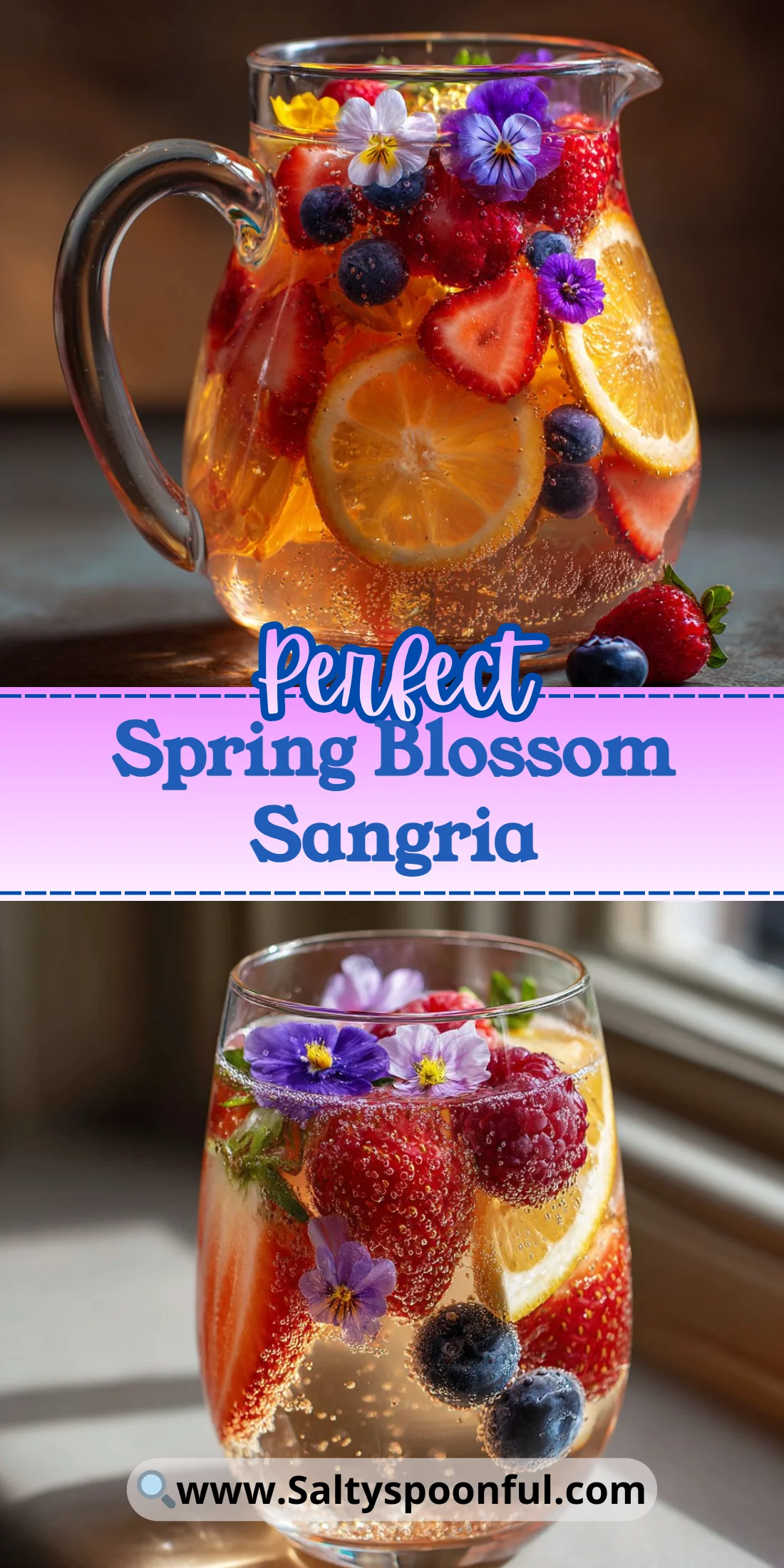
Leave a star rating in the recipe card below and pin this recipe to Pinterest to save it for your next gathering.
Conclusion on Spring Blossom Sangria
For a citrus-driven twist and inspiration from another floral riff, try this Citrus Blossom Sangria recipe to compare techniques.
If you love cherry or orchard notes, check out the flavor ideas in Cherry Blossom Sangria! for creative garnish and fruit swaps.
For a rosé-focused pink sangria variant that emphasizes wine selection, see this take on Pink Sangria with Rosé Wine for pairings and presentation tips.