
Bright, fast, and wildly satisfying — this Sautéed Bok Choy & Ginger Lo Mein is the kind of weeknight dinner that looks and tastes like you spent hours in the kitchen.
It comes together in under 20 minutes and uses pantry-friendly ingredients you probably already have.
Pair it with a light side for a complete meal like the cottage cheese blueberry cloud bread recipe I love for contrast: cottage cheese blueberry cloud bread recipe.
The dish is flexible, Asian-inspired, and perfect for anyone short on time but craving big flavor.
Keep reading for ingredient science, troubleshooting cues, and pro tips to nail it every time.
Why You’ll Love This Sautéed Bok Choy & Ginger Lo Mein
– Ready in about 20 minutes for fast weeknight dinners.
– Loads of bright, crunchy vegetables for great mouthfeel.
– Balanced savory-sesame-ginger flavor that’s kid-friendly.
– Uses simple pantry staples with no special sauces needed.
– Easily vegan, vegetarian, or protein-boosted with shrimp or tofu.
– Great for meal prep and reheats well.
This Sautéed Bok Choy & Ginger Lo Mein balances silky noodles with crisp-tender bok choy and sweet bell pepper. The ginger and garlic add warmth and aroma while soy and sesame oil create a glossy, savory coating. Texturally it hits slippery, crunchy, and slightly chewy notes that make each bite interesting and satisfying.
“Quick, flavorful, and my new go-to for weeknights — the ginger really lifts the whole dish. Five stars!” — Hannah R.
Key Ingredients for Sautéed Bok Choy & Ginger Lo Mein
Lo mein noodles
Lo mein noodles act as the canvas for this dish; they soak up sauce and stay tender without becoming mushy. Buy fresh or dried lo mein where possible for the best chew; if using dried, cook slightly under package time to avoid soggy results. Substituting with rice noodles will change texture and absorbency, and spaghetti will work in a pinch but lacks the same springy bite.
Bok choy
Bok choy gives the dish its vegetal crunch and bright color. Choose firm, vibrant stalks with crisp leaves; baby bok choy is milder and cooks faster. If you swap in napa cabbage or spinach, expect a softer, less crunchy texture and a different leaf-to-stalk ratio that changes mouthfeel.
Fresh ginger
Fresh grated ginger provides sharp, zesty heat and aromatic lift that dried powders cannot replicate. Look for firm, knobbly roots with unwrinkled skin; peel and grate just before cooking for maximum fragrance. If you use ground ginger, add far less and understand it will be less bright and a touch one-dimensional.
Soy sauce
Soy sauce is the primary salty umami that seasons the whole plate and helps color the noodles. Use regular or low-sodium depending on your salt preference; dark soy will deepen color but can be saltier and sweeter. Tamari is an easy gluten-free swap and will keep similar flavor balance.
Full Ingredient List for Sautéed Bok Choy & Ginger Lo Mein
– 8 oz lo mein noodles
– 2 tbsp vegetable oil
– 2 cups bok choy, chopped
– 1 cup bell pepper, sliced
– 1 cup carrot, julienned
– 2 cloves garlic, minced
– 1 inch ginger, grated
– 3 tbsp soy sauce
– 1 tbsp sesame oil
– 2 tsp rice vinegar
– Salt and pepper to taste
Step-by-Step Instructions for Sautéed Bok Choy & Ginger Lo Mein
This narrative will walk you through each action so timing and texture are clear. For recipe variations and side ideas, try pairing with a light bread alternative like cottage cheese blueberry cloud bread on the side.
Step 1: Cook the lo mein noodles according to package instructions. Drain and set aside.
Cook noodles until just al dente so they finish cooking in the wok without getting mushy. Drain well and toss lightly with a drizzle of sesame oil to prevent sticking.
Pro Tip: The noodles should look glossy and separate, not clumped together.
Step 2: In a large pan or wok, heat the vegetable oil over medium-high heat until shimmering.
A hot pan ensures quick searing without stewing the vegetables. Swirl the oil; it should be thinly rippling and almost smoking.
Pro Tip: The oil will shimmer and spread thinly across the pan surface.
Step 3: Add the bok choy, bell pepper, and carrot, and sauté for about 3-4 minutes until they begin to soften.
Keep the vegetables moving so they cook evenly and maintain crunch. You’re aiming for bright color and tender-crisp texture.
Pro Tip: Vegetables should look vibrant with slightly softened edges.
Step 4: Add the minced garlic and grated ginger, and stir-fry for another minute until fragrant.
Garlic and ginger cook quickly; add them after the firmer veggies to prevent burning. Once they hit the pan, the aroma should open up immediately.
Pro Tip: You should smell a sharp, peppery ginger-garlic perfume — not a burnt or acrid scent.
Step 5: Add the cooked noodles, soy sauce, sesame oil, rice vinegar, salt, and pepper, and toss everything together.
Toss vigorously to coat noodles and vegetables evenly so each strand picks up sauce. Taste and adjust seasoning, adding more soy or a dash of vinegar as needed.
Pro Tip: The sauce should cling to the noodles in a thin, glossy layer — not puddle in the pan.
Step 6: Heat through and combine well.
Stir for a minute or two until everything is uniformly hot and aromatic. Finish with a quick toss to aerate and keep noodles from compacting.
Pro Tip: Steam should rise and the dish will look slightly glossy and steaming hot.
Step 7: Serve hot and enjoy, garnishing with scallions, sesame seeds, or extra sesame oil if desired.
Serve immediately for best texture; toppings add crunch and nuttiness. A drizzle of toasted sesame oil at the end brightens the aroma.
Pro Tip: Garnishes will still look vibrant; sesame seeds should stay perky, not soggy.
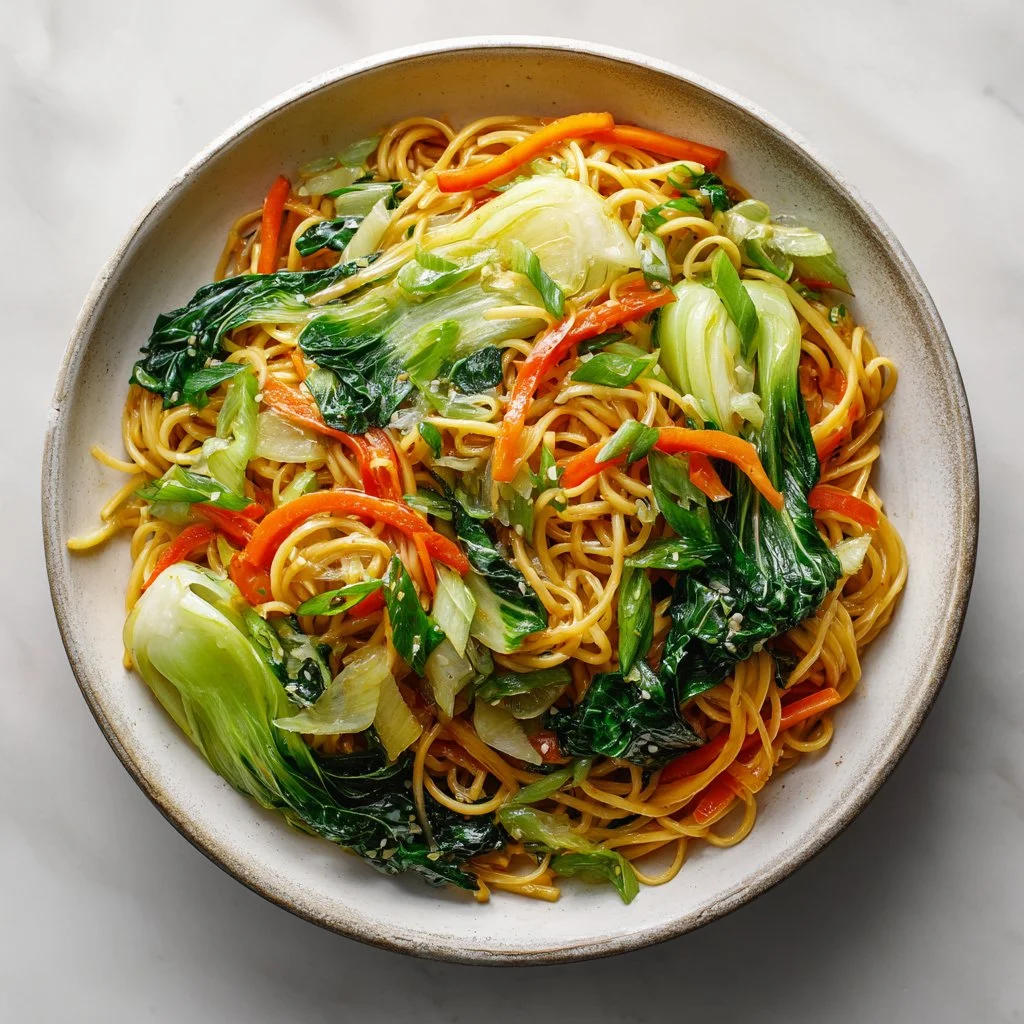
Expert Tips for Sautéed Bok Choy & Ginger Lo Mein
– Heat control: Keep the wok or pan at medium-high to high heat for quick stir-frying; reduce only if ingredients threaten to burn.
– Noodle texture troubleshooting: If noodles clump after cooking, rinse under warm water and toss with a splash of oil to separate them.
– Vegetable doneness: Cut vegetables uniformly so peppers, carrots, and bok choy cook at the same rate for consistent bite.
– Equipment tip: A seasoned wok or a large heavy-bottomed skillet gives the best sear and easy tossing.
– Sauce balance: Taste before serving; a squeeze of rice vinegar or extra soy can rescue a flat batch.
– Common mistake: Overcooking the greens turns them limp and dull; remove immediately once tender-crisp.
– Protein add-ins: If adding shrimp or tofu, cook them first and set aside to avoid overcooking while the veggies finish.
– Make-ahead advice: Par-cook the noodles and store separately to save time; toss and heat in the wok just before serving.
Storage & Freezing for Sautéed Bok Choy & Ginger Lo Mein
Fridge storage: Cool to room temperature and store in an airtight container for up to 3 days. Use shallow containers to help it cool quickly and stay safe.
Freezer storage: I do not recommend freezing this exact dish; the bok choy and bell peppers lose crispness and become watery on thawing. If you must freeze, freeze plain cooked noodles and sauce separately for up to 1 month.
Thawing: Thaw frozen noodles in the fridge overnight before reheating. Avoid thawing the full assembled dish to preserve texture.
Reheating: Reheat in a hot skillet with a splash of oil for 2–3 minutes to revive texture and separate noodles. Microwaving will work but may leave vegetables softer; add a few drops of water to restore steam.
For meal prep: Store vegetables and noodles separately when possible to maintain crunch and avoid soggy leftovers. Also consider a side like cottage cheese blueberry cloud bread to round out make-ahead meals.
Variations & Substitutions for Sautéed Bok Choy & Ginger Lo Mein
1) Shrimp & Bok Choy Lo Mein — Cook 8–10 medium shrimp first in the hot oil until pink, remove, then proceed with the recipe and return shrimp at the end. The shrimp adds sweet briny notes and protein without altering the base technique.
2) Tofu & Mushroom Lo Mein — Pan-fry pressed tofu cubes until golden and toss with sliced cremini mushrooms for an earthy, satisfying vegetarian version that adds umami and chew.
3) Peanut-Sesame Twist — Stir in 1–2 tablespoons of smooth peanut butter with the soy and rice vinegar for a creamy, nutty sauce; finish with crushed peanuts for texture. This yields a richer, more indulgent flavor profile.
4) Spicy Chili-Garlic Lo Mein — Add 1 tablespoon chili-garlic sauce or a pinch of red pepper flakes when adding soy sauce to create a spicy kick that complements the ginger’s warmth.
Frequently Asked Questions About Sautéed Bok Choy & Ginger Lo Mein
Q: Can I make this gluten-free?
A: Yes. Swap regular lo mein for a gluten-free noodle like rice noodles or gluten-free wheat lo mein, and use tamari instead of soy sauce. Expect a slight change in bite; rice noodles are more delicate and absorb sauce differently, so cook them a touch less and toss quickly.
Q: How can I prevent soggy vegetables?
A: Cut vegetables uniformly and use high heat to sear them quickly, keeping them crisp-tender. Avoid overcrowding the pan; if the wok cools too much, vegetables will steam instead of sauté and become limp.
Q: Can I prepare elements in advance?
A: Absolutely. Cook noodles and cool them tossed with a touch of sesame oil to prevent sticking. Chop vegetables and store separately in airtight containers for up to 24 hours. Combine and finish in the pan when ready to eat for best texture.
Q: What proteins pair best with this lo mein?
A: Shrimp, thinly sliced beef, chicken strips, or firm tofu all work well. Cook proteins first in the pan and set aside, then add them back in with the noodles for even heating without overcooking the vegetables.
Q: How do I make the sauce more substantial?
A: Increase the soy sauce by 1 tablespoon and add 1 tablespoon of hoisin or oyster sauce for depth and a slightly sweeter finish. You can also whisk a teaspoon of cornstarch with 2 tablespoons of water and add it to the pan to slightly thicken the sauce so it clings to the noodles.
Final Thoughts on Sautéed Bok Choy & Ginger Lo Mein
If you tried this Sautéed Bok Choy & Ginger Lo Mein, please leave a star rating in the recipe card below and pin it to Pinterest so others can find it. For more bok choy inspiration and related recipes, check these resources: Garlic Ginger Bok Choy – The Stingy Vegan, Easy Shrimp Lo Mein with Bok Choy – Zestful Kitchen, Udon Noodles with Stir-Fried Baby Bok Choy and Pork in Garlic …, Lo Mein Noodles with Chinese Sausage and Gai Lan – Yay! For Food, and Dad’s Authentic Stir-Fried Bok Choy with Beef: A Chinese Chef’s ….
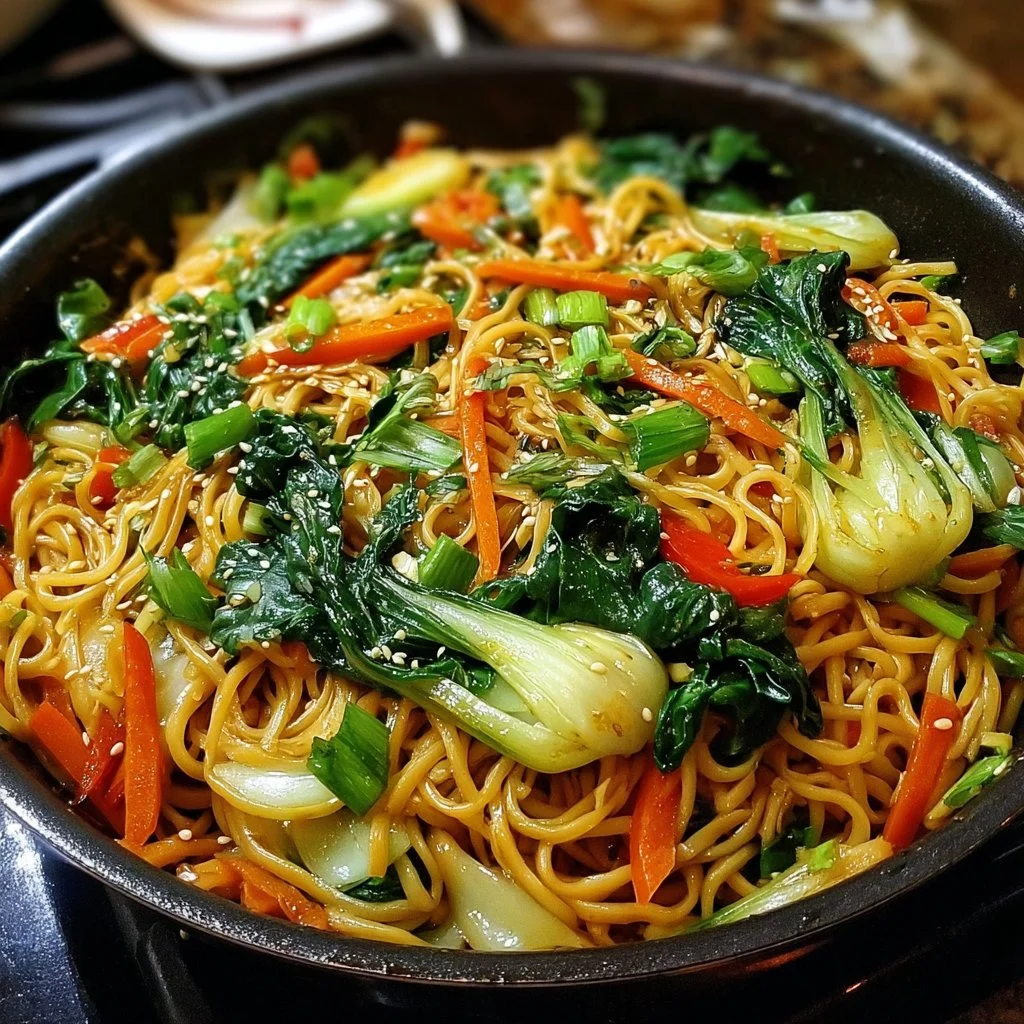
Sautéed Bok Choy & Ginger Lo Mein
Ingredients
Method
- Cook the lo mein noodles according to package instructions. Drain and set aside.
- Heat vegetable oil in a large pan or wok over medium-high heat until shimmering.
- Add bok choy, bell pepper, and carrot; sauté for 3-4 minutes until vegetables soften.
- Add minced garlic and grated ginger; stir-fry for 1 minute until fragrant.
- Add the cooked noodles, soy sauce, sesame oil, rice vinegar, salt, and pepper; toss to combine.
- Heat through for 1-2 minutes until everything is hot and evenly coated.
- Serve hot and enjoy, garnishing with scallions, sesame seeds, or extra sesame oil if desired.