
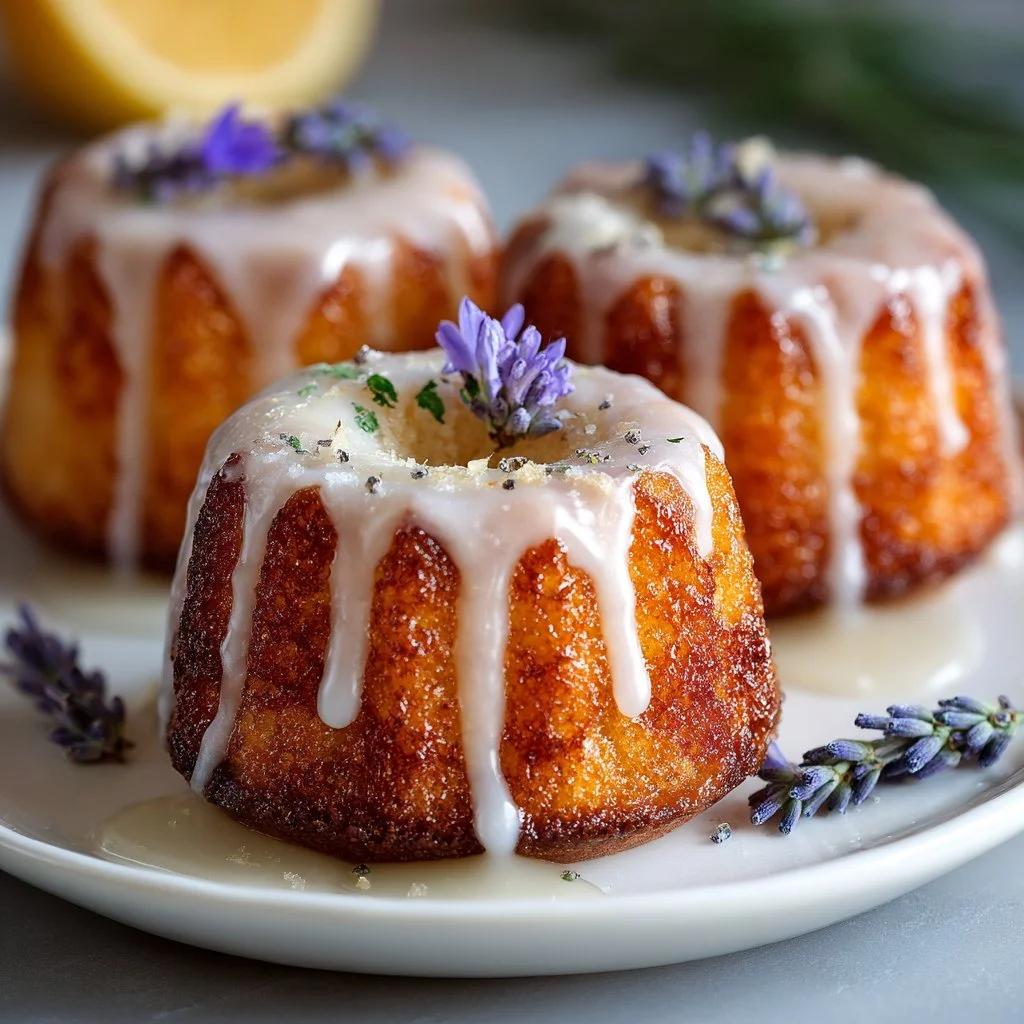
Bright, floral, and impossibly tender, these mini lemon cakes with a lavender-scented glaze feel like spring in every bite.
They bake fast, plate beautifully, and are perfect for showers, tea, or an elegant weeknight dessert.
You’ll notice a delicate crumb, bright lemon notes, and a soft perfumed finish from the lavender glaze.
These little cakes are approachable for home bakers but layered with technique that makes them taste professional.
If you love citrus desserts, you’ll want to try them soon.
Why You’ll Love This Mini Lemon Cakes With Lavender Glaze
- Bite-sized elegance perfect for parties or gifting.
- Bright lemon flavor balanced by subtle floral lavender.
- Quick bake time — about 12–16 minutes per batch.
- Tender crumb from sour cream and room-temp eggs.
- Simple glaze that elevates the whole cake effortlessly.
- Easy to decorate with edible flowers or extra lemon zest.
The flavor is bright and clean; lemon zest gives a fresh citrus pop while the lavender glaze adds a soft, aromatic note that’s never overpowering. Texture-wise these mini cakes are moist and tender thanks to the sour cream and properly creamed butter, with a fine crumb that soaks up the glaze just enough to stay soft rather than soggy.
“5 stars! These mini lemon cakes were both gorgeous and unbelievably moist. The lavender glaze is subtle and elegant — the perfect spring treat.” — Jamie R.
Pairing idea: serve with a bright drink to echo the lemon notes.
Key Ingredients for Mini Lemon Cakes With Lavender Glaze
Unsalted butter — Butter provides richness and structure and helps create a tender, flaky crumb when creamed with sugar. Buy European-style butter if you want a slightly higher butterfat content and more flavor; salted butter changes salt balance, so if you substitute it, reduce added salt by about 1/4 teaspoon.
Grated lemon zest — The zest delivers concentrated citrus oils that make the cake taste vibrant and fresh. Use unwaxed, well-rinsed lemons and zest finely; if you substitute lemon extract, the flavor will be less bright and somewhat artificial.
Sour cream — Sour cream adds moisture, keeps the crumb tender, and contributes a subtle tang that balances the sweetness. Full-fat sour cream works best; low-fat versions can make the cake drier and denser, so compensate with slightly more milk if needed.
Culinary lavender (for glaze) — Lavender blossoms steeped in warm milk give a fragrant, floral finish without bitterness when properly strained. Use culinary-grade lavender only; ornamental varieties may be treated with chemicals or have a harsher flavor. If you skip lavender, the glaze will be a straight lemon glaze and less floral.
Full Ingredient List for Mini Lemon Cakes With Lavender Glaze
- 1 1/3 cups all-purpose flour
- 1/2 tsp. kosher salt
- 1/8 tsp. baking soda
- 1/2 cup unsalted butter, softened
- 2/3 cup granulated sugar
- 1/3 cup packed light brown sugar
- 1 Tbsp. grated lemon zest (from 2 lemons)
- 2 large eggs, at room temperature
- 1/4 cup sour cream, at room temperature
- 1/4 cup whole milk, at room temperature
- 1 tsp. vanilla extract
- 1/4 cup whole milk (for glaze)
- 1/2 tsp. culinary lavender
- 1 1/2 cups powdered sugar
- 1/4 tsp. kosher salt (for glaze)
- 1/8 tsp. vanilla extract (for glaze)
- Edible flowers and lemon zest (for garnish, as needed)
Step-by-Step Instructions for Mini Lemon Cakes With Lavender Glaze
Step 1: Preheat the oven and prepare the pan
Preheat the oven to 350°F (177°C). Grease a mini muffin or cupcake tin, or line it with paper cups to ensure easy release and clean edges.
Pro Tip: The oven should feel uniformly warm when you open it; the pans should be ready and lightly greased so batter slides into cups easily.
Step 2: Combine the dry ingredients
Whisk together the all-purpose flour, kosher salt, and baking soda in a medium bowl until evenly distributed. This step prevents clumps of leavening and ensures even rise.
Pro Tip: The dry mix should look even in color with no streaks of salt or clumps of baking soda.
Step 3: Cream the butter and sugars
In a separate bowl, cream the softened unsalted butter with the granulated and light brown sugars until the mixture is pale and fluffy, about 2–4 minutes with an electric mixer. This aeration creates lift and a finer crumb in the final cakes.
Pro Tip: The creamed mixture should look lighter in color and feel airy when you stop the mixer; if it’s glossy and dense, you may have overworked it.
Step 4: Add lemon zest and eggs
Mix in the grated lemon zest so the citrus oils disperse through the butter-sugar base. Add the eggs one at a time, beating well after each addition until fully incorporated and smooth.
Pro Tip: After adding eggs, the batter should smell bright with lemon and feel slightly loose but not watery.
Step 5: Fold in sour cream, milk, and vanilla
Stir in the room-temperature sour cream, whole milk, and vanilla extract until the batter is smooth and homogenous. These ingredients add fat and moisture for a tender crumb.
Pro Tip: The batter will look glossy and should fall slowly from a spoon; lumps mean heavy ingredients need a short whisk.
Step 6: Combine wet and dry components
Gently fold the dry ingredients into the wet mixture until just combined. Do not overmix, which can develop gluten and make the mini cakes tough.
Pro Tip: The batter should hold together with small air pockets; it should not be stringy or glossy after mixing.
Step 7: Fill the pan and bake
Spoon batter into the prepared mini tins, filling each cavity about two-thirds full for an even rise. Bake for 12–16 minutes, until a toothpick inserted into the center comes out with a few moist crumbs attached.
Pro Tip: Tops should be lightly golden and spring back when gently pressed; the toothpick test helps avoid overbaking.
Step 8: Cool and transfer to a rack
Let the mini cakes cool in the tin for 5 minutes, then carefully transfer them to a wire rack to cool completely before glazing. This prevents the glaze from sliding off warm cakes.
Pro Tip: Cakes will feel slightly bouncy when ready to transfer and should not collapse when lifted.
Step 9: Steep lavender in warm milk for the glaze
Warm 1/4 cup whole milk until it’s hot but not boiling, then add 1/2 teaspoon culinary lavender and steep for 5–10 minutes. Strain the milk through a fine mesh sieve to remove blossoms.
Pro Tip: The milk should smell perfumed but not so floral it tastes medicinal; strain well to avoid bits in the glaze.
Step 10: Make the lavender glaze
Stir the strained lavender milk into the powdered sugar with the 1/4 tsp. kosher salt and 1/8 tsp. vanilla extract until smooth. Adjust thickness with tiny drops of milk if needed.
Pro Tip: The glaze should be pourable but not runny — it should coat the back of a spoon.
Step 11: Glaze the cooled mini cakes
Drizzle or dip the cooled mini cakes into the glaze, allowing excess to drip back into the bowl. Place on a rack to let the glaze set for 10–15 minutes.
Pro Tip: The glaze should set to a soft sheen and not pool excessively on the plate.
Step 12: Garnish and serve
Top each glazed mini cake with a sprinkle of fresh lemon zest and an edible flower if desired. Serve at room temperature to showcase the delicate flavors.
Pro Tip: Garnishes should be light and fresh — a tiny zest curl and a small flower create a polished look.
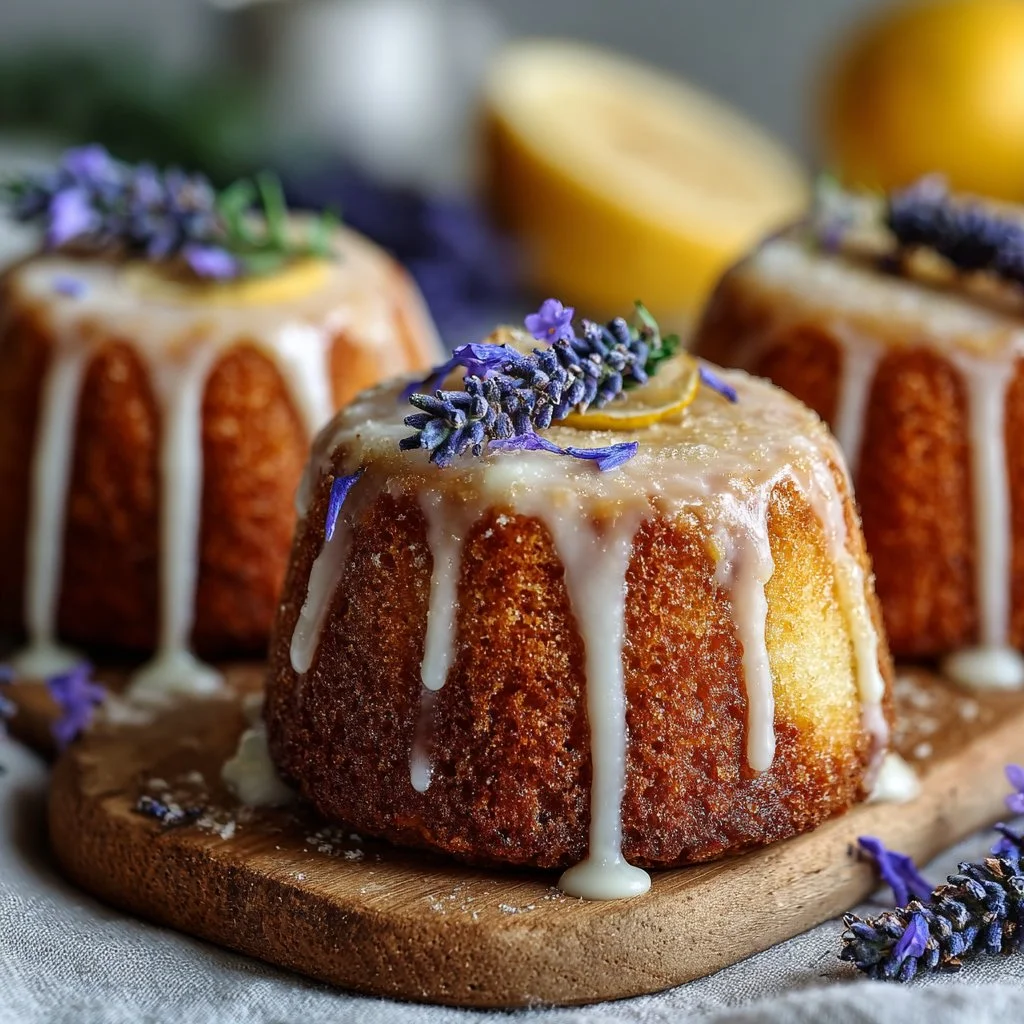
Want a fun twist? Try serving alongside a light cookie or small scoop of sorbet to contrast textures. Also see a light pancake idea for brunch pairing suggestions.
Expert Tips for Mini Lemon Cakes With Lavender Glaze
- Use room-temperature eggs and dairy for a smooth emulsion and even rise; cold ingredients cause batter to curdle.
- Measure flour by spooning into the cup and leveling for accuracy to prevent dense cakes.
- Don’t overmix after adding flour — stop when streaks disappear to keep cakes tender.
- If tops brown too fast, lower oven temperature by 25°F and extend bake time slightly.
- Use a small cookie scoop for uniform batter distribution and even bake times.
- If glaze is too thick, add milk 1/4 teaspoon at a time; too thin, add powdered sugar in small amounts.
- For stronger lemon flavor, fold a teaspoon of lemon oil into the batter but omit if using zest-heavy recipes.
- Common mistake: glazing warm cakes. Always cool fully to avoid melting the glaze and soggy tops.
For more playful breakfast and dessert ideas, also check this cottage cheese pancake recipe and experiment with flavors.
Storage & Freezing for Mini Lemon Cakes With Lavender Glaze
Store glazed mini lemon cakes in an airtight container at room temperature for up to 2 days. If your kitchen is warm, refrigerate them in a single layer for up to 4 days to preserve the glaze appearance.
To freeze: place cooled, unglazed or lightly glazed minis on a baking sheet in a single layer and freeze until firm, about 1–2 hours. Transfer to a freezer-safe container or zip-top bag with parchment layers; freeze for up to 2 months.
Thawing: Move frozen cakes to the fridge overnight, then bring to room temperature before serving for best texture. For a quick thaw, let them sit at room temperature for 1–2 hours.
Reheating: Warm for 5–10 seconds in a microwave if desired, but avoid melting the glaze; a brief 5-second zap refreshes softness without altering structure. Use airtight containers or rigid plastic containers for transport and to avoid crushed garnishes.
Need a colorful brunch idea? Try a stack of small treats with easy rainbow pancakes for a festive spread.
Variations & Substitutions for Mini Lemon Cakes With Lavender Glaze
Lemon poppy seed variation — Add 1–2 tablespoons of poppy seeds to the batter and fold in for texture and a visual speckle. The seeds add a pleasant crunch and nutty note that complements lemon.
Blueberry-lavender mini cakes — Fold 1/2 cup fresh or thawed frozen blueberries into the batter before scooping. The berries add juiciness and a sweet contrast to the floral glaze.
Honey-lavender glaze substitution — Replace powdered sugar glaze with a thinner mixture of warmed honey and steeped lavender for a more rustic, less sweet finish. Expect a stickier, glossier finish and stronger floral notes.
Almond-lemon twist — Substitute 1/4 cup of the flour with almond flour and add 1/4 tsp almond extract for a nutty, tender crumb. Cakes will be slightly denser and have a delicate almond aroma that pairs well with lemon.
Frequently Asked Questions About Mini Lemon Cakes With Lavender Glaze
Q: Can I make the batter ahead of time?
A: Yes. You can prepare the batter and refrigerate it for up to 24 hours in an airtight container. Bring it back to room temperature and give a gentle stir before scooping to ensure consistent texture and even rise.
Q: How can I prevent a soapy or bitter lavender flavor?
A: Use culinary-grade lavender and don’t over-steep; 5–10 minutes in warm (not boiling) milk is ideal. Strain thoroughly and start with the lower end of the steep time, tasting the milk before making glaze.
Q: Can I scale this recipe to full-size cupcakes or a loaf?
A: Yes. For full-size cupcakes bake at 350°F for about 16–20 minutes depending on size; for a loaf, bake at 350°F for 45–55 minutes. Adjust bake times and test with a toothpick for doneness.
Q: What’s the best way to zest lemons without bitterness?
A: Use a microplane and avoid the white pith; zest only the colored outer skin. Zesting directly over the butter-sugar mixture helps disperse oils and enhances flavor.
Q: Can I replace sour cream with Greek yogurt or buttermilk?
A: Full-fat Greek yogurt is the closest swap and maintains moisture and tang. Buttermilk will thin the batter slightly — reduce the milk proportion if using buttermilk to keep the batter’s consistency.

Final Thoughts on Mini Lemon Cakes With Lavender Glaze
If you love bright citrus desserts with a delicate floral finish, these Mini Lemon Cakes With Lavender Glaze are a fast, elegant option for entertaining or a special weeknight treat. Leave a star rating in the recipe card below and pin this recipe to Pinterest to save it for later.
For more inspiration and related recipes, see Southern Living’s Mini Lemon Cakes With Lavender Glaze recipe, explore a similar Citrus Cake with a Lemon-Lavender Glaze for larger cakes, or compare techniques with this Lemon Pound Cake with Lavender Glaze.