
Bright, green, and impossibly fresh—the first forkful of this pesto tastes like spring in a bowl.
It’s fast, bright, and perfect for weeknights or a simple dinner party.
This recipe turns humble asparagus and peas into a silky sauce that clings to pasta.
You’ll love how lemon lifts the vegetal flavors without overpowering them.
Simple technique, big payoff.
No fuss, just vibrant flavor.
Why You’ll Love This Lemony Asparagus & Pea Pesto
- Bright, lemony freshness wakes up pasta and vegetables.
- Uses seasonal or frozen produce for year-round convenience.
- Fast to make—about 15–20 minutes from start to finish.
- Versatile: toss with pasta, spread on crostini, or use as a dip.
- Lighter than nut-based pesto but still satisfying and silky.
- Kid-friendly texture when blended smooth.
The texture is creamy yet airy, with tiny flecks of asparagus and pea for interest.
The lemon juice adds a clean acidity that balances the olive oil’s roundness.
Overall the taste is green, zesty, and slightly sweet from peas.
“I made this on a whim and it was a revelation—so bright and perfect on spaghetti. My kids even asked for seconds. Five stars!” — Casey R.
Key Ingredients for Lemony Asparagus & Pea Pesto
Asparagus (1 cup, chopped)
Asparagus provides a light, grassy backbone. Choose firm, bright-green spears with closed tips and no limp or woody ends. If you substitute with broccoli or spinach, expect a denser green flavor and slightly different mouthfeel; blanching time will change too.
Peas (1 cup, fresh or frozen)
Peas add natural sweetness and help create a silky texture when pureed. Fresh peas are the sweetest in season, but frozen worked flash-frozen at peak ripeness are an excellent, convenient choice. Swapping for edamame yields a nuttier, fuller-bodied pesto that pairs well with heartier pastas.
Lemon juice (1/4 cup)
Lemon juice brightens and preserves the vibrant green color by adding acid. Use fresh-squeezed lemon for the cleanest, most aromatic citrus notes. Bottled lemon juice will work but tastes flatter and can mute the delicate vegetable flavors.
Olive oil (1/4 cup)
Olive oil emulsifies the pesto and adds silkiness and richness. Use a good-quality extra-virgin olive oil for fruity, peppery notes that complement lemon. If you substitute a neutral oil, the sauce will be less flavorful and lack that characteristic olive finish.
Full Ingredient List for Lemony Asparagus & Pea Pesto
- 1 cup asparagus, chopped
- 1 cup peas (fresh or frozen)
- 1/4 cup lemon juice
- 2 cloves garlic
- 1/4 cup olive oil
- Salt and pepper to taste
- Pasta of choice
Step-by-Step Instructions for Lemony Asparagus & Pea Pesto
Step 1: Blanch the asparagus and peas
Bring a large pot of water to a vigorous boil and salt it lightly.
Add the chopped asparagus and peas and let them cook for 2–3 minutes until they turn a bright green and feel tender when pierced with a fork.
Remove them quickly with a slotted spoon or pour into a fine-mesh strainer.
Pro Tip: The vegetables should look vibrantly green and be tender but still slightly firm—think al dente.
Step 2: Shock the vegetables
Immediately transfer the blanched asparagus and peas to an ice bath or rinse under very cold running water to halt cooking.
This preserves the color and stops residual heat from turning them mushy.
Pro Tip: The veggies should feel cool to the touch and keep that glossy green; no steam should rise from them.
Step 3: Combine in a food processor
Add the chilled asparagus and peas to a food processor along with the lemon juice and garlic.
Pulse until the mixture is roughly chopped—small, even bits will help the final texture blend smoothly.
Pro Tip: The mixture should look coarsely chopped with no large stalks; you should hear even, steady pulses.
Step 4: Emulsify with olive oil
With the processor running, slowly drizzle in the olive oil until the pesto becomes smooth and cohesive.
Stop and scrape down the sides as needed to ensure even emulsification and a creamy texture.
Pro Tip: The pesto should glisten and form a ribbon when drizzled; it shouldn’t separate into oil and solids.
Step 5: Season to taste
Add salt and pepper in small increments, pulse, and taste.
Adjust acidity with a touch more lemon juice if it needs brightness, or a pinch of sugar if the lemon feels too sharp.
Pro Tip: The aroma should be lemon-forward with a savory, garlicky undertone and no raw garlic bite.
Step 6: Toss with cooked pasta and serve
Cook your pasta according to package directions until al dente, reserving a cup of pasta cooking water.
Toss the hot pasta with the pesto, adding a splash of cooking water to loosen the sauce and help it cling to the noodles. Serve immediately for the most vibrant flavor.
Pro Tip: The final pasta should be glossy, the pesto evenly coating each strand without puddles of oil.
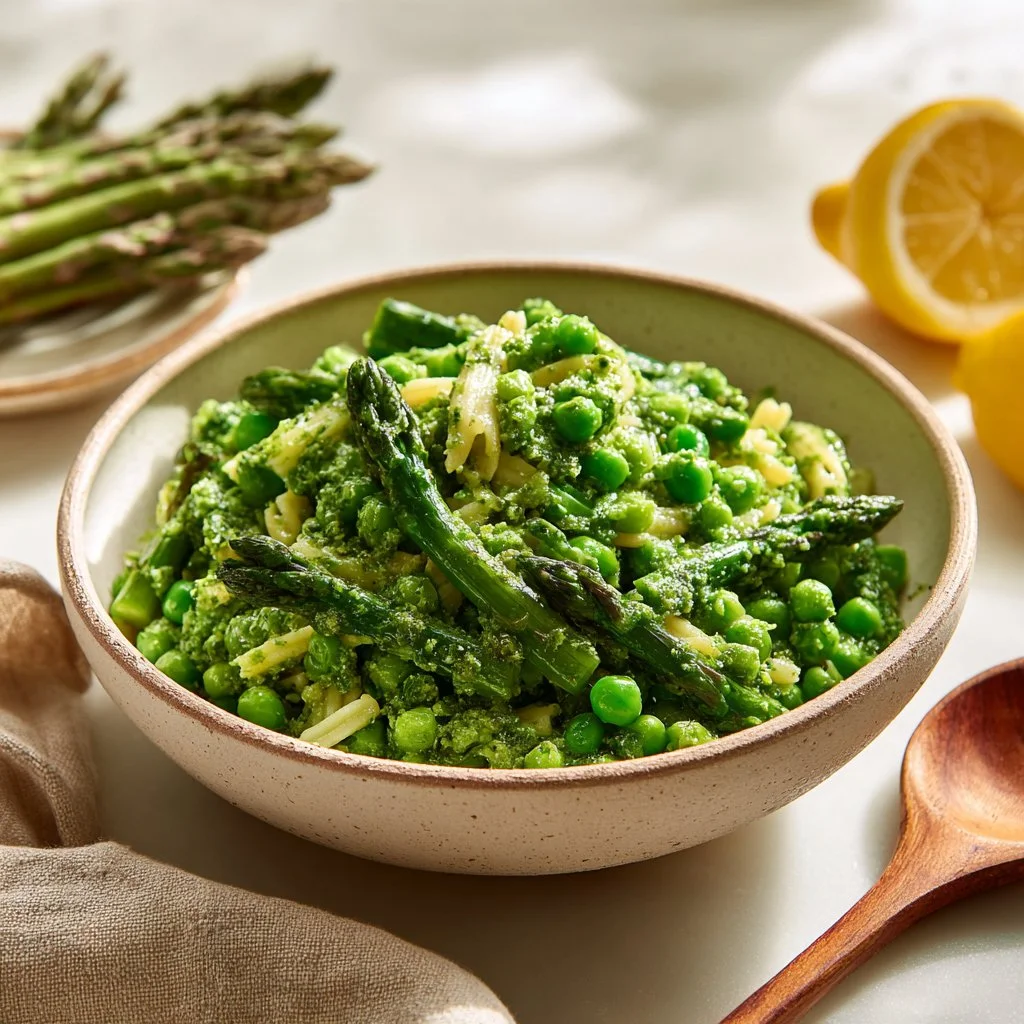
Expert Tips for Lemony Asparagus & Pea Pesto
- Keep the blanching time short to preserve color and a slight bite. Overcooked asparagus becomes dull and mushy.
- Use cold or frozen peas without thawing if you want the sweetest flavor; thawing can make them mealy.
- If the pesto is grainy, drizzle in more olive oil while processing to smooth it out.
- Use a food processor for a chunkier texture; a blender will make a silkier, finer sauce.
- For temperature control, process while the vegetables are cool; warm veggies can make the oil separate.
- If the pesto is too thin, add a few more peas or a tablespoon of grated cheese to thicken.
- Avoid oversized garlic cloves; too much raw garlic will overpower the lemon and peas.
- Common mistake: adding salt only at the end. Season in stages—light when blanching water, adjust after blending.
Storage & Freezing for Lemony Asparagus & Pea Pesto
Refrigerator: Store pesto in an airtight container for up to 4 days. Press a thin layer of olive oil on top to minimize browning. Use a shallow container so you don’t disturb the oil seal when scooping.
Freezer: Freeze in ice cube trays or small airtight containers for up to 3 months. Portioning into tablespoons or 1/3-cup scoops makes thawing simple and reduces waste.
Thawing: Thaw in the fridge overnight or at room temperature for 30–60 minutes before use. If it separates slightly, stir in a teaspoon of warm water or olive oil to re-emulsify.
Reheating: For pasta, reheat gently in a skillet over low heat with a splash of reserved pasta water. Avoid high heat, which can dull the lemon and break the emulsion.
Variations & Substitutions for Lemony Asparagus & Pea Pesto
Spring Herb Twist
Add a handful of fresh basil or mint before processing. This deepens the herbal profile and gives a brighter, more complex aroma. Expect a slightly sweeter, herbed finish.
Nutty Parmesan Pesto
Add 2 tablespoons of grated Parmesan and a tablespoon of toasted pine nuts or almonds. The result is richer and more savory, with a creamier mouthfeel that clings to pasta.
Vegan & Creamy Swap
Stir in 2 tablespoons of nutritional yeast and replace olive oil with a mix of olive oil and water for a lighter finish. The yeast adds umami, and the texture stays creamy without dairy.
Spicy Garlic Kick
Add 1/4 teaspoon red pepper flakes and an extra small clove of garlic for heat. This gives the pesto a lively, peppery edge that pairs well with grilled proteins.
Frequently Asked Questions About Lemony Asparagus & Pea Pesto
Can I use frozen peas and frozen asparagus in this pesto?
Yes, you can use frozen peas and frozen asparagus, but blanch them briefly and allow them to thaw slightly before processing.
Frozen peas are usually flash-frozen at peak ripeness and give excellent flavor.
Avoid overcooking after thaw, as waterlogged vegetables can lead to a watery pesto; drain well.
How do I prevent the pesto from turning brown?
Acid from the lemon juice helps preserve the bright color, so don’t skimp on it.
Shock the vegetables in ice water immediately after blanching to stop enzymatic browning.
Store with a thin layer of oil on top in an airtight container to reduce contact with air.
Can I make this pesto ahead of time for a dinner party?
Yes—make it up to two days ahead and store it refrigerated with a thin oil layer on top.
Bring it to room temperature before tossing with hot pasta; loosen with reserved pasta water if it’s become thick.
If frozen in portions, thaw overnight in the fridge before use.
What pasta shapes work best with this pesto?
Ribbon pastas like linguine or fettuccine are classic choices because the sauce coats the strands evenly.
Short shapes with nooks—orecchiette, fusilli, or farfalle—trap bits of asparagus and pea for bursts of flavor.
For a lighter meal, use whole-grain or legume-based pasta to add body and nutrition.
How can I adjust the texture if my pesto is too thin or too thick?
If too thin: add more peas or a tablespoon of grated Parmesan to thicken, or pulse a few extra seconds to incorporate solids.
If too thick: add reserved pasta water, a splash of olive oil, or a teaspoon of warm water while processing until you reach the desired consistency.
Taste after each adjustment to keep the balance of lemon, salt, and olive oil.
Final Thoughts on Lemony Asparagus & Pea Pesto
This Lemony Asparagus & Pea Pesto is an easy, bright sauce that makes pasta feel like a spring celebration.
If you loved the recipe, please leave a star rating in the recipe card below and pin it to Pinterest.
For a similar twist on asparagus and lemon flavors, see Baked Eggs with Asparagus and Lemony Pea Pesto for breakfast inspiration.
If you want a ricotta-forward take, try these Lemony Baked Ricotta Dumplings with Asparagus and Pea Pesto.
For a pasta-focused variation, compare notes with this Lemony Asparagus Pasta recipe.
If you’d like a grain-based option, check the Creamy Farro with Pesto Asparagus and Peas for a hearty side.
For another lemon-ricotta combination using peas and asparagus, see Lemony Ricotta Stuffed Shells with Peas & Asparagus.
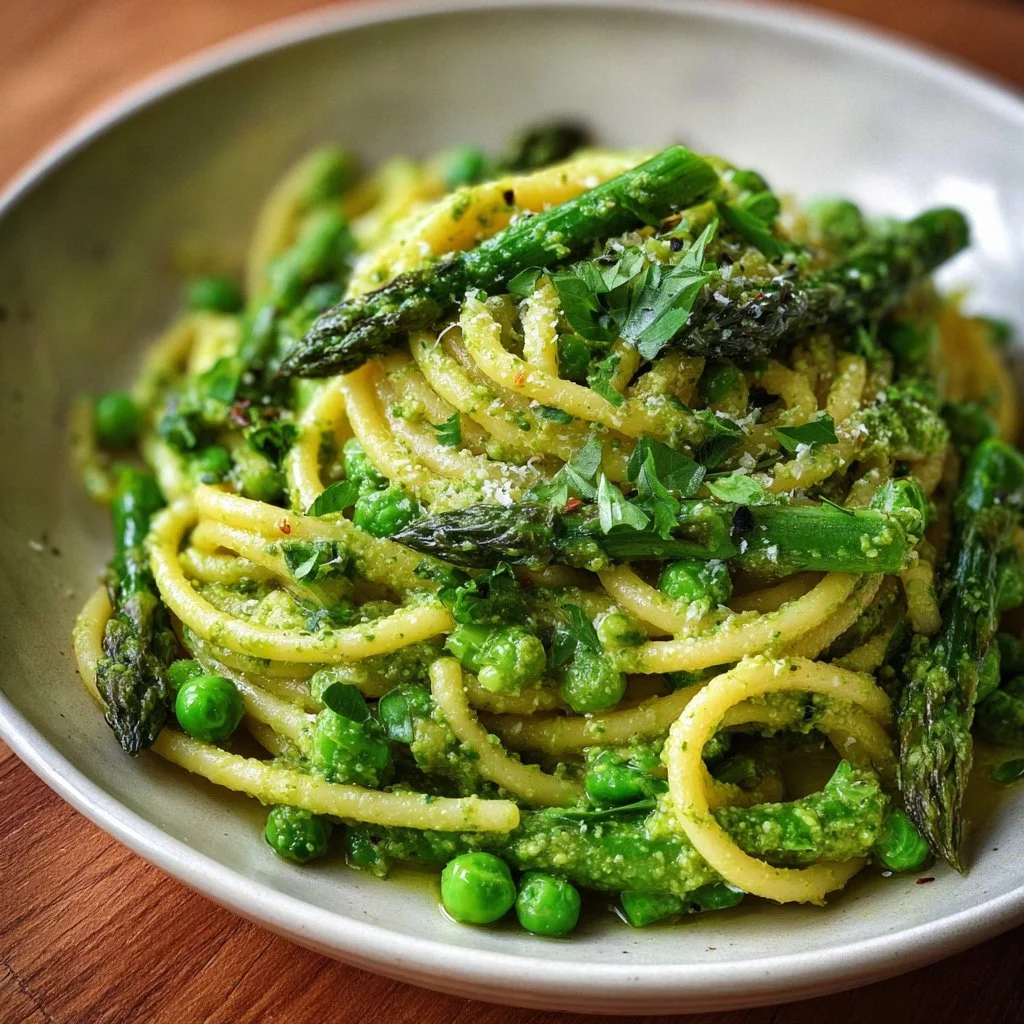
Lemony Asparagus & Pea Pesto
Ingredients
Method
- Bring a large pot of water to a vigorous boil and salt it lightly.
- Add the chopped asparagus and peas and cook for 2-3 minutes until bright green and tender.
- Remove quickly with a slotted spoon or pour into a fine-mesh strainer.
- Immediately transfer the vegetables to an ice bath or rinse under cold running water.
- Add the chilled asparagus, peas, lemon juice, and garlic to a food processor.
- Pulse until roughly chopped.
- With the processor running, slowly drizzle in the olive oil until smooth.
- Season with salt, pepper, and more lemon juice to taste.
- Toss the pesto with cooked pasta, adding reserved pasta water if needed for consistency.
- Serve immediately.