
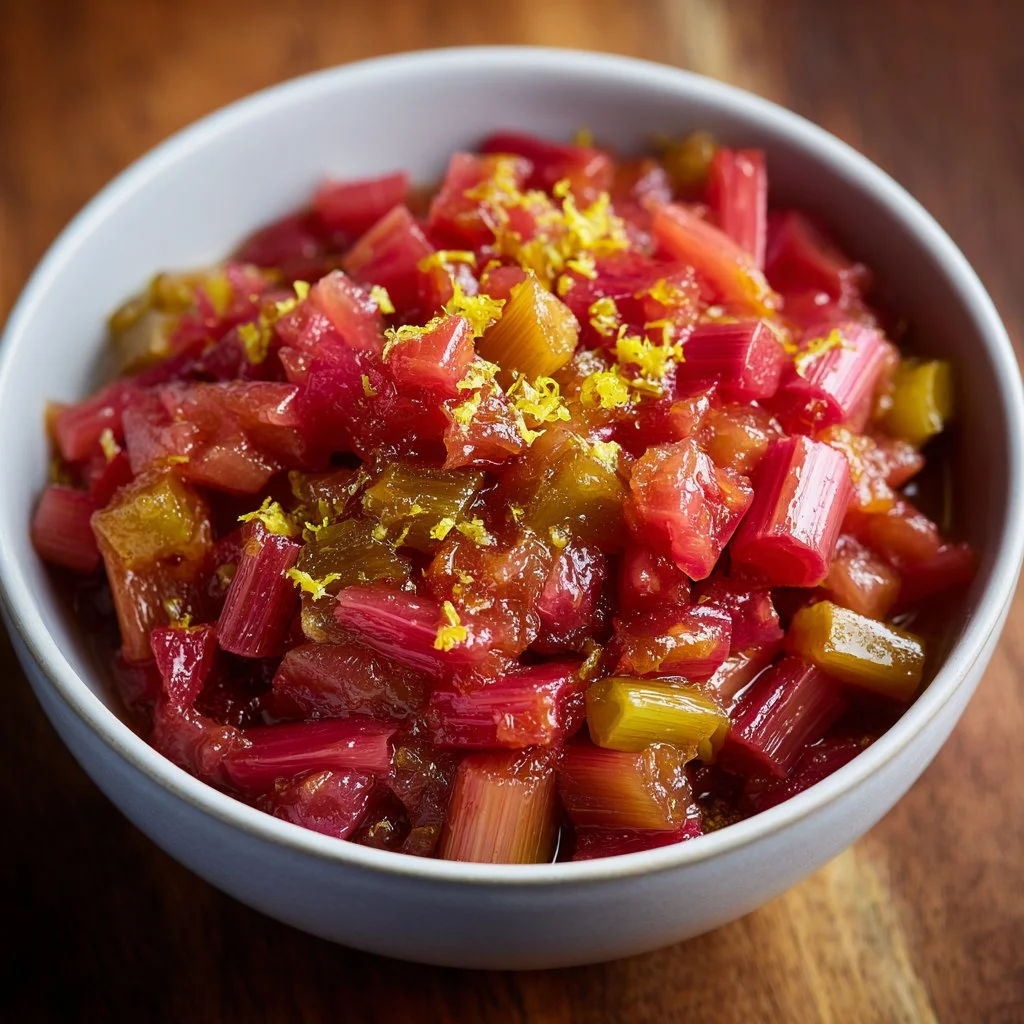
I first made this Lemon Honey Rhubarb Compote on a rainy spring morning when the farmer’s market bins were piled high with ruby-red stalks. The bright lemon and sticky honey soften rhubarb’s natural tartness into a glossy, saucy compote that’s endlessly useful — think dolloped on yogurt, spooned over pancakes, or stirred into a tart cheese plate. If you like quick preserves that sing of spring, this is one to keep in the fridge. For a brunch-ready partner, try it alongside a lemon-blueberry breakfast bake I love making.
What makes this recipe special
Rhubarb has a short season and a fierce tartness; slow cooking with honey and a squeeze of lemon turns it into something versatile and elegant. This compote is:
- Fast: about 10–15 minutes active simmering.
- Simple: five ingredients, no pectin or sugar required.
- Natural: honey both sweetens and adds depth, while lemon brightens.
- Multiuse: great warm on oatmeal or cold as a condiment.
“A perfect balance of tart and sweet — bright enough for breakfast, rich enough to spoon over ice cream.” — a friend after trying it with Greek yogurt
If you’re planning a small spring spread, this compote pairs wonderfully with chilled beverages like a fresh blue raspberry lemonade I often serve.
Step-by-step overview
Before you dive in, here’s what happens: you chop rhubarb, combine it with honey, water, and lemon, then simmer until the stalks break down and the liquid reduces into a syrupy compote. Finish with lemon zest to lift the flavors. The whole process is forgiving: low heat prevents sticking and you can control texture (chunky vs. saucy) by simmer time.
For a quick weeknight dinner that benefits from a bright condiment like this compote, consider a one-pan honey-garlic kielbasa and veggies recipe I use — the compote makes an unexpected, fresh counterpoint.
What you’ll need
- 2 cups rhubarb, chopped (about 3–4 stalks depending on size)
- 1/2 cup honey (use mild-flavored honey for a cleaner taste; buckwheat will be stronger)
- 1/4 cup water
- 1 tablespoon lemon juice (fresh is best)
- Zest of 1 lemon
Notes and substitutions:
- Frozen rhubarb works fine — no need to thaw if you don’t mind a slightly looser texture.
- To make vegan: swap honey for pure maple syrup (the flavor will be a touch different but still excellent).
- If you prefer less sweetness, start with 1/3 cup honey and taste before adding more.
Step-by-step instructions
- Trim and wash the rhubarb. Cut into roughly 1/2-inch pieces.
- In a medium saucepan, combine the chopped rhubarb, honey, water, and lemon juice. Stir to mix.
- Place the pan over medium heat and bring to a gentle simmer. Reduce heat if it bubbles too vigorously.
- Stir occasionally so the honey dissolves and the rhubarb cooks evenly.
- Simmer 10–15 minutes, until the rhubarb breaks down and the liquid becomes saucy. For chunkier compote, stop earlier; for a smoother jammy texture, cook a bit longer.
- If the mixture starts to stick to the pan, lower the heat and stir more frequently.
- Remove from heat and stir in the lemon zest. Taste and adjust with more honey or lemon juice if needed.
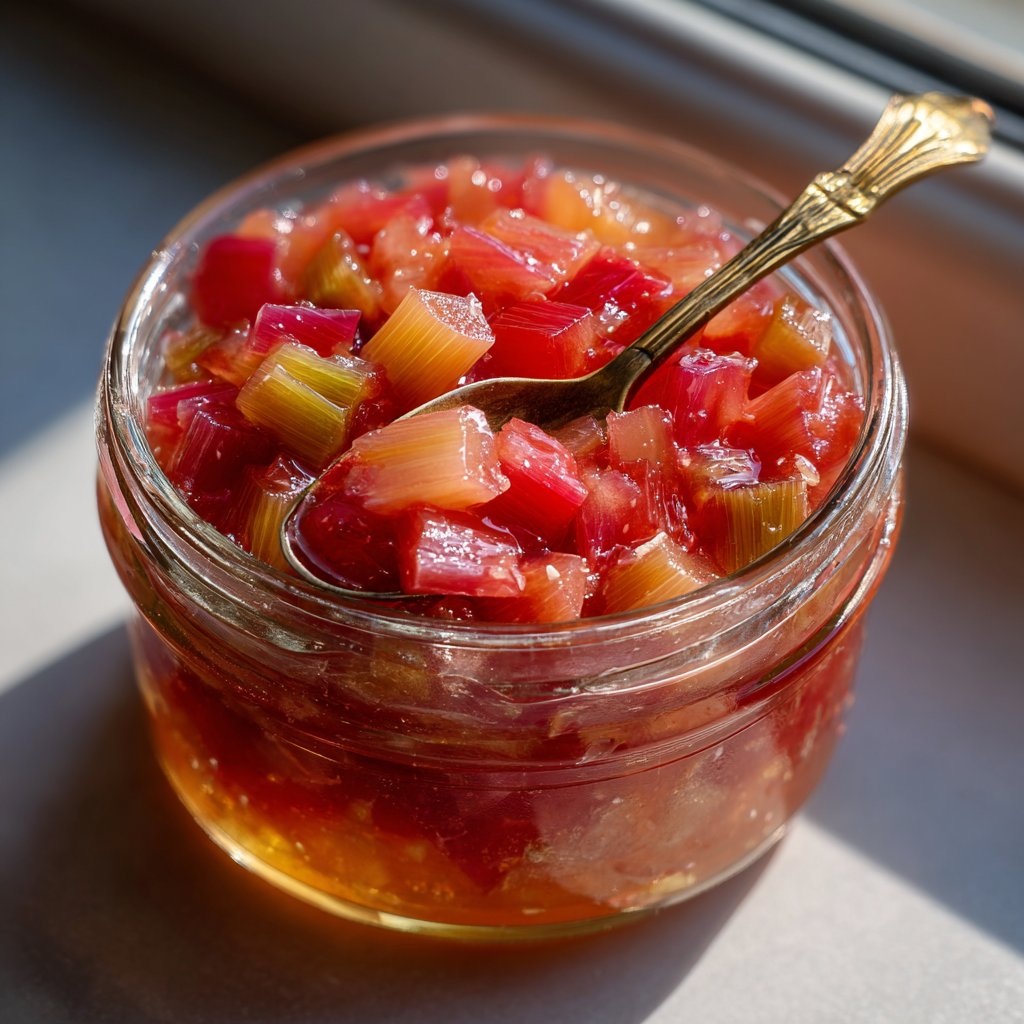
- Let cool to room temperature; the compote will thicken further as it cools. Serve warm or chilled.
Best ways to enjoy it
- Spoon over plain or vanilla yogurt for breakfast or a snack.
- Spread on toast or a warm biscuit with ricotta or cream cheese.
- Use as an ice cream topping or swirl into panna cotta for dessert.
- Pair with roasted pork or chicken as a fruity condiment; it’s especially nice with tangy sandwich builds like honey-mustard chicken sliders I sometimes serve.
- Fold into oatmeal or spoon over pancakes for a spring twist.
Storage and reheating tips
- Refrigerate: Transfer cooled compote to an airtight container. It keeps well in the fridge for up to 10 days.
- Freeze: For longer storage, spoon into a freezer-safe container or bag and freeze up to 3 months. Thaw overnight in the fridge.
- Reheat: Gently warm portions in a small saucepan over low heat or microwave in short bursts, stirring in between. Add a teaspoon of water if it’s too thick.
- Safety: Always cool to room temperature before sealing containers to avoid condensation. Reheat leftovers only once.
Pro chef tips
- Balance the acidity: Lemon juice brightens but can overtake if you use bottled juice. Taste and add gradually.
- Honey dissolves easier in warm liquid; if your honey is very thick, warm it briefly before measuring.
- Prevent sticking: Use a heavy-bottomed pan and stir occasionally. If it starts to cling, add a splash more water and lower heat.
- Texture control: Pulse with an immersion blender for a smoother spread, or leave as-is for rustic chunks.
- Want a deeper honey flavor? Try a darker honey and reduce simmer time slightly to keep floral notes intact. For more honey-based inspiration, see how sticky honey glazes play out in a crispy honey garlic chicken recipe I also use.
Creative twists
- Ginger-honey rhubarb: Add 1 teaspoon grated fresh ginger in step 2 for a warming bite.
- Citrus swap: Replace lemon zest with orange zest for a sweeter, rounder profile.
- Berry blend: Stir in 1/2 cup berries (fresh or frozen) during simmering for a mixed-fruit compote.
- Boozy finish: Stir in 1–2 tablespoons of Grand Marnier or bourbon off the heat for an adult dessert topping.
- Less sweet / paleo: Use maple syrup in place of honey and reduce to taste; texture and color will change slightly.
Your questions answered
Q: Can I use frozen rhubarb?
A: Yes. Add frozen rhubarb straight to the saucepan; it may take a couple more minutes to break down and will release extra liquid.
Q: How long does this compote last in the refrigerator?
A: Stored in an airtight container, it will stay good for about 7–10 days. Smell and appearance are good guides — any off odors or mold mean toss it.
Q: Can I can this compote for shelf-stable storage?
A: This recipe isn’t formulated for safe water-bath canning as-is because of low acidity and honey’s variable preservation qualities. If you want shelf-stable jars, follow a tested canning recipe and processing times from a reliable source.
Q: Is it possible to make this with less honey?
A: Absolutely. Start with 1/3 cup, simmer, then taste. You can always add more honey, but you can’t take it away.
Q: Can I use this compote in savory dishes?
A: Yes — it pairs well with roasted meats and cheeses. A spoonful can add bright contrast to rich, fatty dishes.
Conclusion
If you want a ginger-spiked variation and a tried method, the recipe on Honey Sweetened Rhubarb Compote With Ginger – Food in Jars offers a lovely approach. For another simple compote method and useful serving ideas, see the Rhubarb Compote – Occasionally Eggs post. And if you’re looking for a straightforward seasonal guide with preserving tips, check Rhubarb Compote – Healthy Seasonal Recipes.