
Soft, pillowy sponge and cloud-like cream meet bright strawberries in this classic Japanese dessert.
It’s deceptively simple but rewards care with melt-in-your-mouth texture and a striking, elegant look.
Read on for ingredient science, step-by-step visuals, and pro troubleshooting to make it reliably perfect every time.
For a different strawberry spin, try this playful strawberry sushi roll for inspiration: strawberry shortcake sushi roll.
Why You’ll Love This Japanese Strawberry Shortcake
– Light, airy sponge that feels like a cloud.
– Silky, stabilized whipped cream that never overwhelms.
– Fresh strawberry brightness balances delicate sweetness.
– Quick assembly for a show-stopping dessert.
– Easy to scale for parties or individual rounds.
– Visually impressive with clean layers and bright color.
The flavor is gently sweet and balanced, letting the strawberries sing.
The texture contrasts—fine, tender crumb against creamy, billowy whipped cream—are what make this cake addictive.
It’s a dessert that looks elaborate but is forgiving when you understand the small technical details.
"5 stars — I made this for a birthday and everyone asked for the recipe. The sponge was unbelievably soft and the cream tasted light, not greasy. Will make again!" — reader review
Key Ingredients for Japanese Strawberry Shortcake
Eggs are the structure.
Use four large eggs at room temperature; warm eggs whip more voluminously, giving the sponge lift and silkier crumb.
Substituting with smaller eggs reduces volume; using only whites will change richness and mouthfeel.
Cornstarch and all-purpose flour form the tender crumb.
The split between 55 g cornstarch and 55 g AP flour lightens the gluten network for a velvety, fine texture.
If you replace cornstarch with only flour, the crumb becomes denser; if you use cake flour instead of AP, you’ll get slightly finer crumb but may need less sifting.
Whole milk and vegetable oil add moisture and tenderness.
60 g whole milk and 45 ml oil keep the sponge tender without weighing it down; oil gives a more moist cake than butter at room temp.
If swapped for skim milk the cake will be drier; replacing oil with melted butter adds flavor but firms the crumb slightly.
Whipped cream and strawberries are the personality.
600 ml cream, 100 g sugar, and 1 tsp vanilla create a stable, sweetened cream that complements fresh 370 g strawberries.
Heavy cream with higher fat gives better structure; overbeating will turn it grainy and risk butter formation.
Full Ingredient List for Japanese Strawberry Shortcake
– 4 large eggs
– 60 g whole milk (¼ cup)
– 45 ml vegetable oil (3 tablespoons)
– 55 g cornstarch (about ⅓ cup plus 2 tablespoons)
– 55 g all-purpose flour (about ⅓ cup plus 2 tablespoons)
– 90 g granulated sugar (about ⅓ cup plus 2 tablespoons)
– 65 g granulated sugar (⅓ cup)
– 80 ml water (⅓ cup)
– 600 ml whipped cream (2½ cups)
– 100 g granulated sugar (½ cup)
– 1 teaspoon vanilla extract
– 370 g strawberries (13 ounces)
Step-by-Step Instructions for Japanese Strawberry Shortcake
Step 1: Sponge Cake
Preheat your oven and prepare a round cake pan by lining the bottom and greasing the sides.
Separate any heavy lumps in dry ingredients by sifting the cornstarch and all-purpose flour together; this ensures even aeration.
Whisk the eggs with 90 g sugar until tripled in volume and pale; the masa of bubbles is what gives the sponge lift.
Gently fold in milk, oil, and sifted dry ingredients in stages, using a light hand to preserve air.
Bake until a skewer comes out clean and the top springs back; avoid overbaking to keep it moist.
Pro Tip: Look for a pale golden top that springs back and a skewer with a few moist crumbs — the cake should feel springy, not hard.
Step 2: Whipped Cream
Chill your mixing bowl and beaters briefly to help the cream whip faster.
Combine 600 ml cream with 100 g sugar and 1 tsp vanilla; whip to medium peaks so the cream holds shape but remains glossy.
If you need a slightly firmer cream for piping, chill the bowl and give a few additional beats, watching closely to avoid buttering.
Pro Tip: The cream should form peaks that bend slightly at the tip and look glossy; it should coat the whisk without running.
Step 3: Assembly
Slice the cooled sponge horizontally into two or three even layers.
Brush each layer lightly with the reserved 80 ml water mixed with a touch of sugar if you like extra moistness; it should not be soggy.
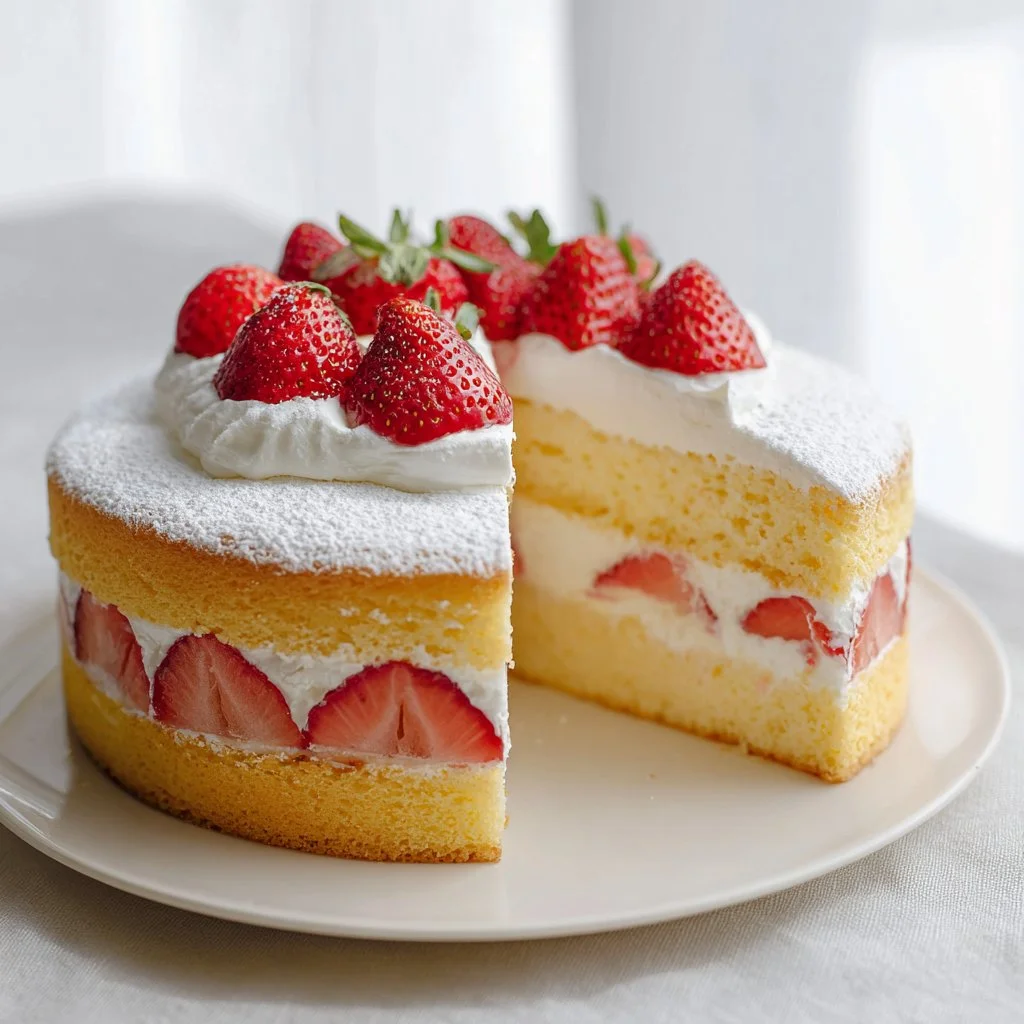
Spread a thin layer of whipped cream, arrange sliced strawberries, then stack and finish with a smooth coat of cream.
Chill briefly to set the layers before serving to ensure clean slices.
Pro Tip: The sliced strawberries should be bright red and shine slightly from the cream; the cake should slice cleanly with a sharp, warm knife.
Expert Tips for Japanese Strawberry Shortcake
– Temperature tips: Warm eggs whip best; chill bowls for cream. These small temp changes control volume and stability.
– Texture troubleshooting: If sponge is gummy, you likely underbaked or folded too slowly and knocked out air. Return to oven only if noticeably underbaked.
– Equipment tips: Use a scale for dry ingredients—this recipe is sensitive to small weight differences. A turntable speeds up icing and smoothing.
– Common mistakes: Overwhipping cream turns it grainy; underwhipping yields runny layers—stop at medium peaks for best results.
– Visual cues: The batter should be ribbon-like when lifted; if it collapses instantly, it was overfolded.
– Stabilizing whipped cream: If you need extended hold, fold in 1–2 teaspoons of cornstarch or a tablespoon of mascarpone for stability without changing flavor.
– Slicing tip: Chill the cake 20–30 minutes before slicing and use a knife warmed in hot water for cleaner cuts.
– Scaling tip: For larger sizes, increase baking time gradually and rotate pans for even browning.
Storage & Freezing for Japanese Strawberry Shortcake
Refrigerator storage: keep in an airtight cake carrier or covered with plastic wrap for up to 48 hours.
Avoid long fridge stays; whipped cream will gradually weep and strawberries will soften.
Freezer storage: freeze unfrosted sponge layers wrapped tightly in plastic and foil for up to 2 months.
To freeze a fully assembled cake reduces quality; freeze only when necessary and expect texture changes.
Thawing: thaw frozen sponge in the refrigerator overnight wrapped to avoid condensation.
Reheating: warm slices are not recommended; enjoy cold or room temperature after 20–30 minutes out of the fridge.
Containers: use airtight containers, cake domes, or double-wrap with plastic and foil for freezer storage to prevent freezer burn.
Label with date and contents to track freshness.
Variations & Substitutions for Japanese Strawberry Shortcake
Matcha Japanese Strawberry Shortcake: Fold 1–2 teaspoons sifted matcha into the dry mix and reduce cornstarch by 5 g.
Result: subtle earthy notes with a green hue and classic Japanese flavor pairing.
Lemon-scented Japanese Strawberry Shortcake: Add 1 teaspoon lemon zest to the whipped cream and 1 tablespoon lemon juice to the syrup.
Result: brighter acidity cuts richness and lifts fresh strawberry flavor.
Mascarpone-stabilized Japanese Strawberry Shortcake: Replace 100 ml of cream with 100 g mascarpone and fold gently.
Result: richer, more stable filling that holds its shape for longer events.
Chocolate-dusted Japanese Strawberry Shortcake: Sift 10–15 g cocoa into the top crumb before assembly and dust finished cake lightly.
Result: a subtle chocolate note that pairs with strawberries without overpowering the delicate cake.
Frequently Asked Questions About Japanese Strawberry Shortcake
Q: How do I keep the sponge so soft and not dry?
A: Use room-temperature eggs and precise weights for dry ingredients. Remove from oven as soon as a skewer shows a few moist crumbs. Cool on a rack to avoid steam soaking the bottom. If desired, brush layers with a simple sugar syrup (80 ml water + 65 g sugar boiled and cooled) for extra moisture.
Q: Can I use frozen strawberries?
A: Frozen strawberries release more water when thawed. If you must use them, macerate and drain well, then pat dry to avoid soggy layers. Consider folding thawed fruit into whipped cream rather than layering as slices.
Q: How long can I leave the assembled cake at room temperature?
A: With whipped cream and fresh fruit, keep it under two hours at room temperature. For warmer environments, limit to one hour. Otherwise store chilled in the fridge.
Q: My whipped cream separated—can I fix it?
A: If slightly overwhipped, fold in a few tablespoons of unwhipped cream to bring back gloss and softness. If it has turned buttery, it can’t be reclaimed as whipped cream but can be used as a crunchy butter topping or in baking where texture won’t matter.
Q: How do I get even cake layers?
A: Use a ruler or cake leveler to mark concentric slices and cut with a long serrated knife using gentle back-and-forth motion. Chill the cake briefly before slicing for cleaner cuts.
Final Thoughts on Japanese Strawberry Shortcake
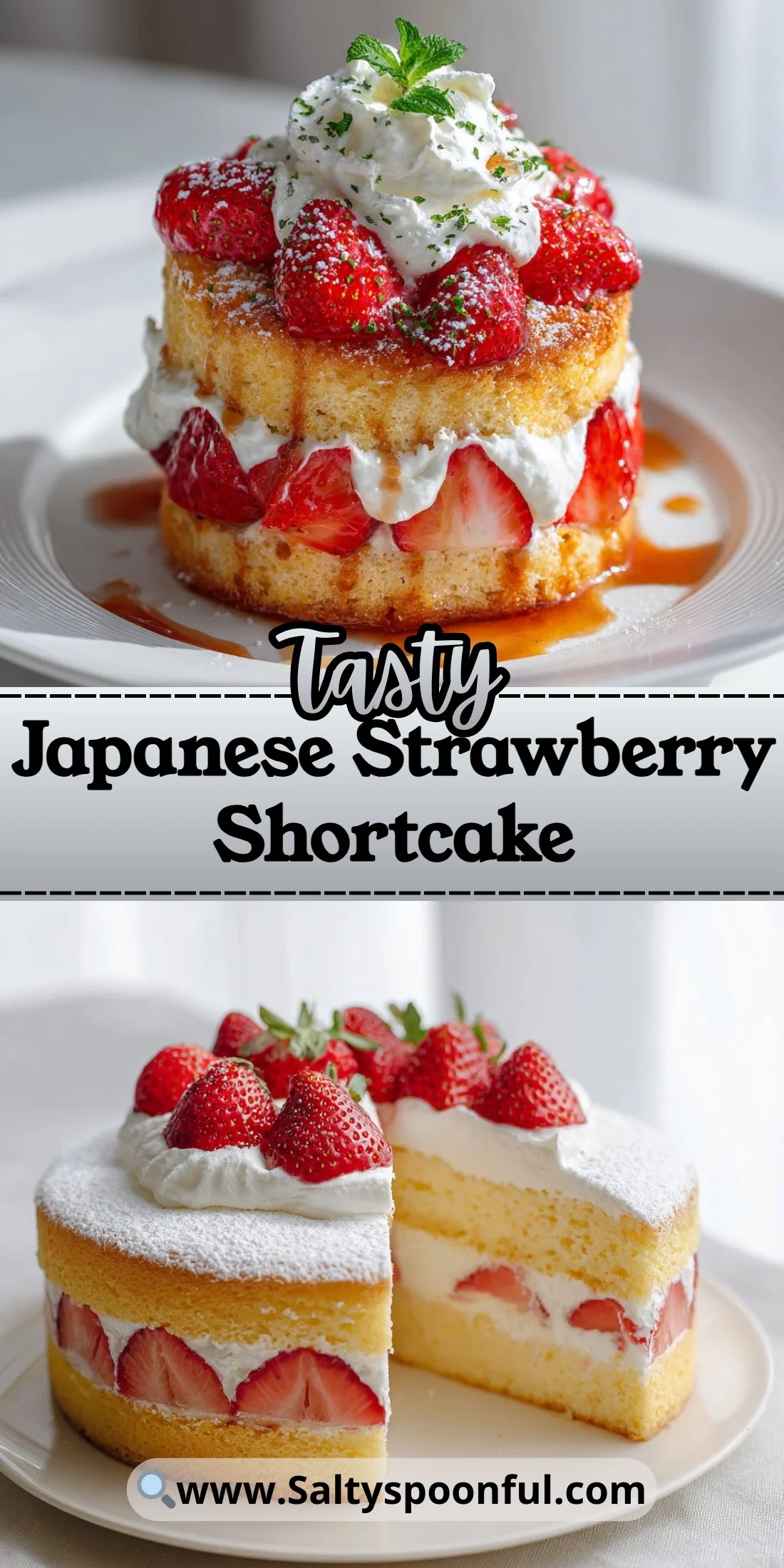
This Japanese Strawberry Shortcake rewards small technical steps with a sublime result that’s light, elegant, and crowd-pleasing.
If you enjoyed this guide, please leave a star rating in the recipe card below and pin it to Pinterest.
Conclusion — Japanese Strawberry Shortcake
For further inspiration and variations from trusted Japanese baking sources, check this detailed recipe for a classic Japanese Strawberry Sponge Cake (Strawberry Shortcake).
If you want another well-explained take with step photos and tips, see the guide at Japanese Strawberry Cake – Omnivore’s Cookbook.
For a compact, light 6-inch version and plating ideas, this tutorial is a great reference: Light and Creamy 6 Inch Japanese Strawberry Shortcake.
Japanese Strawberry Shortcake
Ingredients
Method
- Preheat your oven and prepare a round cake pan by lining the bottom and greasing the sides.
- Sift the cornstarch and all-purpose flour together to ensure even aeration.
- Whisk the eggs with 90 g sugar until tripled in volume and pale.
- Gently fold in the milk, oil, and sifted dry ingredients in stages.
- Bake until a skewer comes out clean.
- Cool on a rack to avoid steam soaking the bottom.
- Chill your mixing bowl and beaters to help the cream whip faster.
- Combine the cream, sugar, and vanilla; whip to medium peaks.
- Slice the cooled sponge horizontally into two or three even layers.
- Brush each layer lightly with the reserved water mixed with a touch of sugar.
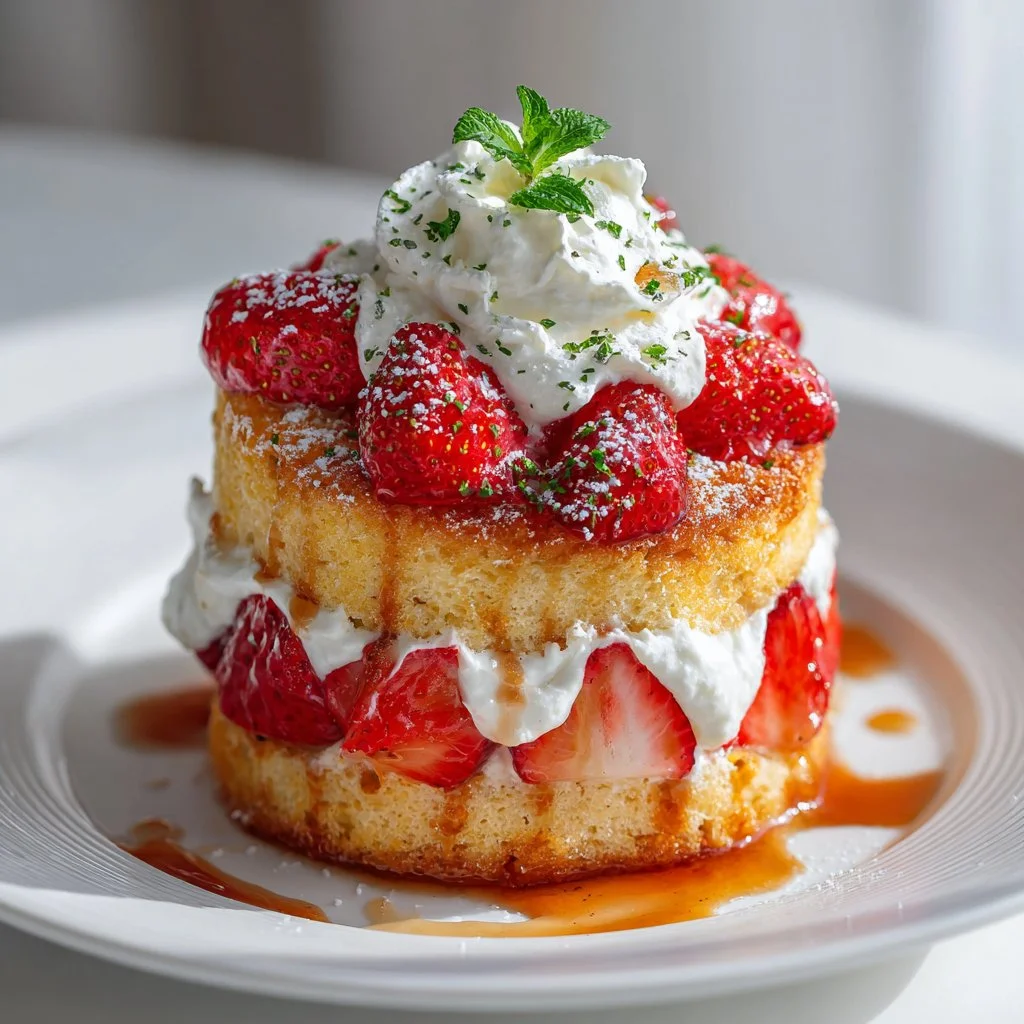
- Spread a thin layer of whipped cream, arrange sliced strawberries, then stack and finish with cream.
- Chill briefly to set the layers before serving.