
A warm stack of cottage cheese pancakes is one of those small breakfasts that feels fancy and finishes fast. They come together in moments and deliver tender, slightly tangy pancakes that are lighter than expected.
This recipe uses just three pantry staples and a blender, meaning fewer dishes and reliable results every time. Read on for why these pancakes work, how to fix common problems, and smart ways to change the flavor or texture.
Perfect for busy mornings, low-carb swaps, and cooks who want texture without fuss. Try them today and keep the batter chilled for a quick reheat later.
Why You’ll Love This Cottage Cheese Pancakes
– Ridiculously quick: blender batter in under a minute.
– High-protein breakfast: cottage cheese and eggs boost satiety.
– Light, tender texture that browns beautifully.
– Minimal ingredients and single-bowl convenience.
– Flexible — sweet or savory toppings work equally well.
– Kid-friendly and easy to portion as small rounds.
– Great for make-ahead breakfasts and meal prep.
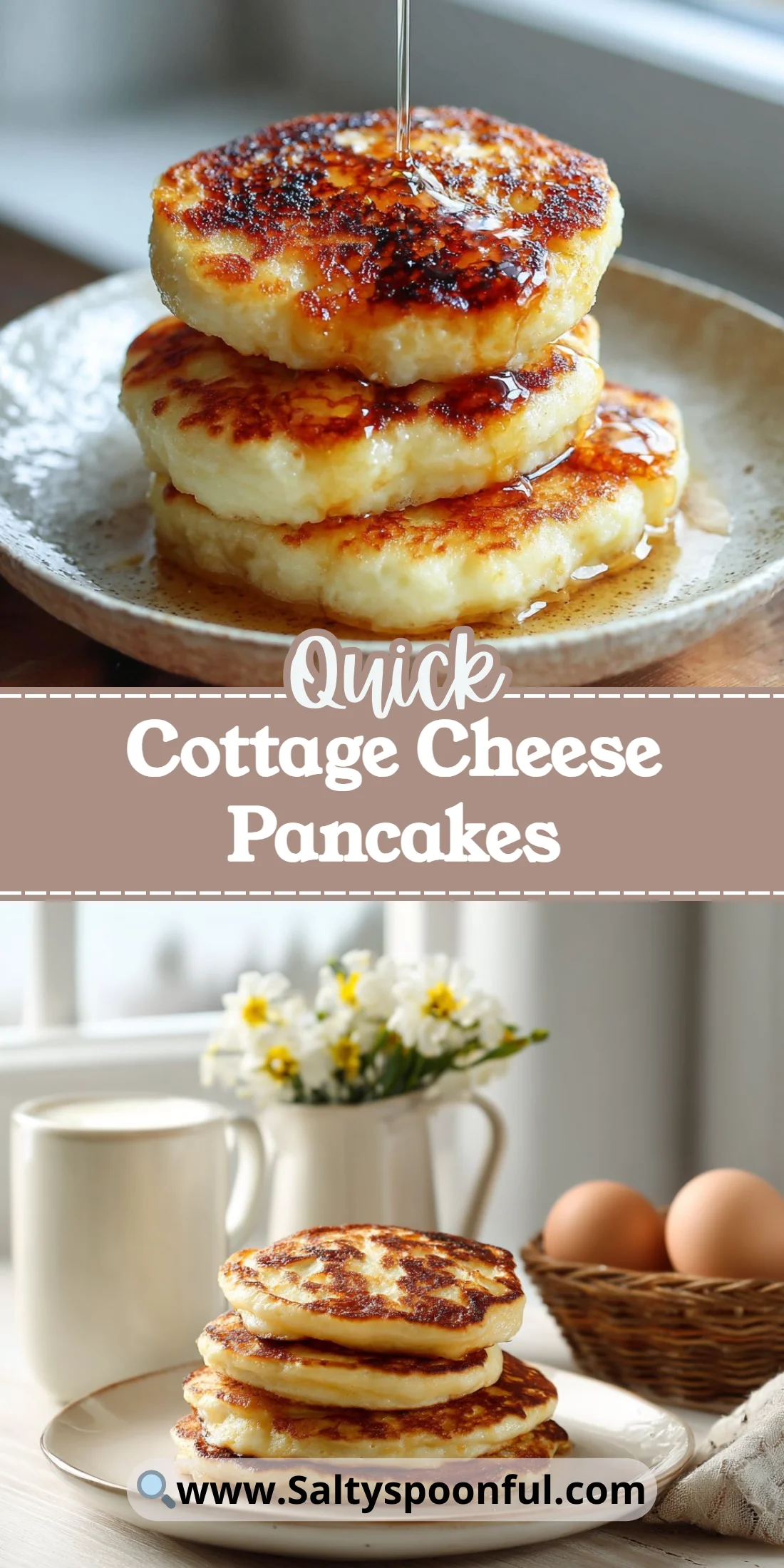
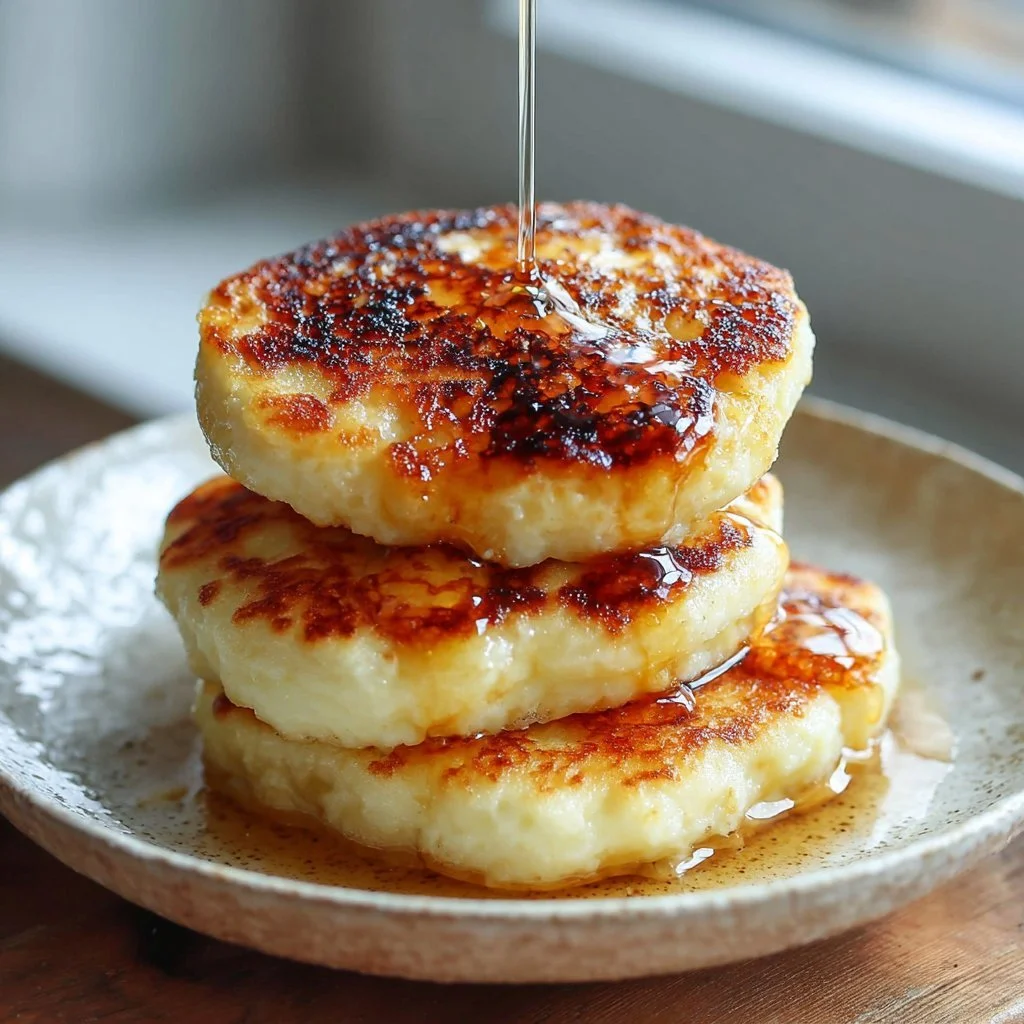
These pancakes are soft and slightly tangy from the cottage cheese, with a golden exterior that gives a subtle caramelized note. The eggs provide lift and structure, while the flour tames the moisture into a pourable batter that cooks into delicate, uniform cakes.
“Five stars — I make these every Sunday now. They’re fluffy, quick, and the whole family loves the mild tang from the cottage cheese. No wasted leftovers!”
Key Ingredients for Cottage Cheese Pancakes
Cottage cheese
Cottage cheese is the hero here; it supplies moisture, protein, and a pleasant tang that keeps the pancakes from tasting eggy. Choose small- or medium-curd cottage cheese for a smoother blend; if you prefer a silkier batter, opt for low-fat or full-fat depending on richness desired. If you substitute Greek yogurt, expect a denser, tangier pancake and reduce any added liquid slightly.
Large eggs
Eggs provide structure, lift, and richness — they coagulate as the pancakes cook to form a tender crumb. Use fresh large eggs at room temperature for the best emulsification and rise. Replacing eggs with a flax or chia egg will make a noticeably looser, flatter pancake and reduce protein; for best texture with vegan swaps, add a binder like mashed banana or a commercial egg replacer.
All-purpose flour
All-purpose flour gives the batter body and creates the light, cake-like texture when it sets in the skillet. Measure by spooning the flour into the cup and leveling, or weigh it for accuracy; too much flour yields dense pancakes. Substituting with whole-wheat flour will darken flavor and result in a slightly heavier pancake; gluten-free blends can work but expect more fragile cakes and possibly a grainier texture.
Full Ingredient List for Cottage Cheese Pancakes
– 1 cup cottage cheese
– 3 large eggs
– 1/2 cup all-purpose flour
Step-by-Step Instructions for Cottage Cheese Pancakes
Step 1: Blend the batter
Place the cottage cheese, eggs, and flour into a blender or a high-speed food processor. Blend until the mixture is smooth and pourable, stopping to scrape the sides if curds catch; you want a batter that flows off a spoon but still holds a hint of density.
Pro Tip: The batter should coat the back of a spoon and fall in a steady ribbon — no large lumps and not watery.
Step 2: Heat the skillet
Set a non-stick skillet over medium heat and let it warm for a minute or two so the surface is evenly hot. Lightly grease with butter or neutral oil if your pan needs it; a well-seasoned or high-quality non-stick pan often requires only a whisper of fat.
Pro Tip: When a bead of water sizzles and skitters across the pan, the heat is right — medium gives a golden edge without burning.
Step 3: Cook the pancakes
Pour small rounds of batter into the hot skillet, keeping them modest in size (2–3 tablespoons each) so they cook through evenly. Cook until bubbles form across the surface and the edges appear set, about 2–3 minutes, then flip carefully and cook until the second side turns golden, about 1–2 minutes more.
Pro Tip: Look for a ring of tiny bubbles across the center and slightly dry-looking edges — that visual cue means it’s time to flip.
Step 4: Serve warm
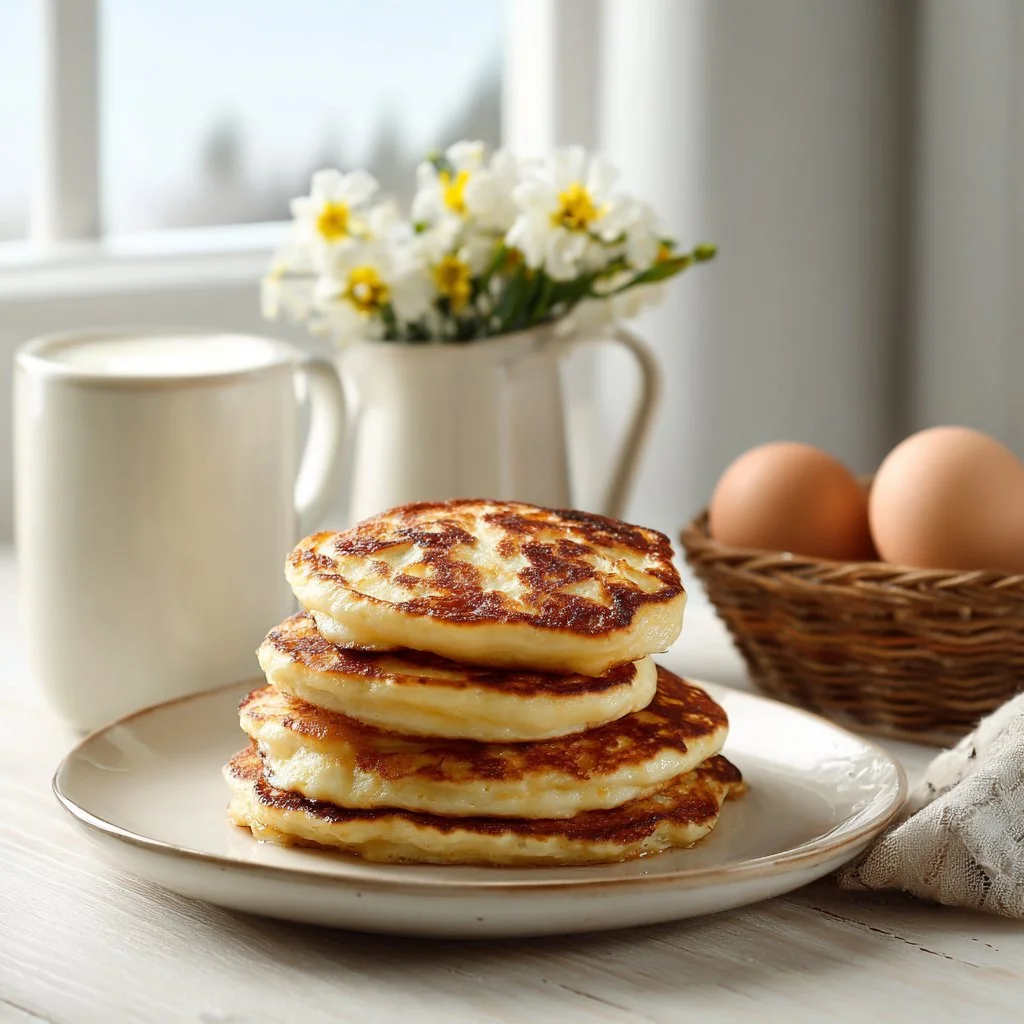
Stack the finished pancakes on a plate and serve immediately with your favorite toppings — fresh fruit, maple syrup, yogurt, or a pat of butter. If you’re making a larger batch, keep cooked pancakes warm on a baking sheet in a low oven (200°F / 95°C) for 10–15 minutes while you finish the rest.
Pro Tip: The pancakes should smell lightly sweet and tangy and feel springy to the touch; they’ll deflate slightly as they cool but remain tender.
Expert Tips for Cottage Cheese Pancakes
– Temperature tip: Cook over medium rather than high heat to allow the interior to set without over-browning the exterior.
– Batter rest: Letting the blended batter sit 5–10 minutes hydrates the flour and improves texture, but it’s fine to cook immediately if short on time.
– Texture troubleshooting: If pancakes are too dense, reduce flour by 1–2 tablespoons next time or add a splash of milk to thin the batter.
– Visual cue for doneness: Tiny bubbles and matte edges mean the interior has set; a quick jiggle should show a slight wobble but not a raw center.
– Equipment tip: A non-stick skillet or a well-seasoned cast-iron pan yields the best browning with minimal oil; avoid thin, cold pans as they cause uneven cooking.
– Overmix warning: Blend until smooth but don’t overheat the eggs in a high-speed processor; a few short pulses are enough.
– Portion control: Use a small ladle or 2-tablespoon scoop for uniform pancakes that cook in the same time.
– Common mistakes: Using too-large pancakes leads to undercooked centers; too-hot pans scorch the outsides before the eggs set — adjust heat and size accordingly.
Storage & Freezing for Cottage Cheese Pancakes
Refrigerator storage: Cool pancakes completely on a wire rack, then stack with parchment between layers and store in an airtight container or zip-top bag for up to 3 days. Use within that window for best texture and flavor.
Freezer storage: Flash-freeze pancakes in a single layer on a baking sheet for 1 hour, then transfer to a freezer bag or rigid container with parchment between layers. They keep well for up to 2 months.
Thawing and reheating: Thaw overnight in the fridge or reheat from frozen. For best texture, reheat in a 325°F (160°C) oven on a baking sheet for 8–12 minutes, flipping once; alternatively, reheat gently in a non-stick skillet over low heat, or microwave on medium power for 30–60 seconds per pancake (microwave will soften edges).
Best containers: Use airtight plastic containers or heavy-duty freezer bags for the freezer; glass or BPA-free plastic containers with tight lids work well in the fridge.
Variations & Substitutions for Cottage Cheese Pancakes
– Sweet berry vanilla: Fold 1/2 cup pureed berries and 1 teaspoon vanilla into the blended batter, then cook as directed. The berries add color, fruity sweetness, and a looser batter, producing pancakes with a soft, jammy interior.
– Savory herb and cheese: Stir 2 tablespoons grated Parmesan and a tablespoon of chopped chives into the batter before cooking. These pancakes become savory, perfect for pairing with smoked salmon or eggs, and the cheese adds a pleasing umami edge.
– Gluten-free almond flour: Replace the 1/2 cup all-purpose flour with 1/3–1/2 cup almond flour, blending until smooth; expect slightly denser, nuttier pancakes that brown quickly. You may need an extra egg or tablespoon of flour for structure.
– Banana oat boost: Blend one ripe banana and 1/4 cup rolled oats with the cottage cheese, eggs, and flour for a heartier texture and natural sweetness. The resulting pancakes will be moister and more substantial — ideal for a filling brunch.
Frequently Asked Questions About Cottage Cheese Pancakes
Q: Can I make cottage cheese pancakes without a blender?
A: Yes — for a rustic version, whisk the eggs in a bowl, add cottage cheese and flour, and mix until combined. You’ll retain some curds and a chunkier texture; press curds against the bowl with a fork to break them down if you prefer smoother pancakes. The cooking time remains similar, but expect slight textural variation.
Q: How can I make these pancakes fluffier?
A: To increase fluffiness, separate the eggs, whip the whites to soft peaks, and fold them into the blended batter. This introduces extra air and lift. Be gentle when folding to preserve volume, and cook slightly smaller pancakes so the interior sets before the exterior over-browns.
Q: Are cottage cheese pancakes high in protein?
A: Yes — cottage cheese and eggs are both excellent protein sources, making these pancakes higher in protein than typical flour-only pancakes. Protein content varies by brand and portion size, but a serving made from this recipe will be substantially more satiating than standard pancakes.
Q: Can I use low-fat or non-fat cottage cheese?
A: You can. Low-fat or non-fat cottage cheese will reduce richness and calories while yielding a slightly drier batter; adding a teaspoon of oil or a splash of milk can improve mouthfeel. Full-fat cottage cheese produces a creamier, more indulgent pancake.
Q: Why did my pancakes turn out gummy or raw in the center?
A: Gummy centers usually mean the pan was too hot or the pancakes were too large. Lower the heat to medium, make smaller pancakes, and allow a full 2–3 minutes per side so the eggs fully coagulate. Also ensure the batter isn’t overly wet — reduce liquid or add a tablespoon of flour if necessary.
Final Thoughts on Cottage Cheese Pancakes
These Cottage Cheese Pancakes are quick, forgiving, and endlessly adaptable, making them a weekday hero or weekend treat. If you enjoyed this recipe, please leave a star rating in the recipe card below and pin it to Pinterest for later.
For additional recipe ideas and versions, check out this trusted quick recipe from Cottage Cheese Pancakes (Quick & Easy) – Momsdish, a simple 3-ingredient variation at Cottage Cheese Pancakes Recipe (Only 3 Ingredients!) | The Kitchn, and a flavorful take with serving suggestions at Cottage Cheese Pancake Recipe – Jar Of Lemons.
Cottage Cheese Pancakes
Ingredients
Method
- Place the cottage cheese, eggs, and flour into a blender or a high-speed food processor.
- Blend until smooth and pourable, scraping the sides as needed.
- Heat a non-stick skillet over medium heat and lightly grease if necessary.
- Pour small rounds of batter (2-3 tablespoons each) into the skillet.
- Cook until bubbles form and edges appear set, about 2-3 minutes, then flip and cook until golden, about 1-2 minutes more.
- Stack pancakes on a plate and serve warm with toppings of your choice.