
A bowl of warm, savory stew feels like a hug in a spoon. This Corned Beef and Cabbage Stew turns a classic into a one-pot weeknight dinner that’s both comforting and impressive.
It’s hearty, simple to make, and built on a few pantry-friendly ingredients. If you’ve made corned beef before, this method gives you tender meat and vegetables that soak up rich, beefy broth.
Try this as a weekend project or a St. Patrick’s Day centerpiece. For a slider night inspired by bold flavors, compare textures with our steak and cheese sliders recipe for ideas on serving and sides.
Why You’ll Love This Corned Beef and Cabbage Stew
– Deep, beefy flavor from slow braising that melds with sweet cabbage.
– Effortless one-pot cooking that minimizes cleanup.
– Bold, simple seasoning keeps the meat as the star.
– Flexible with swaps for root vegetables you already have.
– Hearty, filling, and perfect for leftovers and meal prep.
– Great texture contrast: fork-tender meat with slightly crisp cabbage edges.
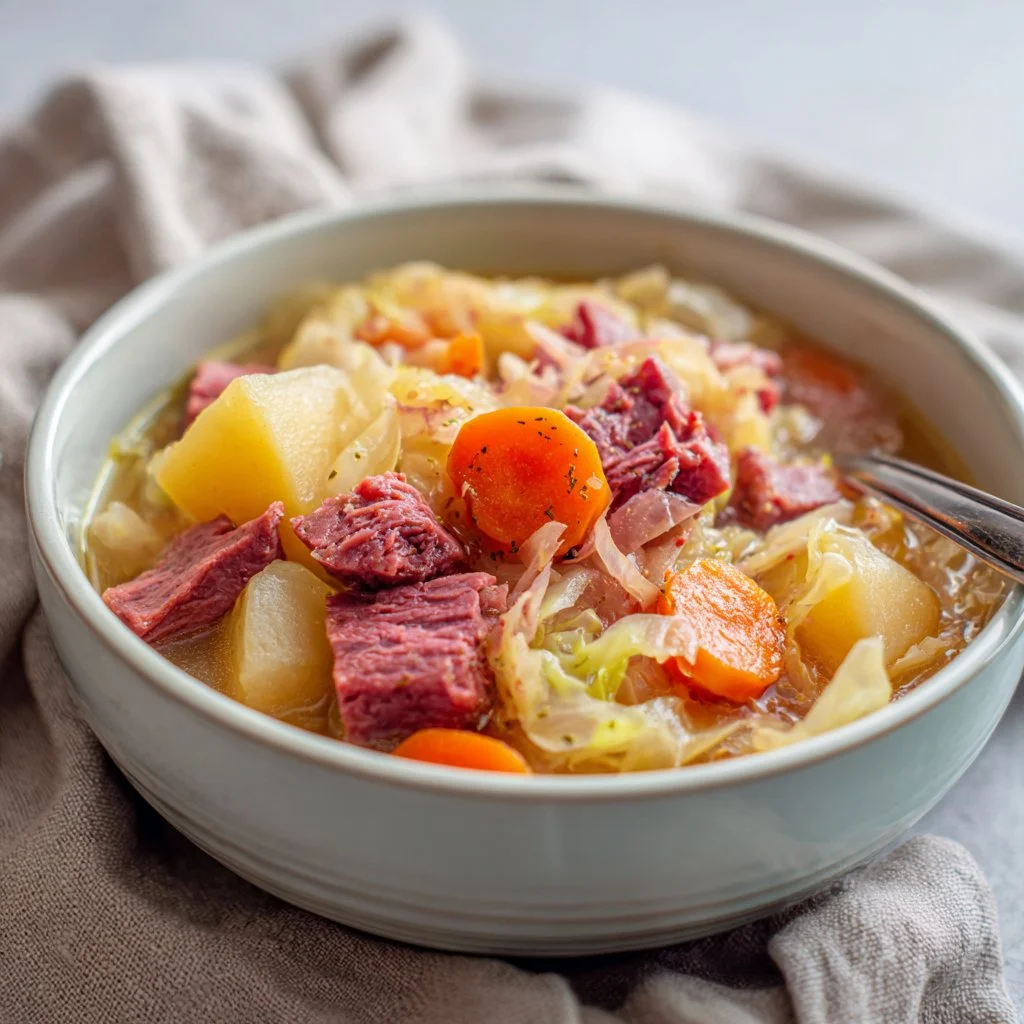
This stew offers a rich, savory broth with the unctuous chew of corned beef and the soft, comforting bite of potatoes and carrots. The cabbage adds a hint of sweetness and a light vegetal note, balancing the salty beef and mustard tang in each spoonful.
"Five stars — The stew was easy, filling, and tasted like it had simmered for hours. The potatoes held up and the cabbage was perfect. Will make again!" — Reader review
Key Ingredients for Corned Beef and Cabbage Stew
Corned beef — The quality of the corned beef determines the depth of the stew. Choose a brisket cut labeled “corned beef” with a good fat cap; fat renders into the broth, enriching mouthfeel. If you substitute corned pork or a lean roast, expect a less gelatinous broth and drier slices.
Cabbage — Fresh, crunchy cabbage provides sweetness and texture. Look for a firm head with tight, pale-green leaves and no brown spots. Substituting with bok choy or kale will change texture and reduce sweetness; add them later to avoid overcooking.
Potatoes — Starchy, waxy potatoes both work but give different outcomes. Yukon Gold or red potatoes hold shape and become creamy without falling apart; russets will break down more and thicken the broth. If you prefer a stewier texture, use russets; for distinct chunks, choose Yukon Gold.
Beef broth — Use a low-sodium, full-flavored beef broth or homemade stock for the best backbone. It amplifies savory notes and helps braise the corned beef evenly. Swap with chicken stock for a milder flavor, but expect a less robust, slightly sweeter profile.
Full Ingredient List for Corned Beef and Cabbage Stew
– 4 cups chopped cabbage
– 1 pound corned beef
– 4 large potatoes, cubed
– 2 carrots, sliced
– 1 onion, chopped
– 4 cups beef broth
– 1 teaspoon black pepper
– 1 tablespoon mustard
Step-by-Step Instructions for Corned Beef and Cabbage Stew
Step 1: Place corned beef, broth, and onions in a heavy-bottomed pot and bring to a simmer
Place the corned beef into a heavy-bottomed pot and pour in 4 cups of beef broth until the meat is mostly submerged. Add the chopped onion around and on top of the meat so it braises into the broth. Turn the heat to high, bring to a gentle boil, then immediately reduce to a low simmer and cover.
Pro Tip: The broth should barely ripple and release steady steam from the lid — you should see small, slow bubbles, not a rolling boil.
Step 2: Simmer the corned beef for 1 hour until tender
Let the corned beef braise for about 1 hour at a low simmer; this relaxes muscle fibers and begins collagen breakdown. Check the pot to ensure the liquid level remains high enough to cover most of the meat. Adjust heat if you see the liquid boiling vigorously.
Pro Tip: After an hour, the meat will feel springy with a slight give when pressed; it should not be falling apart yet.
Step 3: Add potatoes, carrots, and cabbage around the beef
After an hour of braising, nestle the cubed potatoes, sliced carrots, and chopped cabbage into the pot around the beef so they cook in the same flavorful liquid. Arrange denser vegetables closer to the heat source so they soften evenly. Keep the lid on and simmer.
Pro Tip: Vegetables should sit just below the surface of the broth and start releasing an aromatic steam — you’ll smell a sweet, earthy steam within minutes.
Step 4: Season with black pepper and mustard
Stir in 1 teaspoon black pepper and 1 tablespoon mustard to the pot, mixing into the broth so the flavors distribute. The mustard brightens the broth while pepper adds a warming background spice. Taste the broth, then adjust the seasoning gently.
Pro Tip: The broth will take on a slightly glossy sheen and a tangy aroma from the mustard when it’s properly incorporated.
Step 5: Simmer until vegetables are fork-tender, about 30 minutes
Cover and continue to simmer for another 30 minutes, or until the potatoes are fork-tender and carrots are soft. Avoid overcooking the cabbage more than necessary; it should be tender with some structure. Remove the meat and let it rest briefly before slicing.
Pro Tip: Potatoes are done when a fork slides through with little resistance; cabbage should wilt but still keep some shape.
Step 6: Slice the corned beef against the grain and serve with vegetables
Transfer the corned beef to a cutting board, slice against the grain into even pieces, and arrange with the vegetables on a platter. Spoon broth over the meat and vegetables when serving to keep everything juicy.
Pro Tip: Slices should show obvious short muscle fibers; if they shred, the meat is overcooked for slicing but still lovely in bite-sized pieces.
Expert Tips for Corned Beef and Cabbage Stew
– Cook low and slow: maintain a gentle simmer (about 185–200°F / 85–93°C) to break down collagen without drying the meat.
– Test textures early: check potatoes at 20 minutes and cabbage at 25 minutes to prevent mushy vegetables.
– Use a heavy-bottomed pot or Dutch oven to distribute heat evenly and avoid hot spots.
– Trim fat strategically: leave a thin fat cap on the corned beef to enrich the broth, but trim excess to avoid greasy soup.
– If your beef is too salty, add more unsalted broth or a peeled, quartered potato to absorb salt, then remove before serving.
– For a glossy broth, finish with a tablespoon of cold butter off heat and swirl it in to emulsify fats.
– Avoid overboiling after adding vegetables; a rolling boil will fracture potatoes and strip cabbage of texture.
– Common mistake: slicing corned beef while too hot; let it rest 10 minutes so juices redistribute and slices stay intact.
For serving ideas and party prep, compare timing with our steak and cheese sliders recipe to plan side dishes and timing.
Storage & Freezing for Corned Beef and Cabbage Stew
Fridge storage: Cool the stew to room temperature within two hours and store in airtight containers. Use within 3–4 days for best texture.
Freezer storage: Portion into freezer-safe containers or heavy-duty freezer bags, leaving 1 inch headspace. Freeze for up to 3 months for best flavor and texture.
Thawing: Thaw overnight in the refrigerator for 24 hours. For quicker thawing, use the defrost setting on your microwave or submerge sealed bags in cold water, changing water every 30 minutes.
Reheating: Reheat gently on the stovetop over low heat, stirring occasionally, until just simmering. Microwaving in covered, vented containers works for single servings; stir halfway through to heat evenly.
Pro tip: To prevent the potatoes from becoming grainy after freezing, flash-chill your stew before freezing and reheat gently to restore creaminess. Compare reheating methods with our guidance in the steak and cheese sliders recipe for party prep consistency.
Variations & Substitutions for Corned Beef and Cabbage Stew
Irish-style stout variation — Substitute 1 cup of beef broth with a dark stout for a deeper, slightly bitter richness. The beer adds roasted malt notes and pairs beautifully with the mustard.
Slow-cooker version — Brown the corned beef briefly, then transfer everything to a slow cooker with broth and onions; cook on low 6–8 hours and add vegetables for the last 2 hours. Result is ultra-tender meat and hands-off cooking.
Spicy mustard twist — Add 1 teaspoon of whole-grain mustard and a pinch of red pepper flakes for a spicier, textured sauce. Expect a livelier, tang-forward broth that cuts through the beefy richness.
Root vegetable medley — Swap some potatoes for parsnips or turnips and add rutabaga for earthier flavors. The stew becomes slightly sweeter with a more complex root profile.
For a lighter take, replace half the beef broth with water and finish with fresh lemon zest for brightness.
Frequently Asked Questions About Corned Beef and Cabbage Stew
What cut of corned beef is best for this stew?
Brisket is the most common and reliable cut because it contains connective tissue that melts into gelatin during slow braising, yielding tender slices and a silky broth. If you use flat cut, expect leaner slices; point cut has more marbling and richer flavor.
How do I reduce the saltiness of corned beef stew?
Add unsalted liquid (beef broth or water) to dilute, or add peeled raw potato halves to absorb excess salt during simmering and remove them before serving. You can also rinse pre-packed corned beef briefly before cooking to remove surface brine.
Can I make this in a slow cooker or Instant Pot?
Yes. Slow cooker: follow the slow-cooker variation above and add vegetables during the last 2 hours. Instant Pot: use the high-pressure setting for about 70–90 minutes depending on thickness, then quick-release and add vegetables on sauté mode until tender.
How do I know when the corned beef is done braising?
Probe the meat; it should offer little resistance and slice with a fork but still hold together if you intend to slice. If it shreds easily, it’s overcooked for slicing but still excellent for chopped or shredded presentations.
Can I prepare this stew ahead for a crowd?
Absolutely. The flavors deepen after a day in the fridge. Reheat gently before serving. For events, cook the stew a day ahead, chill, skim any hardened fat, and reheat slowly to serve.
Final Thoughts on Corned Beef and Cabbage Stew
This Corned Beef and Cabbage Stew is a comforting, easy-to-execute recipe that rewards patience with rich flavor and tender texture. If you enjoyed this, please leave a star rating in the recipe card below and pin it to Pinterest.
For more variations and similar recipes, see Corned Beef and Cabbage Soup – Barefeet In The Kitchen, try a slow-cooker adaptation at Slow Cooker Corned Beef and Cabbage Stew | The Recipe Critic, or explore a different take at Corned Beef & Cabbage Stew | Sumptuous Spoonfuls.
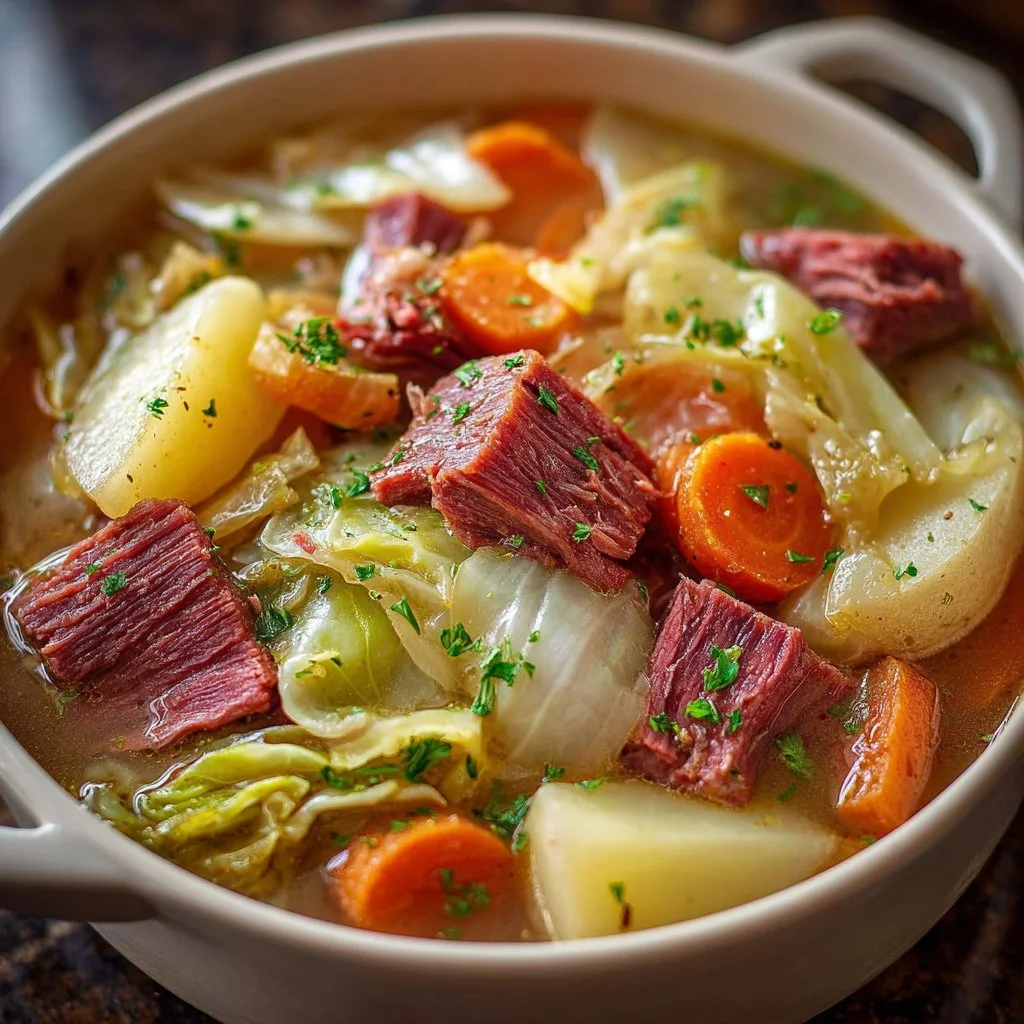
Corned Beef and Cabbage Stew
Ingredients
Method
- Place the corned beef, beef broth, and chopped onions in a heavy-bottomed pot and bring to a simmer. Cover the pot.
- Simmer the corned beef for about 1 hour at low heat, ensuring it remains mostly submerged in the broth.
- Add the cubed potatoes, sliced carrots, and chopped cabbage into the pot around the beef.
- Stir in black pepper and mustard, allowing the flavors to meld into the broth.
- Continue to simmer for another 30 minutes, or until the vegetables are fork-tender.
- Remove the corned beef from the pot, let it rest for a few minutes, then slice against the grain and serve with the vegetables, spooning broth over them.