
Bright, herbaceous, and deceptively simple, this British Spring Salad brings a plateful of seasonality to the table.
It’s built around tender Jersey royals, bright peas and broad beans, crisp asparagus, and a punchy wild garlic pesto.
Ready in under 30 minutes, it’s a showstopping side or a light main that celebrates spring.
If you like bright salads, try pairing it with other light sides like this creamy cucumber dill salad for a full seasonal spread.
Why You’ll Love This British Spring Salad
- Uses seasonal British produce at its peak.
- Simple, fast prep with big flavour payoff.
- Wild garlic pesto is aromatic and unique.
- Warm potatoes marry seamlessly with chilled greens.
- Textural contrast: creamy, crunchy, soft, and herby.
- Great for entertaining or meal-prep a shareable side.
The overall taste is bright and garlicky from the wild garlic pesto, sweet from peas and broad beans, and nutty from pine nuts and pecorino. Texturally it’s a balance: soft Jersey royals, snap-tender asparagus, and the pop of peas and pea shoots create a lively mouthfeel.
“Absolutely gorgeous. Served this to friends and everyone asked for the pesto recipe — perfect balance of fresh and indulgent.” — 5 stars
Key Ingredients for British Spring Salad
The following ingredients are the anchors of the salad; each one shapes flavour, texture, and appearance.
Jersey royal potatoes
Jersey royals are waxy, thin-skinned new potatoes with a sweet, buttery flavour that holds shape when boiled. Buy small, uniform tubers for even cooking, and scrub rather than peel to retain their texture and nutrients. If you must substitute, use other waxy new potatoes — but avoid floury russets which will fall apart and become mealy.
Wild garlic leaves (for pesto)
Wild garlic gives the pesto a clean, springtime garlicky aroma without the bite of raw garlic. Pick bright, unblemished leaves or buy a reputable bunch; avoid old, wilted leaves that taste musty. Substitute with a mix of basil and young spinach if wild garlic is unavailable, though the flavour will be milder and less aromatic.
Peas and broad beans (frozen)
Frozen garden peas and broad beans are convenient and lock in peak-season sweetness when blanched correctly. Buy good-quality frozen veg with no added salt or sauces to control seasoning. Fresh alternatives are excellent if in season, but frozen produce is ideal for consistent texture and convenience.
Wild garlic pesto components (olive oil, pine nuts, Pecorino, capers)
The olive oil binds and carries flavour; pine nuts add a buttered nuttiness; Pecorino contributes salty umami; capers add briny contrast. Use extra-virgin olive oil for the best aroma and freshly grated Pecorino for depth. If you swap Parmesan or skip capers, expect a less briny, slightly different umami profile.
Full Ingredient List for British Spring Salad
- 500g Jersey royal potatoes
- 150g frozen broad beans
- 150g frozen garden peas
- 250g asparagus
- Wild garlic pesto (see note in directions)
- 75g wild garlic leaves (for pesto)
- A small handful basil leaves (for pesto)
- 150ml olive oil (for pesto)
- 20g pine nuts (for pesto)
- 1 tsp capers (for pesto or finish)
- 10g grated Pecorino
- Handful of pea shoots (for garnish)
- Cracked black pepper
- Pinch of Maldon salt
Step-by-Step Instructions for British Spring Salad
Step 1: Make the wild garlic pesto by adding the wild garlic leaves, basil, pine nuts, capers, grated Pecorino, and olive oil in a food processor; blitz until it forms a paste.
Pulse the leaves, pine nuts, capers, and Pecorino while slowly streaming in olive oil until you have a smooth, slightly coarse paste. Taste and adjust — add a pinch more Pecorino or a few more capers if you want more saltiness or brine. Reserve two-thirds of the pesto for tossing with the warm potatoes and keep the remaining third to dress the finished salad.
Pro Tip: The pesto should be bright green and glossy, with visible flecks of nuts and cheese; it should smell fresh and garlicky, not bitter.
Step 2: Cook the Jersey royal potatoes by boiling them in water until tender.
Place whole or halved Jersey royals in cold, salted water and simmer until you can easily pierce them with a knife (about 12–15 minutes depending on size). Drain and let them steam-dry briefly so they don’t become waterlogged before tossing with pesto. Warm potatoes absorb the pesto best and create a silky coating.
Pro Tip: The potatoes should feel tender but still hold shape when you shake the pan; the exterior will look glossy rather than dry.
Step 3: Blanch the asparagus, peas, and broad beans in salted water for 1 minute until bright and just tender.
Bring a separate pot of salted water to a rolling boil and add the asparagus tips, peas, and broad beans for about 60 seconds. Immediately transfer the vegetables to an ice bath or cold water to stop cooking and preserve colour and snap. If broad beans are large, remove the outer skins after blanching for a more tender bite.
Pro Tip: Vegetables should be vividly green and slightly springy under your teeth, not mushy or dull.
Step 4: Toss warm potatoes with two-thirds of the pesto to coat.
Return the drained, slightly warm potatoes to a mixing bowl and fold in most of the pesto until each piece is lightly and evenly coated. The residual heat helps the pesto cling and infuse the potatoes with garlicky, cheesy flavour. Taste and add cracked black pepper or a touch more cheese if desired.
Pro Tip: Coated potatoes will glisten with a thin green sheen and smell richly of garlic and cheese.
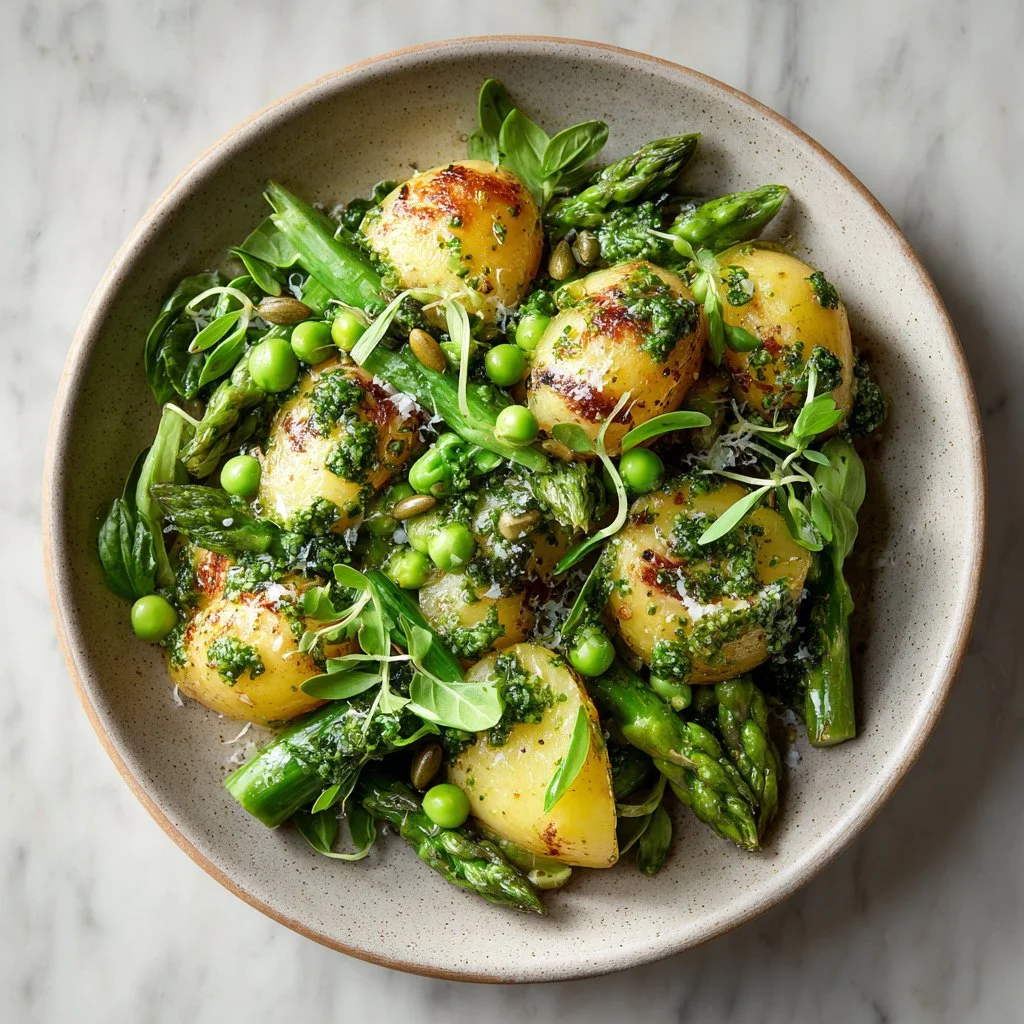
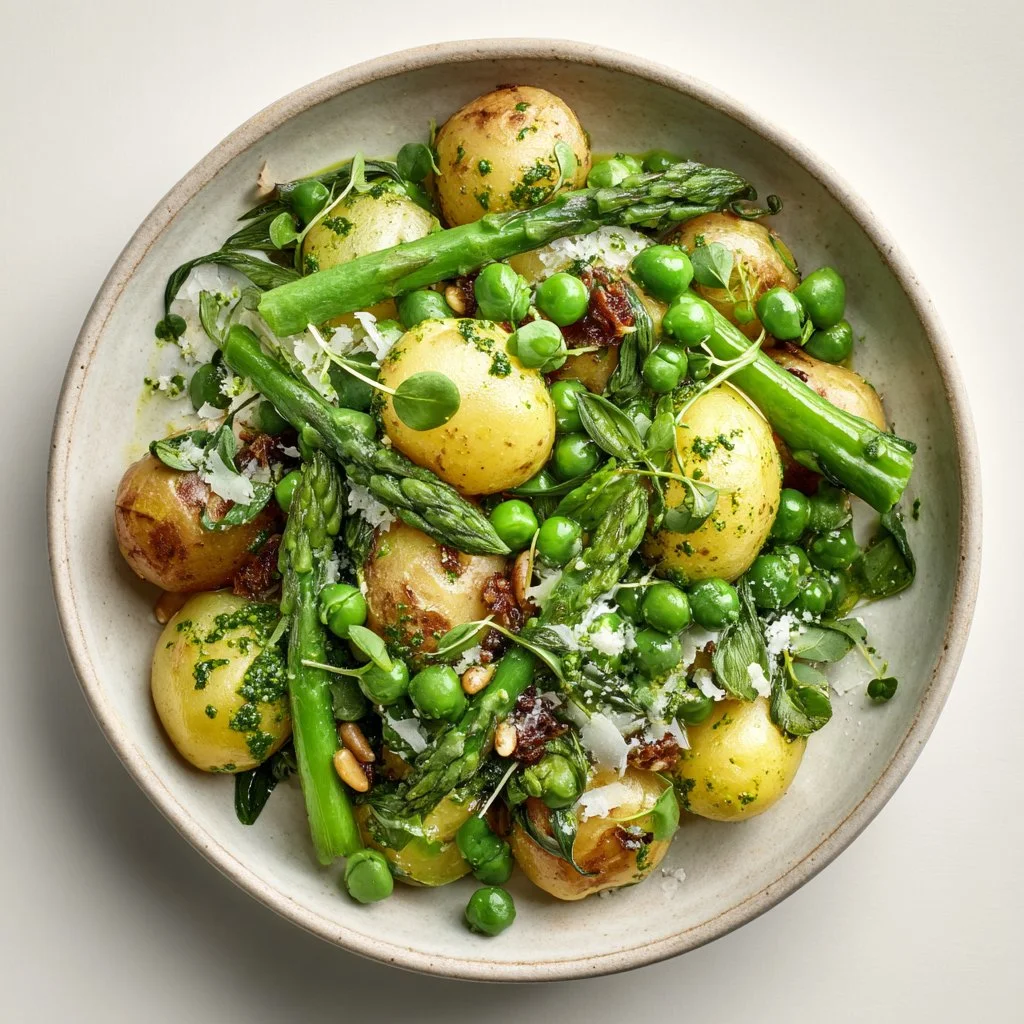
Step 5: Assemble the salad by placing the potatoes on a platter, arranging the blanched vegetables on top, drizzling with remaining pesto, and finishing with cracked black pepper, Maldon salt, and pea shoots.
Layer the potatoes on a platter, scatter asparagus, peas, and broad beans artistically on top, then spoon the reserved pesto over the vegetables. Finish with a scatter of pea shoots, a crack of black pepper, and pinches of Maldon salt to highlight the flavours. Serve immediately so warm potatoes and cool greens contrast at their best.
Pro Tip: The finished dish should look vibrant with contrasting greens, a glossy pesto drizzle, and a light sprinkle of flaky salt that catches the light.
Expert Tips for British Spring Salad
- Use room-temperature ingredients when possible to help flavours meld; warm potatoes are essential for pesto absorption.
- If the pesto breaks or separates, add a tablespoon of warm water and re-blitz to emulsify.
- Blanch vegetables in plenty of salted water for colour preservation; under-salting at this stage dulls flavour.
- For texture balance, keep the asparagus slightly underdone — it should snap, not flop.
- Toast pine nuts briefly for more flavour but watch them closely; they go from golden to burnt in seconds.
- Use a slotted spoon to move vegetables to the ice bath quickly; lingering heat will continue cooking.
- Avoid over-peeling or over-mashing potatoes; the salad relies on distinct shapes for mouthfeel.
- A food processor makes pesto quick, but pulse rather than over-process to retain small nutty bits and a fresher colour.
Try a tangy chickpea salad if you want another contrasting flavour to serve alongside this salad.
Storage & Freezing for British Spring Salad
Fridge storage: Store leftovers in an airtight container for up to 48 hours. Keep the pesto-coated warm potatoes separate from blanched vegetables if possible to preserve texture. Use glass containers to avoid flavour transfer and to monitor freshness.
Freezer storage: This salad does not freeze well once assembled due to texture changes in peas and asparagus. You can freeze leftover pesto on its own in ice-cube trays for up to 3 months; transfer cubes to a freezer bag once solid.
Thawing & reheating: Thaw frozen pesto cubes overnight in the fridge or at room temperature and whisk with a splash of olive oil before using. Reheat potatoes gently in a low oven (150°C/300°F) for 8–10 minutes to warm through without drying. Avoid microwaving whole salad components together as it wilts greens and softens textures.
Best containers and times: Airtight glass containers in the fridge for 48 hours; freezer-grade bags or silicone trays for pesto up to 3 months. Label with dates for best practice.
Variations & Substitutions for British Spring Salad
Add protein: Fold in flaked smoked trout or warm chunks of grilled chicken for a heartier main. The smoky or meaty notes complement the herbal pesto and keep the dish balanced.
Swap the pesto base: Replace wild garlic with mint and parsley to create a minty green sauce. The result is fresher and slightly sweeter, pairing especially well with peas.
Change the nuts: Use toasted almonds or walnuts instead of pine nuts for crunch and a more robust nutty flavour. Toasting intensifies nuttiness but slightly changes the pesto’s colour and texture.
Make it vegan: Omit Pecorino and use toasted nutritional yeast for umami, and increase capers slightly to compensate for brininess. The salad remains bright but loses the dairy saltiness, so taste and adjust seasoning.
Frequently Asked Questions About British Spring Salad
Q: Can I make the wild garlic pesto ahead of time?
A: Yes. Make the pesto up to 48 hours ahead and store in a sealed jar with a thin layer of olive oil on top to prevent oxidation. Refrigerate and bring to room temperature before using; if it darkens slightly, blitz again to refresh the color. For longer storage freeze in small portions for up to 3 months.
Q: How do I prevent peas and asparagus from overcooking?
A: Use rapid blanching: a rolling boil for exactly 60 seconds, then plunge into ice water to immediately halt cooking. Use a timer and plenty of salted boiling water so vegetables cook evenly and retain firmness and colour.
Q: Is it okay to use all fresh vegetables instead of frozen?
A: Fresh is excellent when truly in season; use shelled fresh peas and blanched fresh broad beans. Fresh vegetables may need a slightly longer or shorter blanch depending on size — always test one piece for doneness to avoid mushiness.
Q: How do I adjust seasoning for a crowd?
A: Scale the pesto ingredients proportionally, but taste as you go. Pecorino and capers add salinity; increase gradually. Prepare extra pesto and serve on the side so guests can add more if desired.
Q: Can I serve this salad warm or cold?
A: Both work. Serve warm by tossing potatoes hot with pesto and adding chilled blanched veg just before serving. For a fully cold salad, chill potatoes first, then toss with pesto just before plating to avoid a claggy texture.
Final Thoughts on British Spring Salad
This salad is a quick hymn to spring: vibrant, textural, and herb-forward. It’s easy to scale and perfect for weekend meals or dinner parties.
Please leave a star rating in the recipe card below and pin this to Pinterest if you loved it.
Conclusion – British Spring Salad
For an extra touch of finishing salt inspiration, see this Maldon guide to seasonal salads at Maldon Salt’s Great British Spring Salad.
If you’re researching spring produce and kitchen notes, Rachel Phipps’ thoughts on spring onions offer great seasonal context at Spring onions. – by Rachel Phipps.
For historical perspective on British salad traditions that inspired dishes like this, read the essay The Salad in Winter–and Spring – British Food in America.
British Spring Salad
Ingredients
Method
- Make the wild garlic pesto by adding the wild garlic leaves, basil, pine nuts, capers, grated Pecorino, and olive oil in a food processor; blitz until it forms a paste.
- Taste and adjust seasoning — add a pinch more Pecorino or a few more capers if you want more saltiness or brine.
- Cook the Jersey royal potatoes by boiling them in salted water until tender (about 12–15 minutes). Drain and let them steam-dry briefly.
- Blanch the asparagus, peas, and broad beans in salted water for 1 minute until bright and just tender.
- Toss warm potatoes with two-thirds of the pesto to coat.
- Assemble the salad on a platter with the coated potatoes and blanched vegetables, drizzle with remaining pesto, and finish with cracked black pepper, Maldon salt, and pea shoots.