
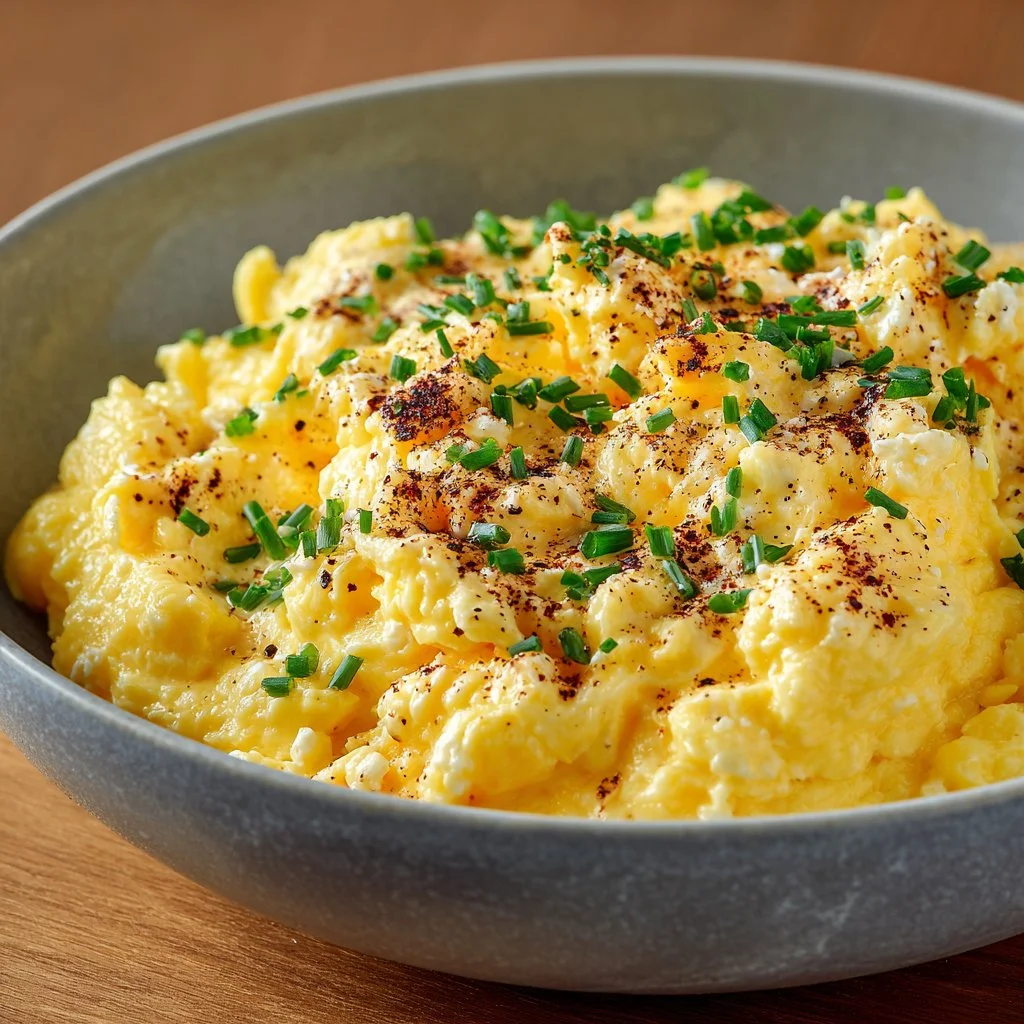
I love a breakfast that feels indulgent without a lot of fuss — that’s why these creamy cottage cheese scrambled eggs are on heavy rotation. They’re silkier than plain scrambled eggs, boosted with protein from the cottage cheese, and come together in under 10 minutes. Perfect for busy mornings, a relaxed weekend brunch, or when you want something simple that still tastes special. If you like cottage-cheese-forward breakfasts, this pairs beautifully with a warm grain bowl — try the baked blueberry cottage cheese breakfast bowl for a sweet-savory morning.
Why you’ll love this dish
This recipe turns ordinary scrambled eggs into a lusciously soft, high-protein meal with almost no extra work. A few reasons to make it:
- Quick: Whisk, cook, and eat in about 8–10 minutes.
- High-protein: Cottage cheese boosts satiety and adds a creamy tang.
- Versatile: Works for solo breakfasts, family brunches, or as a light dinner.
- Kid-friendly texture: Soft curds are easier for little ones to chew than firm eggs.
“I started adding cottage cheese to my eggs and never looked back — they’re silkier, stay moist longer, and I feel full until lunch.” — a satisfied home cook
How this recipe comes together
Step-by-step overview:
- Whisk whole eggs with cottage cheese, salt, and pepper until mostly smooth.
- Heat a nonstick skillet with butter or oil over medium.
- Pour in the mixture, let it briefly set, then gently fold to form soft curds.
- Remove the pan while the eggs are still glossy; residual heat finishes them.
This is a gentle, low-and-slow technique that produces custardy curds instead of dry, rubbery eggs.
What you’ll need
- 2–4 large eggs (use 2 for one person, 3–4 for extra portions)
- 1/4–1/2 cup cottage cheese (small-curd for smoother texture; full-fat for richness)
- Salt, to taste (start light — you can always add more)
- Freshly ground black pepper, to taste
- 1 tsp butter or a splash of neutral oil (vegetable, canola, or light olive oil)
- Optional toppings: chopped chives, fresh herbs, sautéed spinach, or halved cherry tomatoes
Notes/substitutions:
- Greek yogurt or ricotta can substitute for cottage cheese if you prefer a different tang/texture; use the same volume.
- For lower sodium, choose low-sodium cottage cheese and adjust salt at the end.
- If you want a dairy-free version, try a silken tofu scramble with a pinch of turmeric and kala namak for an eggy note.
For more cottage-cheese breakfast ideas, see this blueberry cottage cheese smoothie.
Directions to follow
- Crack the eggs into a bowl. Add the cottage cheese, a pinch of salt, and a few cracks of black pepper. Whisk until the mixture is mostly smooth but not completely liquid — a few little curds are fine.
- Heat a nonstick skillet over medium heat and add the butter or oil. Swirl to coat.
- Pour the egg mixture into the hot pan. Let it sit undisturbed for 10–15 seconds so the base begins to set.
- Using a silicone spatula, gently stir and fold the eggs from the edges toward the center. Work slowly to create soft, custardy curds.
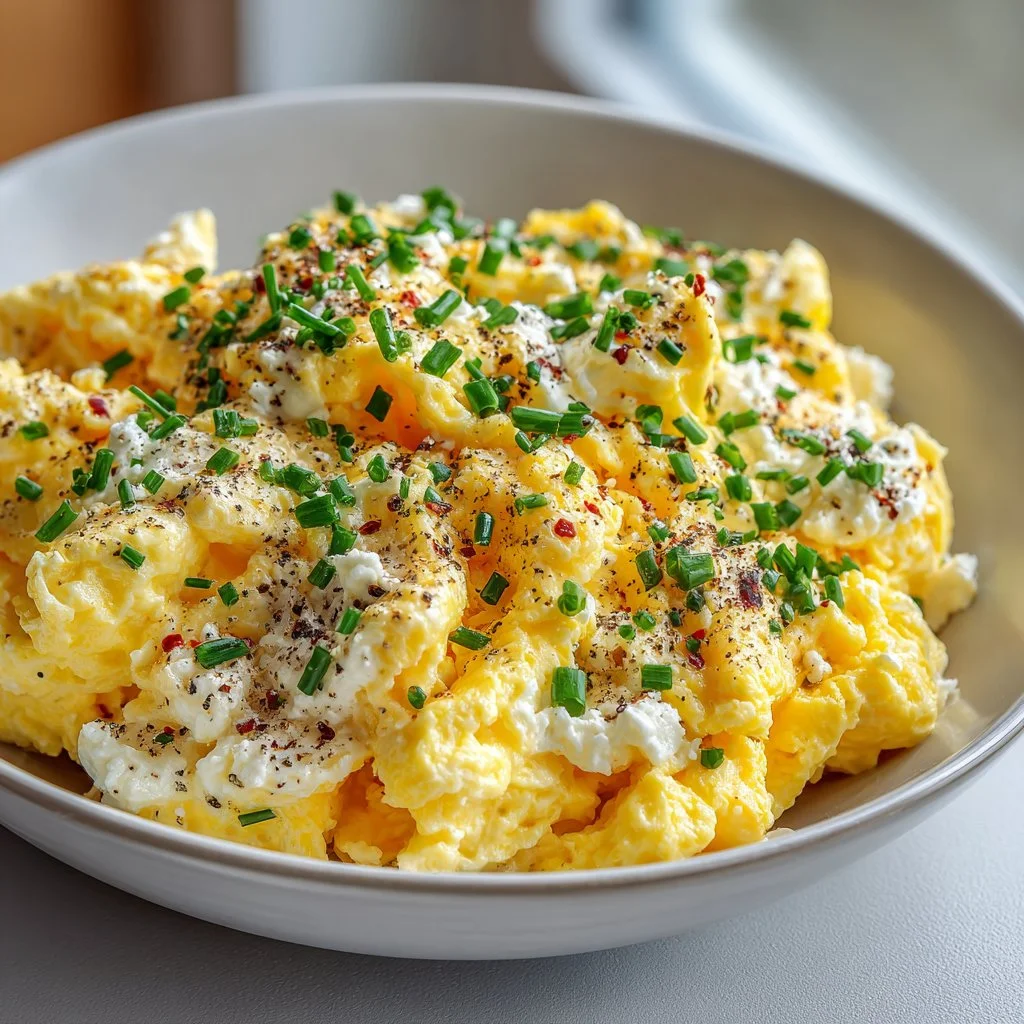
- Cook until the eggs are just set but still glossy and moist — they should look a touch underdone. Remove the pan from the heat; residual heat will finish them.
- Serve immediately, garnished with chopped chives, fresh herbs, sautéed spinach, or halved cherry tomatoes.
If you’d rather a super-quick microwave option for single servings, there are cottage-cheese scramble variations that adapt well to short, interrupted microwaving — for inspiration check a simple cottage-cheese smoothie breakfast like this chocolate cottage cheese smoothie (for ideas about texture and ratios).
Best ways to enjoy it
Serving suggestions:
- Spoon over toasted sourdough or a buttered English muffin and top with sliced avocado and hot sauce.
- Fold into a warm wrap with smoked salmon, dill, and arugula for a luxe breakfast sandwich.
- Make a light brunch plate: scrambled eggs, halved cherry tomatoes, roasted baby potatoes, and a green salad.
- For low-carb mornings, serve the eggs on a cloud bread or alongside grilled asparagus — they’re lovely with this cottage cheese blueberry cloud bread.
Pair with a bright coffee, green tea, or a citrusy sparkling water to cut the richness.
Storage and reheating tips
Storage:
- Cool leftovers within 2 hours and refrigerate in an airtight container. Properly stored, these eggs keep for 3–4 days.
- Freezing is not recommended; cottage cheese changes texture when frozen and thawed, and scrambled eggs become watery.
Reheating:
- Reheat gently on the stovetop over low heat, stirring often, until just warmed through.
- Or microwave in 20–30 second bursts, stirring between intervals to preserve creaminess.
- Reheat until steaming hot; if you follow USDA guidance, heat to 165°F (74°C) for safety.
Pro chef tips
- Use a nonstick pan and a silicone spatula to avoid tearing delicate curds.
- Don’t over-whisk: overbeating introduces air and can make curds less silky. Aim for mostly smooth with small cottage-cheese bits.
- Cook over moderate heat. Too hot and the eggs will turn dry and rubbery; too low and they’ll take forever and release water.
- Salt at the start if using plain cottage cheese, but hold back a little for seasoning at the end.
- Remove from heat when eggs look slightly underdone — carryover cooking will finish them.
- If your cottage cheese is very wet, drain briefly in a fine sieve to avoid thinning the eggs.
Try pairing the technique with richer proteins or bowls inspired by other recipes, like a savory cottage cheese chicken parmesan bowl for dinner-style flavors.
Creative twists
- Cheesy: Stir in a tablespoon or two of grated cheddar, parmesan, or feta at the end.
- Veg-forward: Fold in quickly sautéed mushrooms, spinach, or diced roasted peppers.
- Mediterranean: Add chopped olives, sun-dried tomatoes, and crumbled feta.
- Mexican-style: Stir in a spoonful of salsa, cilantro, and top with avocado.
- Brunch upgrade: Fold in smoked salmon and dill, finish with lemon zest.
- Vegan swap: Use mashed silken tofu with a pinch of turmeric and kala namak for that sulfurous “eggy” taste.
- Make it spicy: Finish with a dash of hot sauce or smoked paprika.
Common questions
Q: Can I use low-fat cottage cheese?
A: Yes. Low-fat or nonfat cottage cheese will work but yields a slightly less rich, less creamy result. If you want extra silkiness, use full-fat cottage cheese or add a small knob of butter at the end.
Q: Can I mix the eggs and cottage cheese ahead of time?
A: You can whisk the eggs and cottage cheese together and refrigerate for up to 24 hours, but for best texture cook them soon after mixing. If refrigerated, bring the bowl to room temperature briefly before cooking to reduce cooking time and help form tender curds.
Q: How long do leftovers last and is reheating safe?
A: Store in the fridge for 3–4 days. Reheat gently on the stovetop or in short microwave bursts until steaming hot (165°F/74°C recommended).
Q: Can I freeze cooked scrambled eggs with cottage cheese?
A: It’s not recommended—freezing changes the cottage cheese texture and often makes the eggs watery when thawed.
Q: Will cottage cheese make the eggs runny?
A: If you use a large amount of very watery cottage cheese, the eggs may be looser. Use 1/4–1/2 cup as suggested and drain excess liquid if needed. Remove from heat when slightly underdone to finish with residual heat.
Conclusion
For a classic take on this idea, see the detailed Creamy Cottage Cheese Scrambled Eggs Recipe – Allrecipes. If you want a lighter, high-protein interpretation, check out High-Protein Scrambled Eggs with Cottage Cheese – Skinnytaste. For another simple, protein-forward cottage-cheese-and-egg combination, read Creamy Cottage Cheese Eggs (High-Protein) – Eat the Gains.