
Bright, creamy pesto wrapped around warm pasta with tender seared chicken—this dish comes together fast and tastes like a weeknight win.
It’s perfect for busy evenings, last-minute guests, or when you want something comforting but green and bright.
Keep your pantry staples ready and you can have this on the table in about 25–30 minutes.
For a creamier spin and inspiration, try this creamy pesto chicken pasta for a similar riff.
Why You’ll Love This Pesto Pasta With Chicken
- Fast to make in about 30 minutes.
- Uses pantry-friendly pasta and jarred pesto for speed.
- Comforting creaminess with a fresh herbal lift from basil.
- High-protein meal that satisfies adults and kids alike.
- Versatile: swaps into gluten-free or veggie-forward versions easily.
- Scales up well for meal prep or a dinner party.
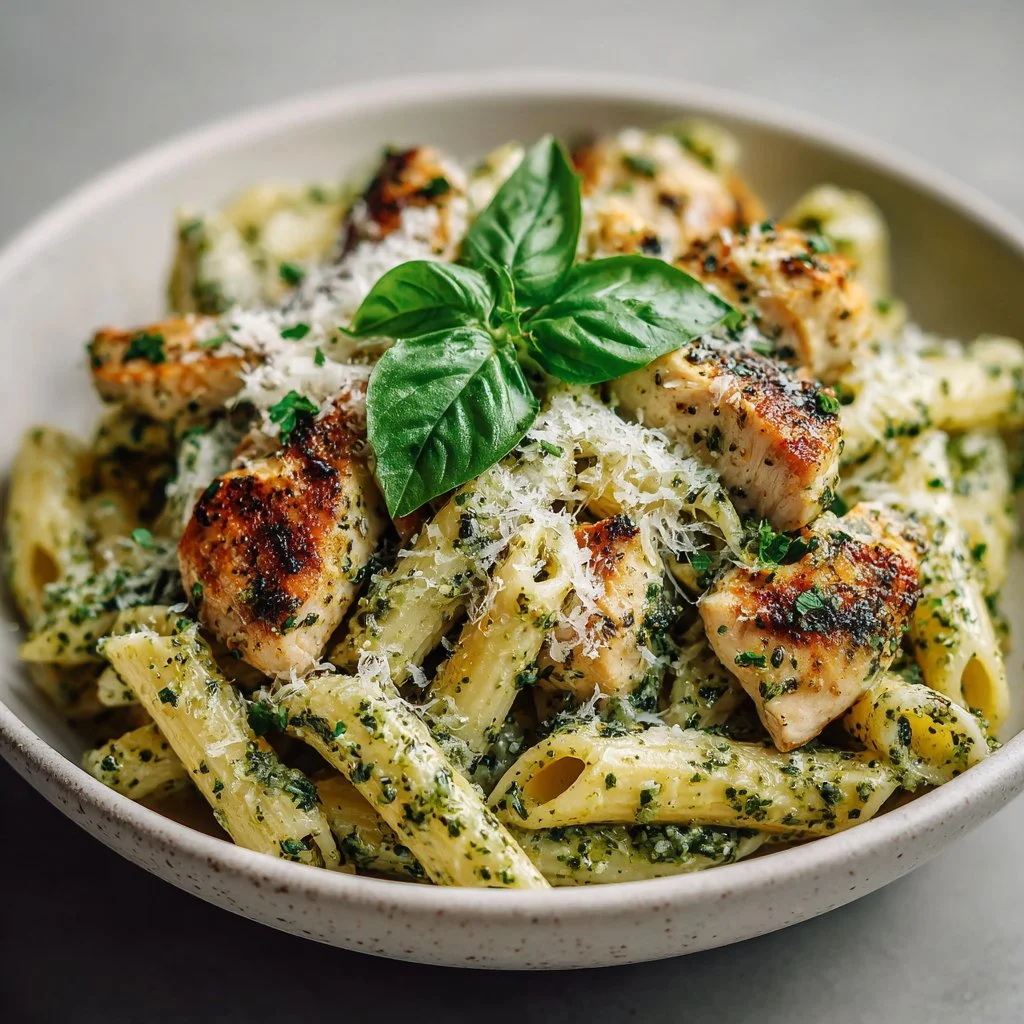
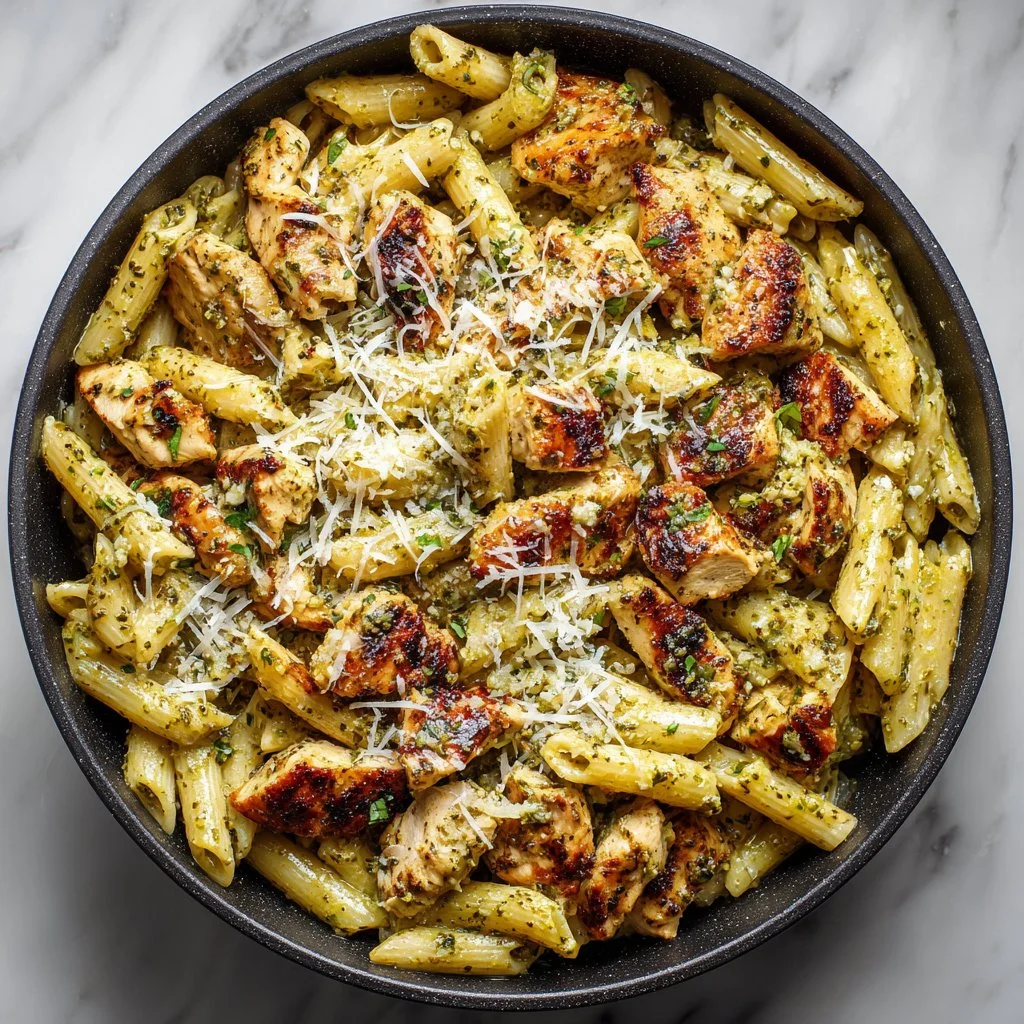
The flavor is herb-forward with the sharp, nutty tang of Parmesan cutting through a silky, cream-thickened pesto sauce. Texture is key: al dente pasta, golden-seared chicken bites, and a sauce that clings to every noodle for perfect mouthfuls.
“Absolutely loved it — restaurant flavor in 30 minutes. The chicken was juicy and the sauce was rich without being heavy. Five stars!” — A happy reader
Key Ingredients for Pesto Pasta With Chicken
Pesto sauce
Pesto is the backbone of this dish; it brings basil, garlic, nuts, olive oil, and umami from Parmesan. Buy a good-quality refrigerated or freshly prepared pesto for brighter, fresher flavor. If you substitute with a lower-quality jarred pesto, boost brightness with a squeeze of lemon and a pinch of red pepper flakes.
Chicken breast
Boneless, skinless chicken gives lean protein and rapid cooking when diced. Look for even-size pieces or trim and cube at home so everything cooks evenly. If you swap for thighs, expect richer flavor and slightly longer cooking time; thighs stay juicier but change the overall mouthfeel.
Pasta (penne or spaghetti)
The pasta surface and shape affect how the sauce clings: penne pockets trap the sauce while spaghetti gets silky coating on each strand. Buy semolina or bronze-cut pasta for better sauce adherence. If you use gluten-free pasta, cook to slightly firmer than package instructions to avoid mush after tossing in sauce.
Heavy cream
Cream softens pesto’s intensity and creates a velvety emulsion that coats pasta. Whole cream gives the best mouthfeel; for a lighter version, use half-and-half but expect a thinner sauce. If you substitute Greek yogurt, add it at off-heat to prevent curdling and consider thinning with reserved pasta water.
Full Ingredient List for Pesto Pasta With Chicken
- 2 cups pasta (e.g., penne or spaghetti)
- 1 lb chicken breast, diced
- 1 cup pesto sauce
- 1 cup heavy cream
- 2 tablespoons olive oil
- Salt and pepper to taste
- Parmesan cheese for serving
- Fresh basil for garnish
Step-by-Step Instructions for Pesto Pasta With Chicken
Step 1: Cook the pasta according to package instructions
Bring a large pot of generously salted water to a rolling boil. Add the pasta and cook until al dente, following the lower end of package timing for best texture.
Pro Tip: The pasta should feel firm but not chalky; it will finish cooking when tossed with the sauce. Keep one cup of pasta water before draining.
Step 2: Sear the diced chicken in olive oil
While the pasta cooks, heat 2 tablespoons of olive oil in a large skillet over medium heat. Add the diced chicken, season with salt and pepper, and let it cook undisturbed for the first 2–3 minutes to build color, then stir and cook until golden and cooked through, about 6–8 minutes total.
Pro Tip: The chicken pieces should show a golden crust and release easily from the pan; if they stick, they need a bit more time to develop color. For searing technique, you can reference pan-sear tips from similar recipes like this cowboy butter chicken pasta for timing guidance.
Step 3: Add pesto and heavy cream, reduce heat to low
Lower the heat and stir the pesto into the skillet, then add heavy cream and whisk until smooth. Heat gently until the sauce is warmed through and glossy—do not boil hard or the cream may separate.
Pro Tip: The sauce should be smooth and slightly thickened, steaming but not bubbling aggressively. Visually, it will shimmer and coat the back of a spoon.
Step 4: Toss in the cooked pasta
Add the drained pasta to the skillet and toss thoroughly to combine, adding reserved pasta water a splash at a time if you need to loosen the sauce. The starchy water helps the sauce cling and emulsify.
Pro Tip: The final dish should look glossy and cohesive, with each pasta piece coated; if it looks dry, add 1–2 tablespoons of pasta water until it looks silky.
Step 5: Serve immediately with Parmesan and basil
Plate the pasta hot, grate a generous amount of Parmesan over the top, and finish with torn fresh basil leaves. Serve at once to preserve the brightness of the basil and the texture of the pasta.
Pro Tip: The finished plate should smell intensely of basil and Parmesan, with steam rising and a sheen on the sauce indicating perfect emulsion.
Expert Tips for Pesto Pasta With Chicken
- Use cold pesto warmed gently: adding pesto to too-hot cream mutes fresh basil aromatics. Warm it over low heat.
- Salt the pasta water well: it’s the primary seasoning for the pasta itself and prevents a flat final dish.
- Avoid overcooking the chicken: dice into uniform pieces and remove from heat the instant juices run clear.
- Use reserved pasta water as a binder: add a tablespoon at a time to loosen sauce and create a glossy finish.
- Temperature tip — finish on low heat: simmering aggressively can break the emulsion and separate the cream.
- Texture troubleshooting — if sauce separates, remove from heat and whisk in a tablespoon of cold butter or a splash of cream to bring it back.
- Equipment tip — use a wide skillet: a broad pan lets pasta and sauce mix evenly and reduces hot spots.
- Common mistake — adding cheese too early: add Parmesan off-heat or at the end to avoid graininess and over-thickening.
Storage & Freezing for Pesto Pasta With Chicken
Fridge storage
Cool the pasta to room temperature within 2 hours and place in an airtight container. It will keep well for 3–4 days in the refrigerator. Store sauce and pasta together for convenience or separately to preserve texture.
Freezer storage
For best results, freeze only the cooked chicken and sauce, not the pasta, to avoid mushy noodles. Use a freezer-safe container or heavy-duty freezer bag, leaving a small headspace; freeze up to 2 months.
Thawing
Thaw frozen sauce overnight in the refrigerator. If frozen in a bag, submerge the sealed bag in cold water for faster thawing. Do not refreeze after thawing.
Reheating
Reheat gently on the stovetop over low heat with a splash of milk or reserved pasta water to loosen the sauce. Microwave reheating works too—cover and heat in 30-second bursts, stirring in between, adding liquid as necessary.
Variations & Substitutions for Pesto Pasta With Chicken
Lemon-Garlic Pesto Twist
Stir in 1 teaspoon lemon zest and an extra clove of minced garlic when adding the pesto. The result is brighter and slightly more aromatic, perfect for summer dinners.
Spinach and Walnut Pesto
Replace jarred pesto with homemade spinach-walnut pesto for a milder, nuttier sauce. The color will be deeper green and the flavor less pungent, which pairs well with shaved Parmesan.
Cream-Lightened Version
Swap half the heavy cream for plain Greek yogurt (added off-heat) or use half-and-half to reduce richness. The sauce will be tangier and lighter but still creamy; avoid high heat to prevent curdling.
Veggie-Forward Swap
Omit chicken and add roasted vegetables like zucchini, cherry tomatoes, and mushrooms. This creates a vegetarian main that’s hearty, with extra texture from roasted vegetables.
Frequently Asked Questions About Pesto Pasta With Chicken
Can I use store-bought pesto, or should I make it from scratch?
Store-bought pesto is a great shortcut and perfectly fine for weeknight meals. Choose refrigerated pesto when possible for fresher flavor; if using shelf-stable jarred pesto, brighten it with a squeeze of lemon and a pinch of flaky salt before adding to the cream.
What’s the best pasta shape for Pesto Pasta With Chicken?
Penne, rigatoni, or fusilli trap chunks of chicken and sauce and are excellent choices. Spaghetti or linguine give a silkier mouthfeel and let the sauce coat each strand; choose based on whether you prefer little pockets of sauce or a silky ribbon of pasta.
How do I prevent the cream from separating when I heat it?
Keep heat low and avoid rapid boiling once cream is added. Stir gently and finish the sauce on low, removing from direct heat as soon as it’s cohesive and glossy. If separation occurs, whisk in a small knob of cold butter or a splash of cream off the heat.
Can I make this ahead for meal prep?
Yes. Store sauce and chicken separately from pasta when possible. Reheat sauce and chicken on the stovetop and add freshly cooked or quickly blanched pasta to combine. Alternatively, mix and store but expect slightly softer pasta texture after refrigeration.
Is pesto safe to freeze?
Pesto freezes well in small portions (ice cube trays or small jars) and keeps for several months. Thaw in the refrigerator and stir into warm cream or pasta; frozen pesto may darken slightly but retains flavor when used in cooked applications.
Final Thoughts on Pesto Pasta With Chicken
This Pesto Pasta With Chicken is an easy, crowd-pleasing dinner that balances herb brightness with creamy comfort. If you enjoyed the recipe, please leave a star rating in the recipe card below and pin it to Pinterest for later.
For another creamy take, check out Creamy Chicken Pesto Pasta from The Mediterranean Dish, or compare techniques with the classic Pesto Pasta with Chicken on Allrecipes. For a quick, popular version with step photos, see this Best Chicken Pesto Pasta recipe on Delish.
Pesto Pasta With Chicken
Ingredients
Method
- Bring a large pot of generously salted water to a rolling boil. Add the pasta and cook until al dente, following the lower end of package timing.
- Keep one cup of pasta water before draining.
- While the pasta cooks, heat 2 tablespoons of olive oil in a large skillet over medium heat.
- Add the diced chicken, season with salt and pepper, and cook undisturbed for the first 2-3 minutes to build color.
- Stir and cook until golden and cooked through, about 6-8 minutes total.
- Lower the heat and stir the pesto into the skillet, then add heavy cream and whisk until smooth.
- Heat gently until the sauce is warmed through and glossy—do not boil hard.
- Add the drained pasta to the skillet and toss thoroughly to combine.
- Add reserved pasta water a splash at a time if you need to loosen the sauce.
- Plate the pasta hot, grate a generous amount of Parmesan over the top, and finish with torn fresh basil leaves.