
Bright, fresh, and impossibly light — these Vietnamese spring rolls are the kind of recipe you make on a weeknight and feel fancy about by the time you sit down to eat.
They come together fast, travel well, and are endlessly customizable.
Before you roll, gather everything so the assembly feels calm, not rushed. If you want a sweet follow-up treat, try something like gooey s’mores rolls for dessert.
Why You’ll Love This Fresh Vietnamese Spring Rolls
– Light, fresh flavors that never feel heavy.
– Quick assembly that’s great for parties and weeknights.
– A balanced texture profile: chewy rice paper, crunchy veg, tender shrimp.
– Naturally gluten-free if you choose GF soy sauce.
– Customizable for vegetarian or protein-forward variations.
– Healthy and low in calories without sacrificing taste.
These spring rolls deliver bright citrus, savory peanut-hoisin depth, fresh herb perfume, and a satisfying contrast between soft noodles and crisp veggies. Each bite hits the mouth with clean, layered flavors that feel both delicate and deeply satisfying.
"5 stars — These were a hit. Bright, fresh, and easy to scale for guests. The peanut-hoisin dip stole the show." — Reader R.M.
Key Ingredients for Fresh Vietnamese Spring Rolls
Choose the right three or four priority ingredients and the recipe sings. Here are the essentials and why they matter.
Rice paper wrappers
Rice paper determines texture and appearance. Buy fresh, round wrappers that are thin but not brittle. If you substitute with lettuce wraps you lose the chewy, translucent exterior that holds the roll together.
Large shrimp, cooked and halved lengthwise
Shrimp give sweet, meaty contrast and make the roll feel substantial. Use large shrimp for visual appeal and easy eating. If you swap to tofu, press it first and marinate for flavor and firmer texture.
Vermicelli noodles
Rice vermicelli provide a light, chewy layer that soaks up dressing and balances herbs. Cook them al dente and rinse in cold water to stop cooking. If you use soba or glass noodles, expect a different chew and slightly different flavor absorption.
Fresh herbs: mint, cilantro, Thai basil
Herbs add layered aromatic lift that defines the roll’s profile. Buy fresh, crisp leaves and keep them refrigerated until assembly. If you skip one herb, increase another — but don’t omit herbs entirely or the roll will taste flat.
Full Ingredient List for Fresh Vietnamese Spring Rolls
– 8 rice paper wrappers
– 8 large shrimp, cooked and halved lengthwise
– 1 cup cooked vermicelli noodles
– 1 cup shredded lettuce
– 1/2 cup grated carrots
– 1/2 cup fresh mint leaves
– 1/2 cup fresh cilantro leaves
– 1/4 cup Thai basil leaves
– 1/4 cup chopped peanuts (optional)
– 1/4 cup hoisin sauce
– 1/4 cup peanut butter
– 2 tablespoons soy sauce
– 1 tablespoon lime juice
– 1 tablespoon fish sauce
– 1 teaspoon sugar
– 1 clove garlic, minced
– 1 small chili, minced (optional)
Step-by-Step Instructions for Fresh Vietnamese Spring Rolls
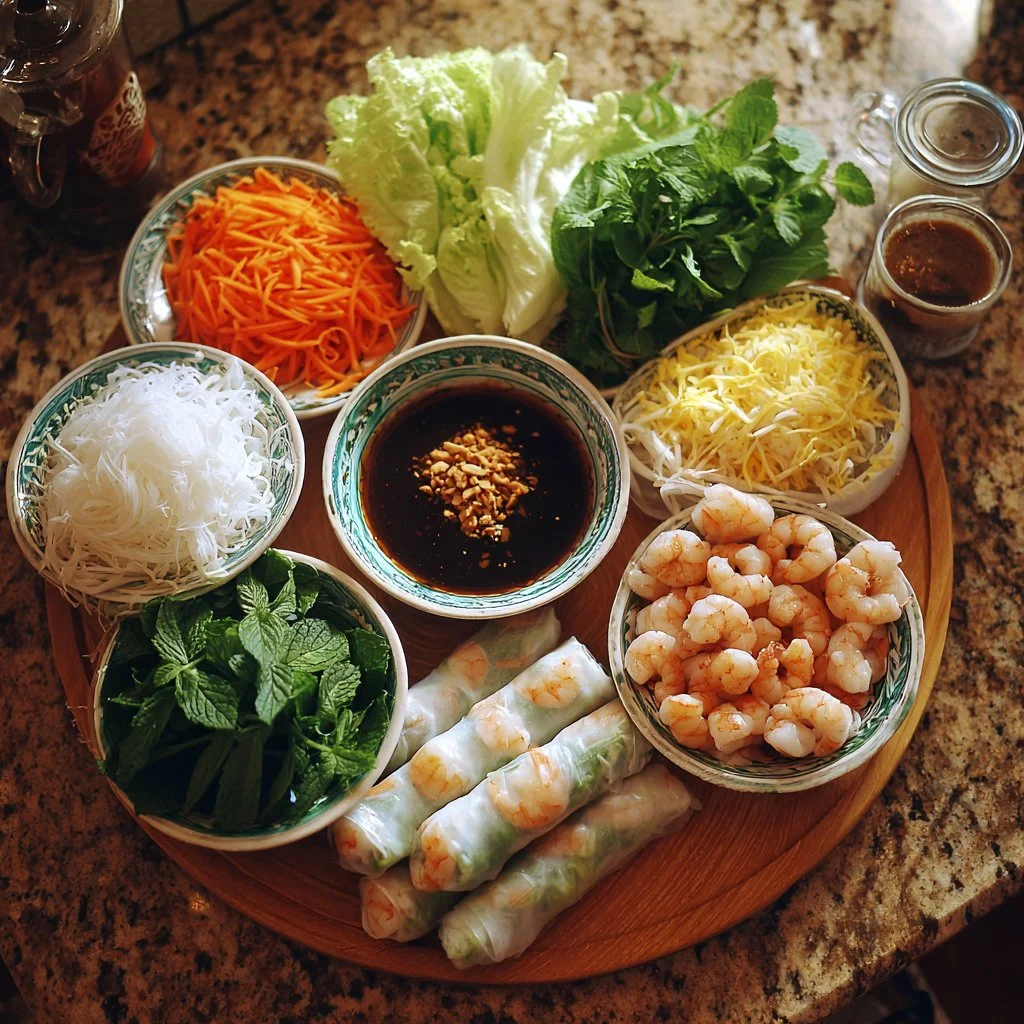
Step 1: Prepare all your ingredients and have them ready on a clean surface.
Lay out shrimp, noodles, lettuce, carrots, and herbs in small bowls. Keep a damp kitchen towel nearby and a large shallow bowl of warm water for the wrappers.
Pro Tip: The station should look orderly — small bowls lined up like a sushi conveyor.
Step 2: Soften a rice paper wrapper by dipping it into warm water for about 15–20 seconds until it becomes pliable.
Swirl the wrapper gently rather than dunking roughly. It should soften but not become gummy or tear.
Pro Tip: The wrapper should look translucent and feel flexible but still hold shape.
Step 3: Lay the softened wrapper on a damp kitchen towel or cutting board with its rough side up.
Position the wrapper so the long edge faces you; this makes rolling easier. Work one at a time to avoid sticking.
Pro Tip: The wrapper should sit flat and slightly tacky to the touch.
Step 4: Arrange the fillings in the center of the wrapper. Add a handful of shredded lettuce, a nest of vermicelli noodles, grated carrots, herbs, and two shrimp halves.
Keep fillings compact and centered; overstuffing makes rolling impossible. Place shrimp with the cut side up for a pretty cross-section.
Pro Tip: The filling mound should be about 2–3 inches wide and not bulging past the edges.
Step 5: Fold the sides of the wrapper over the filling, then roll tightly from bottom to top like a burrito.
Tuck the bottom edge over the fillings, fold in the sides, and roll while keeping pressure to compress the ingredients. Seal the edge with a dab of water.
Pro Tip: The finished roll should feel snug, with no loose pockets and a smooth, glossy seam.
Step 6: Repeat with the remaining ingredients and prepare the dipping sauce by whisking hoisin, peanut butter, soy sauce, lime juice, fish sauce, sugar, minced garlic, and chili until smooth.
Adjust consistency with warm water if needed. Taste and balance sweet, salty, and acidic notes.
Pro Tip: The sauce should be thick but pourable and aroma-forward with garlic and lime.
Step 7: Serve the spring rolls with the dipping sauce on the side. Arrange on a plate and garnish with chopped peanuts.
Cut rolls diagonally to showcase the shrimp, if desired. Serve immediately for the best texture.
Pro Tip: Rolls should look glossy, herbs visible through the wrapper, and peanuts sprinkled on the sauce.
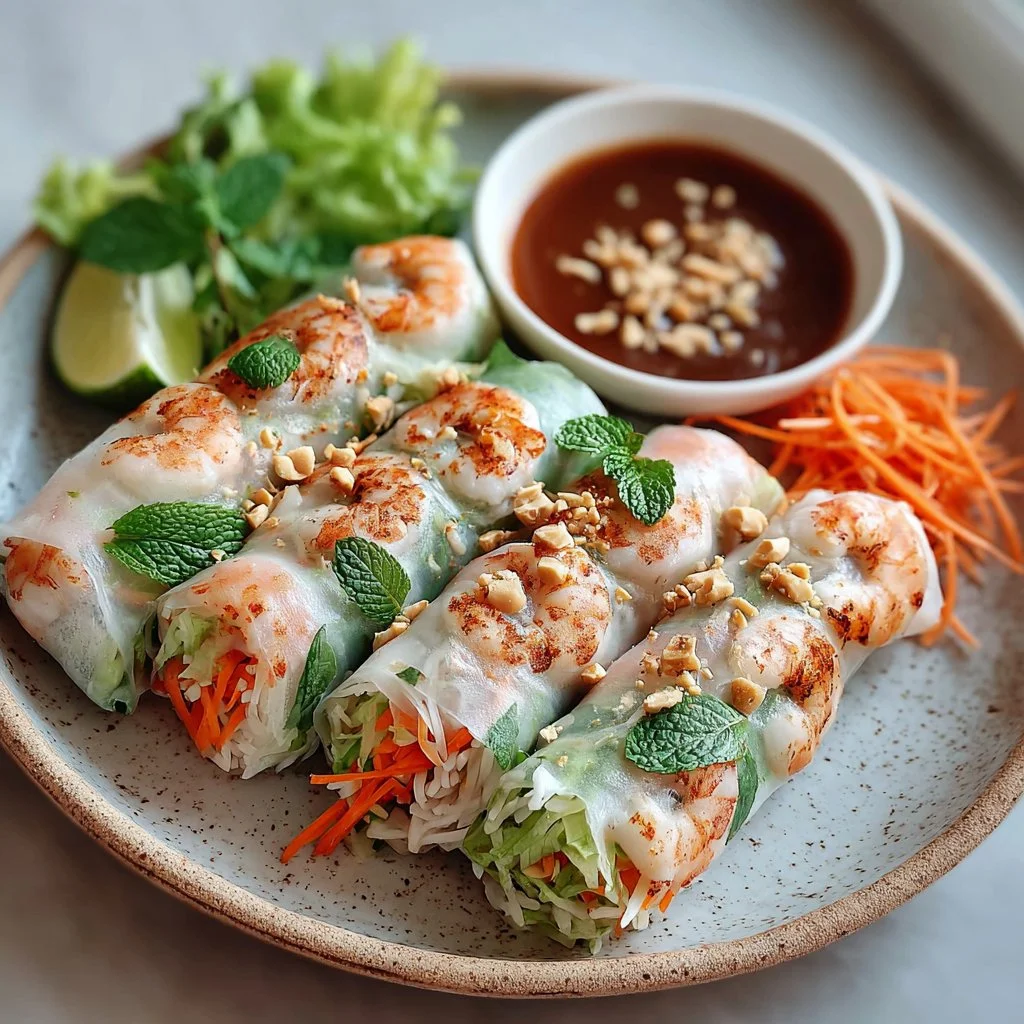
In the step-by-step flow, keep your station tidy and work quickly to prevent wrappers from drying. If you want a playful comparison for a party menu, pairing with a warm dessert like St. Patrick’s cinnamon rolls can make a memorable menu.
Expert Tips for Fresh Vietnamese Spring Rolls
– Chill shrimp and herbs until the last minute to keep the rolls crisp.
– If wrappers tear, dampen the torn edge and press to seal; small rips are fixable.
– Use room-temperature water to soften wrappers; too-hot water makes them sticky and fragile.
– For consistent texture, rinse vermicelli under cold water after cooking and drain well.
– A little fish sauce in the dipping sauce adds umami; add it slowly and taste.
– Use a damp towel to stack finished rolls so they don’t dry and stick; avoid plastic wrap directly on them.
– Invest in a wide shallow bowl for dipping wrappers — it shortens dunk time and prevents tearing.
– Common mistake: overfilling. Keep the filling compact for tidy, bite-sized rolls.
Storage & Freezing for Fresh Vietnamese Spring Rolls
Fridge storage: Store in an airtight container lined with a damp paper towel to keep wrappers from drying. Use within 24 hours for best texture.
Freezer storage: Fresh rolls do not freeze well; freezing breaks the wrapper and changes texture. Avoid freezing assembled rolls.
Thawing: If you freeze components (noodles or shrimp) separately, thaw in the fridge overnight before assembling.
Reheating: These are best served fresh. If the dipping sauce was chilled, let it sit at room temperature 10 minutes before serving to restore aromas. Use shallow airtight containers or reusable silicone boxes for fridge storage.
Variations & Substitutions for Fresh Vietnamese Spring Rolls
Shrimp-free vegetarian rolls: Replace shrimp with marinated, grilled tofu or thin slices of avocado. The result is creamy and herb-forward with the same refreshing bite.
Chicken and mango rolls: Swap shrimp for shredded poached chicken and add thin mango slices. Expect a sweet-savory balance and a more filling roll.
Spicy pork rolls: Use thinly sliced Vietnamese-style grilled pork (thịt nướng) and add extra chili to the dipping sauce. This yields a smoky, spicy profile with deeper savory notes.
Crunchy slaw rolls: Add a slaw of cabbage, apple, and lime for extra crunch. The texture becomes more robust and the flavor turns brighter and tangier.
Frequently Asked Questions About Fresh Vietnamese Spring Rolls
Q: How long can I keep assembled spring rolls in the refrigerator?
A: Store assembled rolls in an airtight container with a damp paper towel for up to 24 hours. After that the rice paper tends to dry and the texture degrades. For best results, assemble within an hour of serving.
Q: Can I make the dipping sauce ahead of time?
A: Yes. The peanut-hoisin sauce stores well in the fridge for up to 5 days in a sealed jar. Stir or thin with a splash of warm water before serving to bring it back to a smooth, pourable consistency.
Q: What is the best way to prevent rice paper from tearing?
A: Use warm (not hot) water and a wide shallow bowl for a gentle dunk. Let the wrapper rest on a damp towel rather than handling it too much. Over-soaking or rough handling causes tearing.
Q: Are these spring rolls gluten-free?
A: They can be. Use gluten-free rice paper and replace regular soy sauce with tamari or a GF soy sauce alternative. Check the hoisin and peanut butter labels for hidden gluten-containing ingredients.
Q: How do I make these vegan?
A: Replace shrimp with marinated tofu or tempeh. Swap fish sauce in the dipping sauce for extra soy sauce and a touch of lime for depth. The herbs and peanut-hoisin remain the same to preserve bright flavor.
Final Thoughts on Fresh Vietnamese Spring Rolls
These Fresh Vietnamese Spring Rolls are a bright, flexible recipe that rewards good prep and fresh ingredients. Leave a star rating in the recipe card below and pin this to Pinterest to save it for parties and weeknights.
For a step-by-step video and alternate technique, see this helpful guide at Fresh Vietnamese Spring Rolls (with video) – Healthy Nibbles.
If you want a variant with a slightly different peanut sauce and technique, check the detailed walkthrough at Vietnamese Spring Rolls Recipe (Gỏi Cuốn) w/ Peanut Sauce.
For a traditional perspective and more regional tips, read the classic approach at Traditional Fresh Vietnamese Spring Rolls (Goi Cuon).
Fresh Vietnamese Spring Rolls
Ingredients
Method
- Prepare all your ingredients and have them ready on a clean surface.
- Soften a rice paper wrapper by dipping it into warm water for about 15–20 seconds until it becomes pliable.
- Lay the softened wrapper on a damp kitchen towel or cutting board with its rough side up.
- Arrange the fillings in the center of the wrapper in a compact manner.
- Fold the sides of the wrapper over the filling, then roll tightly from bottom to top.
- Repeat with the remaining ingredients.
- Prepare the dipping sauce by whisking hoisin, peanut butter, soy sauce, lime juice, fish sauce, sugar, minced garlic, and chili until smooth.
- Adjust consistency with warm water if needed.
- Serve the spring rolls with the dipping sauce on the side. Arrange on a plate and garnish with chopped peanuts.
- Cut rolls diagonally to showcase the shrimp, if desired.