
Bright, tangy, and impossibly smooth—this Lemon Curd Tart delivers sunshine in every bite.
The crisp, tender crust pairs with a glossy, velvety curd for dessert that feels classic but never dull.
Perfect for weeknight baking or a show-stopping brunch centerpiece.
If you love citrus desserts, this tart becomes an instant staple.
Why You’ll Love This Lemon Curd Tart
– Bright, fresh lemon flavor that isn’t overly sweet.
– Silky, custard-like curd with a glossy finish.
– Buttery, crisp tart shell that provides the perfect contrast.
– Quick to make from pantry staples.
– Easy to scale up for gatherings.
– Looks elegant with minimal effort.
The taste is a clean, puckery lemon that arrives first, followed by rich buttery notes from the curd and crust. The texture contrast is the real star: a fragile, slightly crumbly shortcrust that gives way to a dense, smooth curd that holds clean slices and a glossy sheen.
“I made this for a dinner party and everyone asked for the recipe. The lemon is bright but balanced, and the crust stayed crisp even the next day—perfect!” — 5 stars
Try a zesty lemon beverage to serve with the tart for a light dessert pairing.
Key Ingredients for Lemon Curd Tart
Pick the best core ingredients and the tart performs like a pro. Here are the top picks and why they matter.
Fresh lemon juice (1/2 cup)
Fresh lemon juice gives the bright acidity and fragrant top notes that bottled juice can’t match. Buy firm, heavy lemons for their juice content and zest them before juicing to preserve the oils. Substituting bottled lemon juice will flatten the aroma and often adds an off-metallic finish.
Eggs (3 large eggs + 2 egg yolks)
Whole eggs and extra yolks provide structure, silkiness, and richness to the curd. Use large eggs at room temperature so they incorporate evenly and temper without curdling. Replacing yolks with more whites thins the curd and weakens the set; using only yolks yields a denser, richer curd that may be harder to slice cleanly.
Unsalted butter (4 tablespoons plus 1/2 cup softened for crust)
Butter gives both the crust and curd their signature flavor and mouthfeel. Use high-quality, unsalted butter for predictable seasoning and fresh buttery aroma. Swapping margarine or salted butter changes both texture and salt balance; salted butter can make the curd taste too briny, and low-fat spreads will produce a less tender crust.
All-purpose flour (1 1/4 cups)
All-purpose flour creates a sturdy yet tender tart shell that bakes evenly. Choose a fresh, finely milled AP flour and avoid overworking the dough to keep the crust flaky. Using pastry flour will yield a more delicate crust; whole-wheat will be heartier and a bit denser, changing both texture and flavor.
Full Ingredient List for Lemon Curd Tart
– 1 1/4 cups all-purpose flour
– 1/2 cup unsalted butter, softened (for crust)
– 1/4 cup powdered sugar
– 1/4 teaspoon salt
– 1 egg yolk
– 1/4 cup water (for crust if needed)
– 1 cup sugar
– 1/4 cup cornstarch
– 1 cup water (for curd base)
– 3 large eggs
– 2 egg yolks
– 1/2 cup fresh lemon juice
– 2 tablespoons lemon zest
– 4 tablespoons unsalted butter (for curd)
– Fresh berries (for garnish)
– Powdered sugar (for dusting)
Step-by-Step Instructions for Lemon Curd Tart
Step 1: Make and bake the tart shell
Preheat the oven to 350°F (175°C). In a mixing bowl, combine the flour, softened butter, powdered sugar, and salt and cut or rub together until the mixture resembles coarse crumbs. Add the egg yolk and a splash of water if needed, then press the dough evenly into a tart pan, trimming the edges and docking the base lightly if you like. Bake the crust for 15–20 minutes until the edges and base are a light golden color, then remove and cool completely on a wire rack before adding filling.
Pro Tip: The crust should look pale golden with slightly darker edges and feel firm to the touch; a slightly sunken center means it needed a touch more blind pressure or docking.
Step 2: Start the curd base
In a saucepan, whisk together the sugar, cornstarch, and 1 cup water until smooth. Place the pan over medium heat and stir constantly until the mixture begins to thicken and develops a glossy, translucent sheen—this activates the starch and dissolves the sugar. Remove the pan briefly from the heat so you can safely temper in the egg mixture without scrambling.
Pro Tip: The curd base should coat the back of a spoon and move slowly when the pan is tilted; it should not be lumpy or grainy.
Step 3: Temper and thicken with eggs and lemon
Whisk together the 3 large eggs, 2 egg yolks, fresh lemon juice, and lemon zest in a separate bowl. Pour a few spoonfuls of the hot sugar-cornstarch liquid into the eggs while whisking to temper them, then slowly whisk the warmed egg-lemon mixture back into the saucepan. Return to medium-low heat and cook, stirring constantly, for about 2 minutes more until the curd is thick and glossy.
Pro Tip: When properly tempered, the egg mixture should end up smooth and thick enough to leave a trail when the whisk is lifted; it should smell bright and lemony, not eggy.
Step 4: Enrich the curd and assemble
Remove the pan from heat and stir in the 4 tablespoons of unsalted butter a little at a time until fully melted and incorporated; this makes the curd silky and rich. Pour the finished glossy lemon curd into the cooled tart crust, smoothing the top with a spatula. Chill the tart in the refrigerator for at least 2 hours, until the curd is set and sliceable.
Pro Tip: The curd should settle into the crust with a mirror-like surface and a firm, but slightly wobbly, center when chilled.
Step 5: Garnish and serve
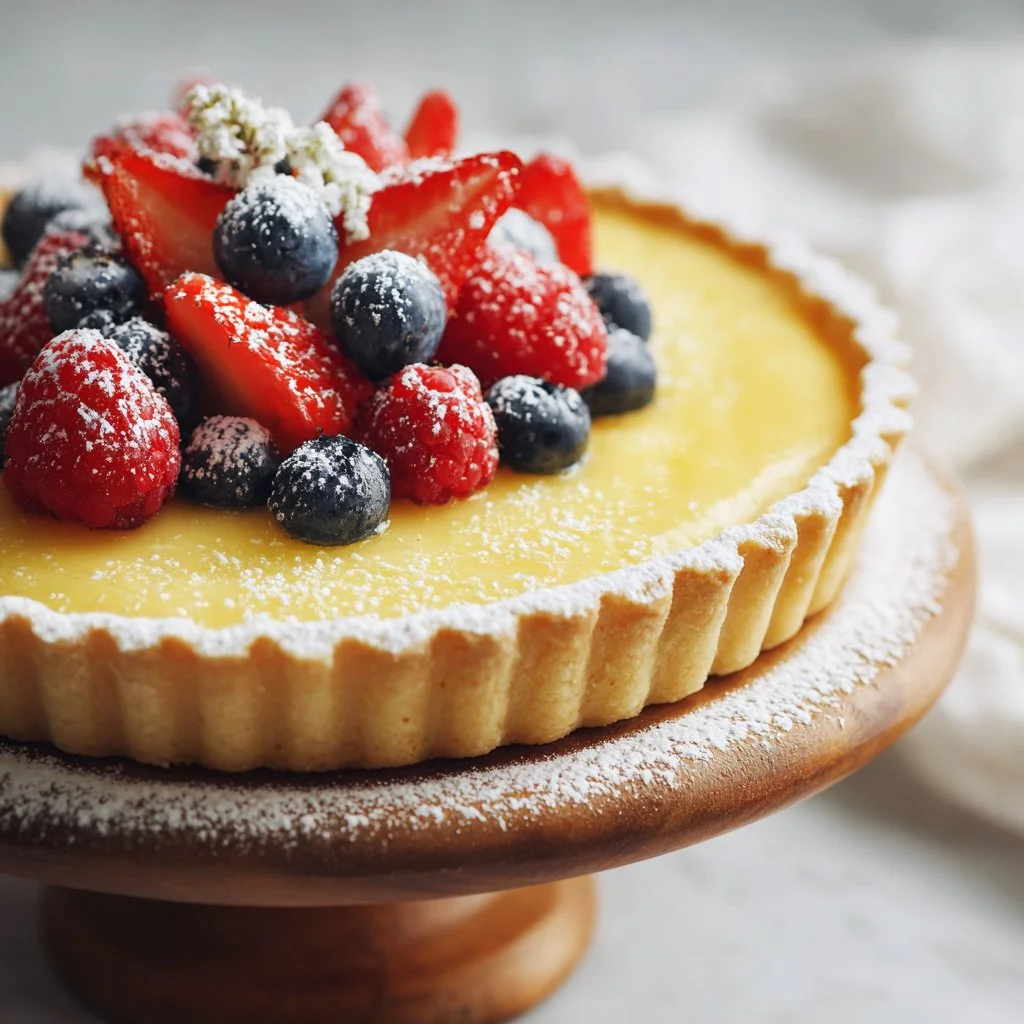
Before serving, scatter fresh berries on top and dust lightly with powdered sugar for contrast and color. For clean slices, run a sharp knife under hot water, dry it, and slice in a single smooth stroke. Serve chilled or at room temperature for maximum flavor.
Pro Tip: A clean slice will reveal a crisp crust edge and a dense, uniform curd layer with no wetness seeping into the crust.
For a lighter citrus pairing, consider serving with a complementary recipe like a lemon blueberry breakfast bake that uses similar citrus notes.
Expert Tips for Lemon Curd Tart
– Use room-temperature eggs for smooth tempering and fewer curdling risks.
– If the curd shows tiny lumps, strain it through a fine-mesh sieve to ensure glossy texture.
– Chill the tart at least 2 hours; overnight improves flavor and ease of slicing.
– Use a tart pan with a removable bottom for the cleanest presentation and easiest slicing.
– Avoid overheating once eggs are added; cook on medium-low and stir constantly to prevent scrambling.
– If the curd is too thin, gently reheat and whisk in a teaspoon of cornstarch dissolved in cold water, then cool and chill.
– To keep the crust crisp, store assembled tart on a wire rack in the fridge in a shallow airtight container; this prevents condensation from softening the base.
– Common mistake: overworking the crust dough leads to toughness—mix until just combined and press gently.
Need a savory lemon contrast? Try pairing a slice with a bright main like slow-cooker lemon herb chicken and rice for a cohesive lemon-forward menu.
Storage & Freezing for Lemon Curd Tart
Refrigerator storage: Store the tart covered loosely with plastic wrap or in a shallow airtight container to avoid absorbing fridge odors. It keeps well for up to 4 days in the refrigerator with the crust remaining reasonably crisp and the curd stable.
Freezer storage: For longer keeping, freeze the tart unglazed and well-wrapped. Wrap first in plastic wrap, pressing gently to prevent frost, then wrap in a layer of foil or place in a freezer-safe container. Freeze for up to 2 months.
Thawing: Thaw the tart overnight in the refrigerator to minimize condensation. Avoid thawing at room temperature, which can cause sogginess.
Reheating: Serve chilled or bring to room temperature before slicing. Do not microwave the whole tart; instead reheat slices briefly for a warm variant by placing on a baking sheet in a 300°F oven for 5–7 minutes.
Variations & Substitutions for Lemon Curd Tart
1) Lime Curd Tart — Swap fresh lime juice and zest for lemon for a punchier, tarter flavor. The texture remains the same, but the citrus will feel more tropical and slightly more acidic.
-
Lemon Meringue Tart — Top the chilled curd with a torched meringue (whipped egg whites + sugar) and torch briefly for a classic lemon meringue experience. This adds a sweet, toasted contrast to the tart curd.
-
Berry-Layered Lemon Curd Tart — Spread a thin layer of mixed berry jam on the crust before pouring in the curd, then top with fresh berries. The jam acts as a moisture barrier and adds a fruity counterpoint to the lemon.
-
Gluten-Free Crust — Replace the all-purpose flour with a gluten-free 1:1 flour blend and adjust hydration slightly. The crust will be more crumbly but still pairs beautifully with the lemon curd.
Frequently Asked Questions About Lemon Curd Tart
Q: How long does homemade lemon curd tart last in the fridge?
A: Stored in a covered container or wrapped tightly, the assembled tart stays best for up to 4 days. After that, the crust will begin to absorb moisture from the curd and lose its crispness. Keep chilled and avoid warm storage.
Q: Can I make the lemon curd ahead of time?
A: Yes—lemon curd can be made up to 3 days ahead and refrigerated in an airtight container. Rewarm gently before pouring into a baked crust if you prefer a slightly softer finish, or chill thoroughly for firm slicing.
Q: Why did my curd become grainy or curdled?
A: Graininess usually comes from overheating or curdling the eggs. Always temper eggs with a small amount of hot liquid before combining and cook on medium-low while stirring constantly. If lumps form, strain the curd through a fine sieve and cool quickly.
Q: How do I prevent the crust from getting soggy?
A: Blind-bake the crust until set and golden. For extra protection, brush the cooled pastry with a thin layer of melted chocolate or lightly beaten egg white and flash-bake for a minute; this seals the crumb and keeps the curd from seeping in.
Q: Can I bake the curd inside the tart shell instead of cooking it on the stove?
A: You can bake a curd-like filling, but stovetop curd allows precise control and a silkier texture. Baking often requires a water bath and careful monitoring to avoid overcooking the eggs; stovetop is faster and yields glossier results.
Final Thoughts on Lemon Curd Tart
If you love bright, refined desserts, this Lemon Curd Tart is a reliable showstopper that balances texture and flavor beautifully. Please leave a star rating in the recipe card below and pin this tart to your Pinterest boards for later.
For inspiration and further reading on lemon curds and tarts, check out Carla Hall’s take on extra-puckery curd at Extra-Puckery Lemon Curd – Carla Hall, a detailed lemon tart walkthrough at Lemon Tart – Preppy Kitchen, and Ina Garten’s classic Lemon Curd Tart recipe on Food Network at Lemon Curd Tart Recipe | Ina Garten – Food Network.
Lemon Curd Tart
Ingredients
Method
- Preheat the oven to 350°F (175°C). In a mixing bowl, combine the flour, softened butter, powdered sugar, and salt. Cut or rub together until the mixture resembles coarse crumbs.
- Add the egg yolk and a splash of water if needed, then press the dough evenly into a tart pan, trimming the edges and docking the base lightly.
- Bake for 15–20 minutes until the edges and base are light golden, then remove and cool completely on a wire rack.
- In a saucepan, whisk together the sugar, cornstarch, and 1 cup water until smooth. Place the pan over medium heat and stir constantly until the mixture thickens and becomes glossy.
- In a separate bowl, whisk together the 3 large eggs, 2 egg yolks, fresh lemon juice, and lemon zest.
- Pour a few spoonfuls of the hot sugar-cornstarch liquid into the eggs while whisking to temper them, then slowly whisk the warmed egg-lemon mixture back into the saucepan.
- Return to medium-low heat and cook, stirring constantly for about 2 minutes more until the curd is thick and glossy.
- Remove the pan from heat and stir in the 4 tablespoons of unsalted butter a little at a time until fully melted and incorporated.
- Pour the finished lemon curd into the cooled tart crust, smoothing the top with a spatula. Chill in the refrigerator for at least 2 hours until set.
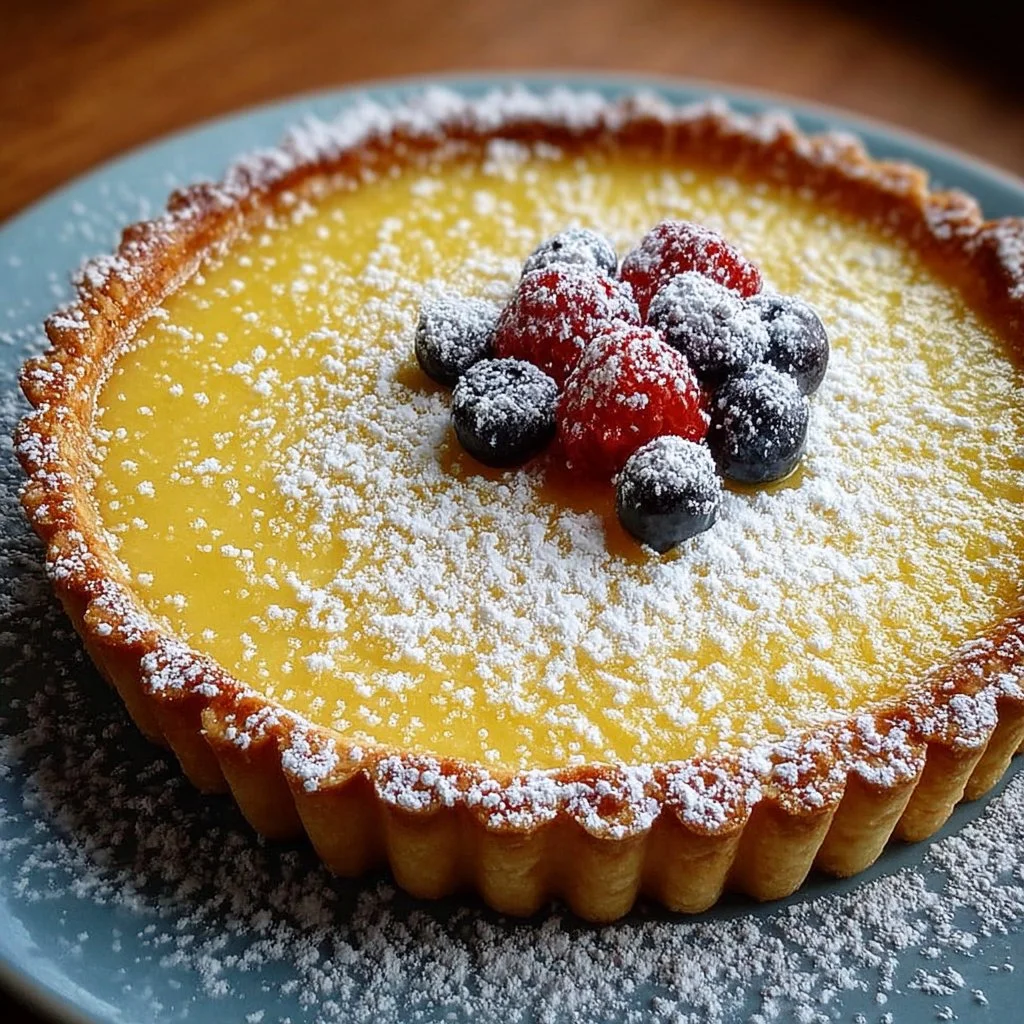
- Before serving, scatter fresh berries on top and dust lightly with powdered sugar.
- For clean slices, run a sharp knife under hot water, dry it, and slice in a single smooth stroke.