
A bright, tart filling swirled into pillowy, buttery rolls — Rhubarb Sticky Buns are the kind of bake that turns an ordinary morning into something memorable.
They smell like warm caramel and spring, and they slice into sticky, jewel-speckled spirals.
This recipe is straightforward but rewarding, perfect for weekend baking or for impressing guests.
Try them with a strong cup of coffee and a little patience; the payoff is worth it. I often pair the sticky glaze with flaky pastries for contrast — see an example of sticky-sweet pairing in this savory sticky noodle inspiration sticky garlic chicken noodles.
Why You’ll Love This Rhubarb Sticky Buns
- Bright tart rhubarb balanced by brown sugar sweetness.
- Tender, enriched dough with buttery crumb.
- Sticky, glossy glaze that soaks the top just enough.
- Simple pantry ingredients and a single rise.
- Perfect for brunch, gifts, or a spring weekend project.
- Textural contrast: soft rolls with slightly crisp edges.
- Adaptable to other fruits if rhubarb is out of season.
The flavor is a lively mix of tart rhubarb and molasses-rich brown sugar wrapped in a soft, enriched dough. Texture-wise, expect a soft interior, a slightly chewy outer edge, and a glossy, slightly set glaze that holds the fruit juices in place and adds sweet balance.
"5 stars — The rhubarb makes these feel bright and springy, and the glaze is downright addictive. I baked them for guests and everyone asked for the recipe." — reader review
Key Ingredients for Rhubarb Sticky Buns
All-purpose flour
All-purpose flour provides structure and the right bite in enriched rolls. Choose a reliable, medium-protein flour for consistent results; unbleached is preferable for flavor. If you substitute with bread flour, expect a slightly chewier result; using cake flour will make the dough fragile and overly tender.
Active dry yeast
Active dry yeast is the leavening workhorse here — it gives lift, flavor, and those classic air pockets. Buy yeast with a clear expiration date and store it in the fridge for longer life. Instant yeast can be swapped 1:1 but skip the rehydration step and mix it directly into the dry ingredients.
Chopped fresh rhubarb
Fresh rhubarb brings tartness and a pleasantly fibrous texture; use firm stalks free of blemishes. If stalks are woody, trim the ends and peel the outer layer slightly. Frozen rhubarb can work if thawed and drained well, but it will release more water and may require a brief cook-down with sugar before spreading.
Brown sugar
Brown sugar adds moisture, depth, and the caramel-like flavor essential to sticky buns. Light brown sugar is more subtle while dark brown adds molasses intensity. If you use granulated sugar instead, the filling will taste less complex and may be drier.
Full Ingredient List for Rhubarb Sticky Buns
- 2 cups all-purpose flour
- 1/4 cup sugar
- 1 packet active dry yeast
- 1/2 teaspoon salt
- 1/2 cup milk
- 1/4 cup butter
- 1 egg
- 1 cup chopped fresh rhubarb
- 1/2 cup brown sugar
- 1 teaspoon cinnamon
- 1/2 cup powdered sugar
- 2 tablespoons milk (for glaze)
- 1 teaspoon vanilla extract
Step-by-Step Instructions for Rhubarb Sticky Buns
Step 1: In a bowl, whisk together the flour, sugar, yeast, and salt. Heat milk and butter until warm, then stir into the dry mixture, add egg, and mix until a shaggy dough forms.
Start by combining dry ingredients in a mixing bowl so the yeast is evenly distributed. Warm the milk with the butter until it’s just warm to the touch (about 105–115°F / 40–46°C), then pour it into the dry mix and add the egg. Stir until a rough, shaggy dough forms that breaks cleanly from the bowl.
Pro Tip: The dough should feel warm and slightly tacky but not sticky to the point of clinging to your fingers; you should be able to form it into a loose ball.
Step 2: Knead the dough on a floured surface for 6-8 minutes, then let it rise in a greased bowl until doubled, about 1 hour.
Turn the dough onto a lightly floured surface and knead until smooth and elastic — roughly 6–8 minutes by hand. Shape it into a ball, oil a bowl, and place the dough inside covered with plastic wrap or a damp towel. Let it rise in a warm, draft-free spot until doubled in size.
Pro Tip: Visual cue: the dough should be noticeably puffy and roughly twice its original size; when gently pressed with a finger, the indentation should slowly spring back.
Step 3: Preheat oven to 350°F (175°C). Roll the risen dough into a rectangle, mix rhubarb with brown sugar and cinnamon, spread it over the dough, and roll it up tightly.
Once risen, roll the dough into a roughly 12×8-inch rectangle. Toss the chopped rhubarb with the brown sugar and cinnamon so each piece is coated, then distribute this mixture evenly over the dough, leaving a small border along one long edge. Roll the dough tightly from the long side into a log to keep the filling compact.
Pro Tip: The log should feel snug and even; you should see a uniform spiral when looking at the cut ends.
Step 4: Cut into pieces and let rise for another 30 minutes in a greased dish.
Use a sharp knife or dental floss to slice the log into 8–10 equal rolls. Place them cut-side up in a greased baking dish, leaving small gaps for expansion. Cover and let the rolls proof until slightly puffy, about 30 minutes.
Pro Tip: Visual cue: rolls should look plump and the spirals slightly open but still holding shape; they’ll expand further in the oven.
Step 5: Bake for about 25 minutes until golden brown.
Bake the buns in the preheated 350°F oven for about 25 minutes, or until the tops are golden brown and a skewer inserted into the center comes out clean. Rotate the pan once halfway through baking for even color.
Pro Tip: The tops should be deep golden but not burnt, and the bottoms should sound hollow when tapped lightly.
Step 6: For the glaze, whisk powdered sugar with milk and vanilla until smooth, then drizzle over warm buns.
While the buns rest for a few minutes after baking, whisk the powdered sugar with milk and vanilla to make a smooth glaze. Drizzle the glaze over the warm buns so it melts slightly and sinks into the edges and fruit.
Pro Tip: The glaze should be pourable but not watery; it should form a glossy sheet over the buns and run slowly into the spirals.
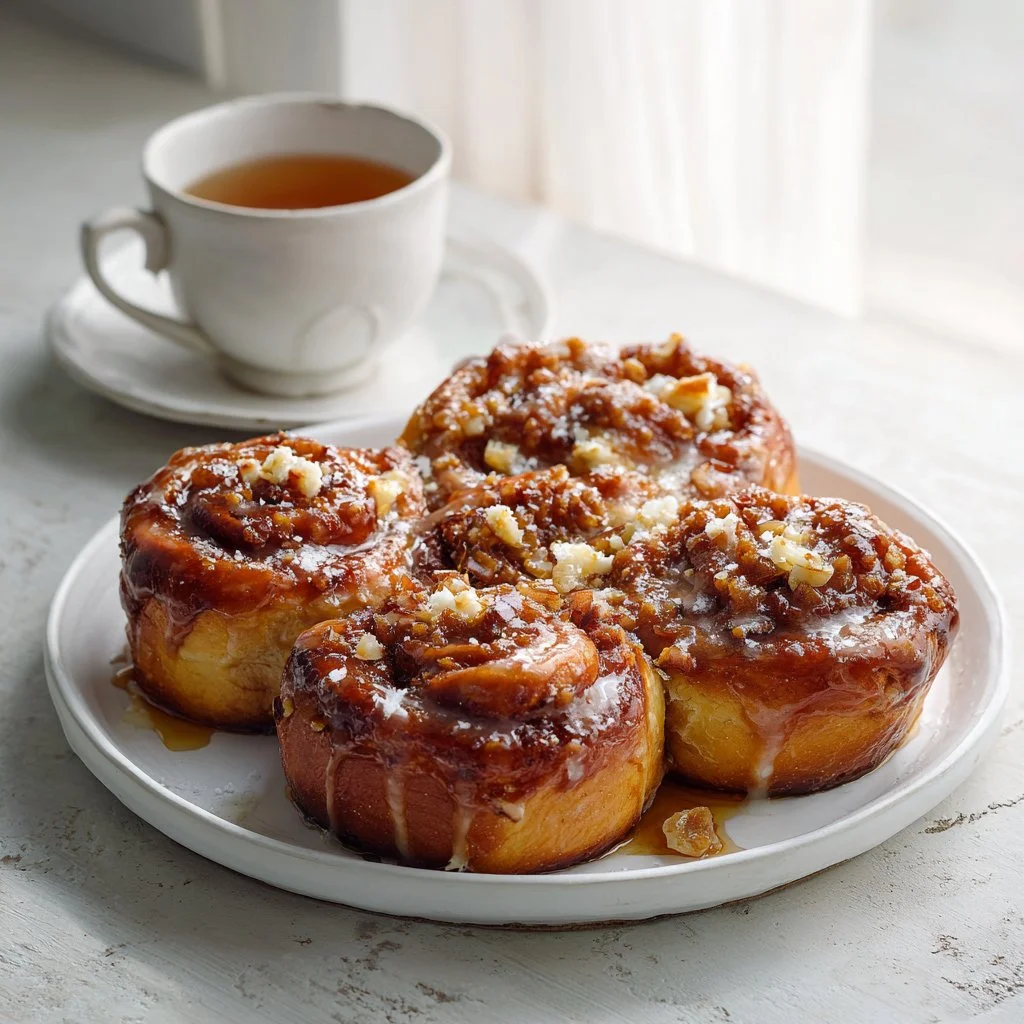
Expert Tips for Rhubarb Sticky Buns
- Temperature tip: Aim for milk between 105–115°F for yeast activation; colder will slow the rise, hotter can kill the yeast.
- Texture troubleshooting: If dough feels too sticky, knead in flour a tablespoon at a time; too dry, add a teaspoon of warm milk until it comes together.
- Equipment tip: Use a sharp serrated knife or unflavored dental floss to slice rolls cleanly without squishing.
- Common mistake: Overfilling with rhubarb can release excess moisture; toss rhubarb in sugar and let it sit to draw off juices if very wet.
- Rise control: If your kitchen is cool, proof the dough in an oven warmed to 100°F then turned off, with the light on.
- Browning tip: Tent with foil in the last 5 minutes if tops are browning too quickly.
- Glaze consistency: Start with 2 tablespoons milk and add more only if needed; a thick glaze clings better to the spirals.
- Serving tip: Let the rolls cool 10–15 minutes before slicing to avoid a runny filling; they’ll still be warm and easier to cut.
For visual techniques on shaping and rolling, I often reference other sticky roll tutorials like this savory sticky garlic reference sticky garlic chicken noodles for shaping tips that apply across sticky recipes.
Storage & Freezing for Rhubarb Sticky Buns
Fridge storage: Store cooled buns in an airtight container for up to 3 days. Reheat in a 325°F oven for 8–10 minutes to revive the texture.
Freezer storage: Freeze individual rolls wrapped tightly in plastic and then foil, or freeze the entire pan covered, for up to 3 months. For best results, freeze before glazing or glaze from frozen after reheating.
Thawing: Thaw overnight in the refrigerator or at room temperature for 1–2 hours. Reheat wrapped in foil in a 325°F oven for 12–15 minutes, then glaze while warm.
Best containers: Use airtight plastic containers or heavy-duty freezer bags for single rolls; for whole pans, wrap tightly with plastic then foil to prevent freezer burn.
Variations & Substitutions for Rhubarb Sticky Buns
Berry-Rhubarb Swirl: Replace half the rhubarb with chopped strawberries or raspberries and reduce added sugar slightly. The result is a jammy, sweeter swirl with retained tart notes.
Maple Glaze: Swap the powdered sugar glaze for a maple glaze using 1/3 cup maple syrup, 2 tablespoons powdered sugar, and a pinch of salt. This adds warm, autumnal depth and a thinner, glossy finish.
Nutty Crunch Topping: Sprinkle chopped toasted pecans or walnuts on top of the rolls before baking. The nuts add texture and a toasty flavor that cuts through the sweetness.
Mascarpone Frosting: For a richer finish, blend 3 ounces mascarpone with 1/2 cup powdered sugar and 1 teaspoon vanilla, then spread over cooled buns. This yields a creamier, tangy-sweet topping similar to specialty bakery versions; see other ricotta-like frostings in roll recipes like these sticky roll techniques sticky garlic chicken noodles.
Frequently Asked Questions About Rhubarb Sticky Buns
Q: Can I use frozen rhubarb in Rhubarb Sticky Buns?
A: Yes. Thaw it completely and drain any excess liquid before mixing it with brown sugar. If it seems very soggy, briefly cook the thawed rhubarb with the brown sugar over medium heat to reduce moisture; cool before spreading to avoid a wet dough.
Q: How do I know when the dough has risen enough?
A: The dough should roughly double in size and feel puffy. Do the fingertip test: press gently—if the indentation springs back slowly, it’s ready. If it springs back immediately, give it more time.
Q: Can I make the dough the night before?
A: Absolutely. Refrigerate the dough after the first rise in a sealed container overnight; it will develop flavor. In the morning, bring it to room temperature (about 30–60 minutes), then roll, fill, and proof briefly before baking.
Q: Why are my buns dense or heavy?
A: Dense buns can result from under-kneading, inactive yeast, or insufficient rise time. Check your yeast freshness, knead until the dough is elastic, and allow a full rise in a warm spot. Slightly warm milk and avoiding over-flouring the dough help too.
Q: How to prevent a soggy bottom from fruit juices?
A: Reduce sogginess by coating the rhubarb in brown sugar and letting it macerate briefly to draw out juices, then drain excess liquid before spreading. You can also place a thin layer of softened butter on the dough before adding fruit to create a barrier.
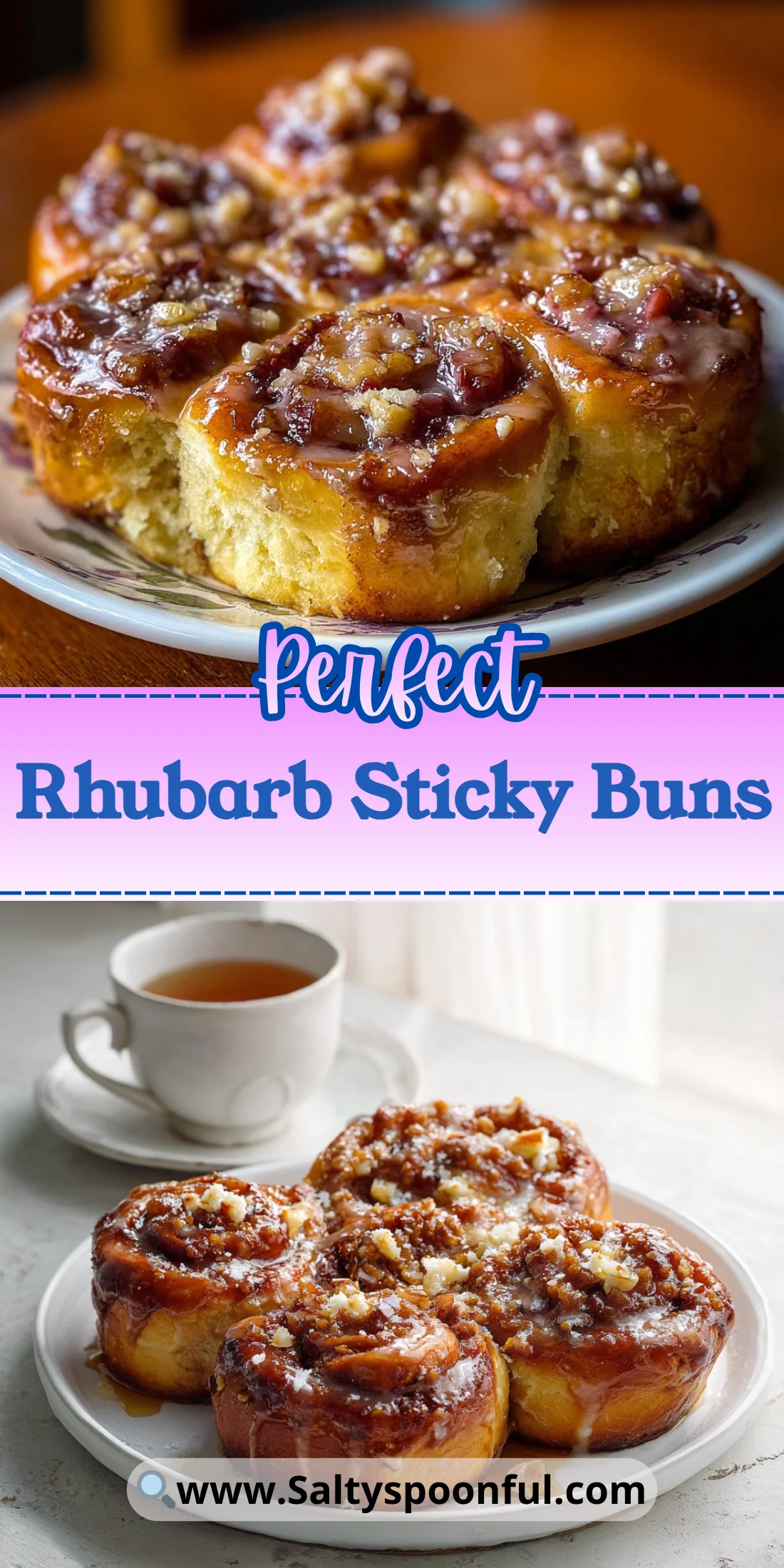
Final Thoughts on Rhubarb Sticky Buns
These Rhubarb Sticky Buns are a celebration of tart fruit and tender enriched dough — simple to make but impressive to serve. If you tried them, please leave a star rating in the recipe card below and pin this to Pinterest for later.
For a classic version and additional user tips, see the Rhubarb Sticky Buns Recipe – Food.com.
For an alternate shaping approach and pictures, check out Rhubarb Rolls – Katiebird Bakes.
If you want an indulgent twist with mascarpone, read this Rhubarb Sticky Buns with Vanilla Bean Mascarpone Frosting.
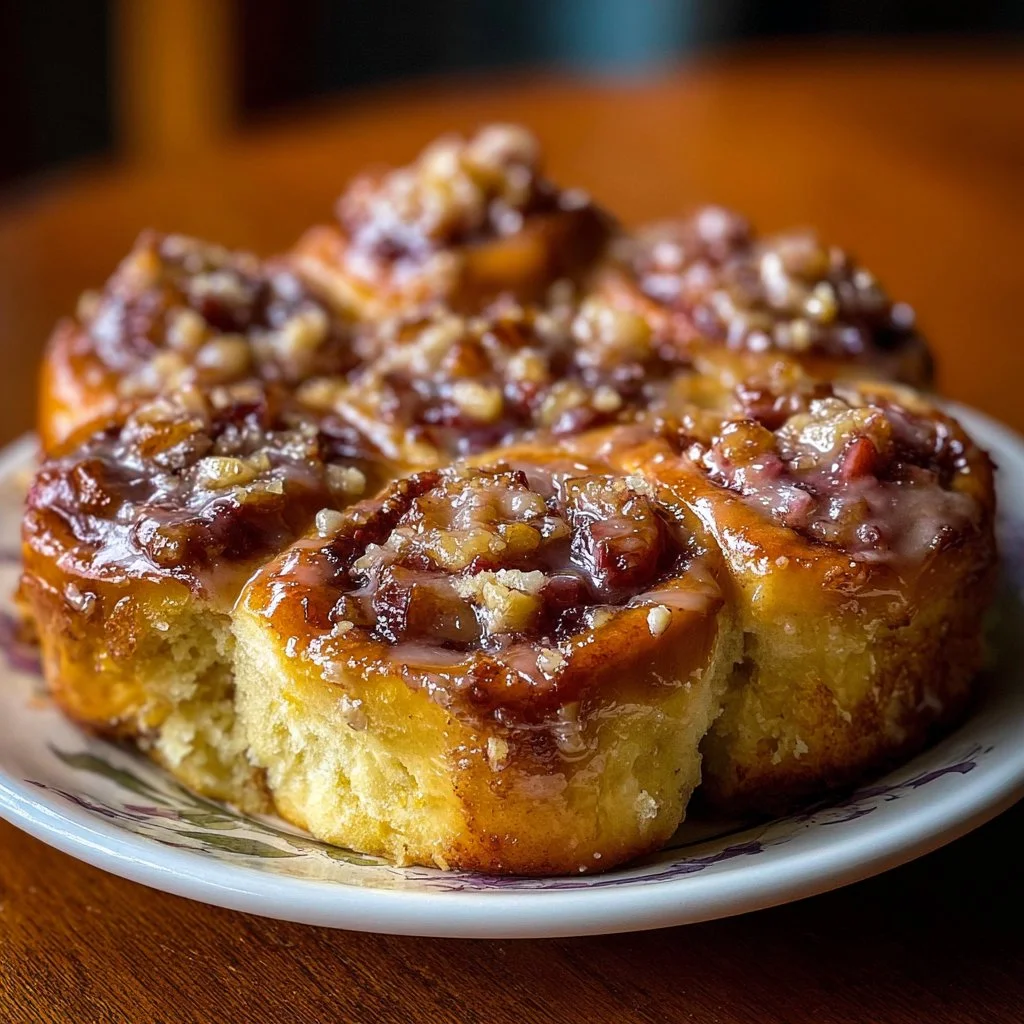
Rhubarb Sticky Buns
Ingredients
Method
- In a bowl, whisk together the flour, sugar, yeast, and salt.
- Heat the milk and butter until warm (about 105–115°F), then stir into the dry mixture, add egg, and mix until a shaggy dough forms.
- Knead the dough on a floured surface for 6-8 minutes, then let it rise in a greased bowl until doubled, about 1 hour.
- Preheat oven to 350°F (175°C). Roll the risen dough into a rectangle.
- Mix rhubarb with brown sugar and cinnamon, spread it over the dough, and roll it up tightly.
- Cut into pieces and let them rise for another 30 minutes in a greased dish.
- Bake for about 25 minutes until golden brown.
- Whisk powdered sugar with milk and vanilla until smooth, then drizzle over warm buns.