
A quick, colorful weeknight meal that feels both familiar and exotic. Bright vegetables, warm spices, and simple pantry ingredients come together in minutes.
This Turkish Pasta is comfort food with a twist — easy to scale, great for leftovers, and ready before you know it.
Perfect for busy cooks who want bold flavor without fuss.
Why You’ll Love This Turkish Pasta
– Fast to make on weeknights.
– Uses pantry staples and fresh veggies.
– Comforting tomato sauce with a warm spice lift.
– Flexible: vegetarian, easy to add protein.
– Bright, fresh finish from parsley.
– Kid-friendly textures with adult-friendly flavor.
– Great for meal prep and reheats well.
The taste is tomato-forward and slightly earthy from turmeric and cumin, while the texture balances tender pasta with softly sautéed peppers and zucchini. Olive oil and garlic build savory depth, and a splash of reserved pasta water makes the sauce cling to each penne or fettuccine strand.
"★★★★★ I made this on a busy night and it felt like a restaurant dish — bright, cozy, and so simple. My whole family loved it!" — Mara, home cook
Key Ingredients for Turkish Pasta
Pasta (penne or fettuccine)
Pasta is the backbone of this dish. Choose good-quality durum wheat pasta for firm bite and less starch release; bronze-cut pasta holds sauce better. Substituting with gluten-free pasta works, but watch cooking time closely to avoid mush.
Olive oil
Extra-virgin olive oil creates the aromatic base and helps sauté vegetables without overpowering them. Buy a fruity, cold-pressed oil for the best aroma; heat gradually to preserve flavor. If you must swap, use a neutral oil like grapeseed for higher-heat cooking, though the flavor will be less Mediterranean.
Tomatoes & Tomato Sauce
Fresh diced tomatoes add texture; tomato sauce provides body and consistency. Use ripe, slightly tangy tomatoes for brightness and a good canned passata or plain tomato sauce for a silky finish. Replacing with all canned tomatoes is fine — just adjust simmer time to reduce excess liquid.
Garlic (and Turmeric)
Garlic is essential for savory depth, while turmeric gives this version its subtle golden color and earthy warmth. Use fresh garlic for the brightest flavor; powdered garlic reduces punch. If you omit turmeric, substitute with a pinch of smoked paprika for color and a different smoky note.
Full Ingredient List for Turkish Pasta
– Pasta (penne or fettuccine)
– Olive oil
– Garlic, minced
– Onion, chopped
– Bell peppers, chopped
– Zucchini, sliced
– Tomatoes, diced
– Tomato sauce
– Turmeric
– Cumin
– Salt
– Pepper
– Fresh parsley, chopped (for garnish)
Step-by-Step Instructions for Turkish Pasta
Step 1: Cook the pasta until al dente
Bring a large pot of salted water to a rolling boil and cook the pasta according to package instructions until al dente. Reserve one cup of the pasta cooking water, then drain the pasta and set it aside while you make the sauce.
Pro Tip: The pasta should be tender but still have a slight bite when you test it — not mushy or chalky.
Step 2: Heat olive oil in a large skillet
Warm a generous splash of olive oil in a wide skillet over medium heat so you have enough surface area to toss pasta and vegetables together. Allow the oil to shimmer slightly but not smoke before adding aromatics.
Pro Tip: The oil should ripple and glisten; if it smokes, lower the heat immediately.
Step 3: Sauté garlic and onion
Add the minced garlic and chopped onion to the skillet and cook, stirring, until the onion becomes translucent and the garlic is fragrant but not browned. This step builds the savory base of the sauce.
Pro Tip: Look for glossy, translucent onions and a fragrant garlic aroma — browning means it’s too hot.
Step 4: Add bell peppers and zucchini
Toss in chopped bell peppers and sliced zucchini and cook until they soften and release a bit of their moisture. Stir frequently so the vegetables cook evenly and keep a little bite for texture contrast.
Pro Tip: The peppers should be tender with slightly blistered edges; zucchini should be softened but not falling apart.
Step 5: Stir in tomatoes, tomato sauce, and spices
Pour in the diced tomatoes and tomato sauce, then add turmeric, cumin, salt, and pepper. Stir well and reduce the heat to a gentle simmer for about 10 minutes so flavors meld and excess liquid reduces slightly.
Pro Tip: The sauce should thicken slightly, coat a spoon, and smell warmly spiced — not watery or raw-tasting.
Step 6: Toss pasta with the sauce
Add the drained pasta to the skillet and toss thoroughly, folding the noodles into the sauce. If the sauce seems dry, add reserved pasta water a splash at a time until the sauce clings smoothly to the pasta.
Pro Tip: The finished dish should have a silky sheen and the noodles should be coated evenly without pools of watery sauce.
Step 7: Serve hot with parsley garnish
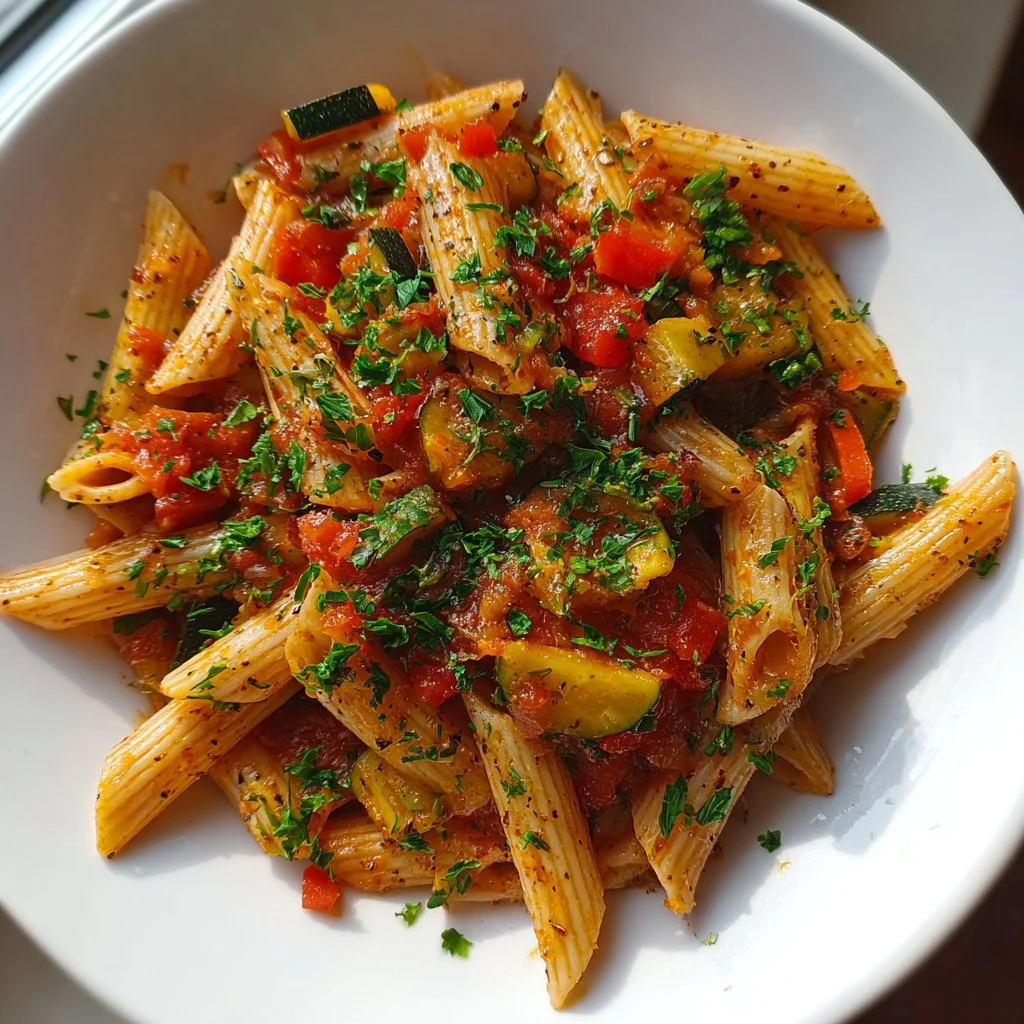
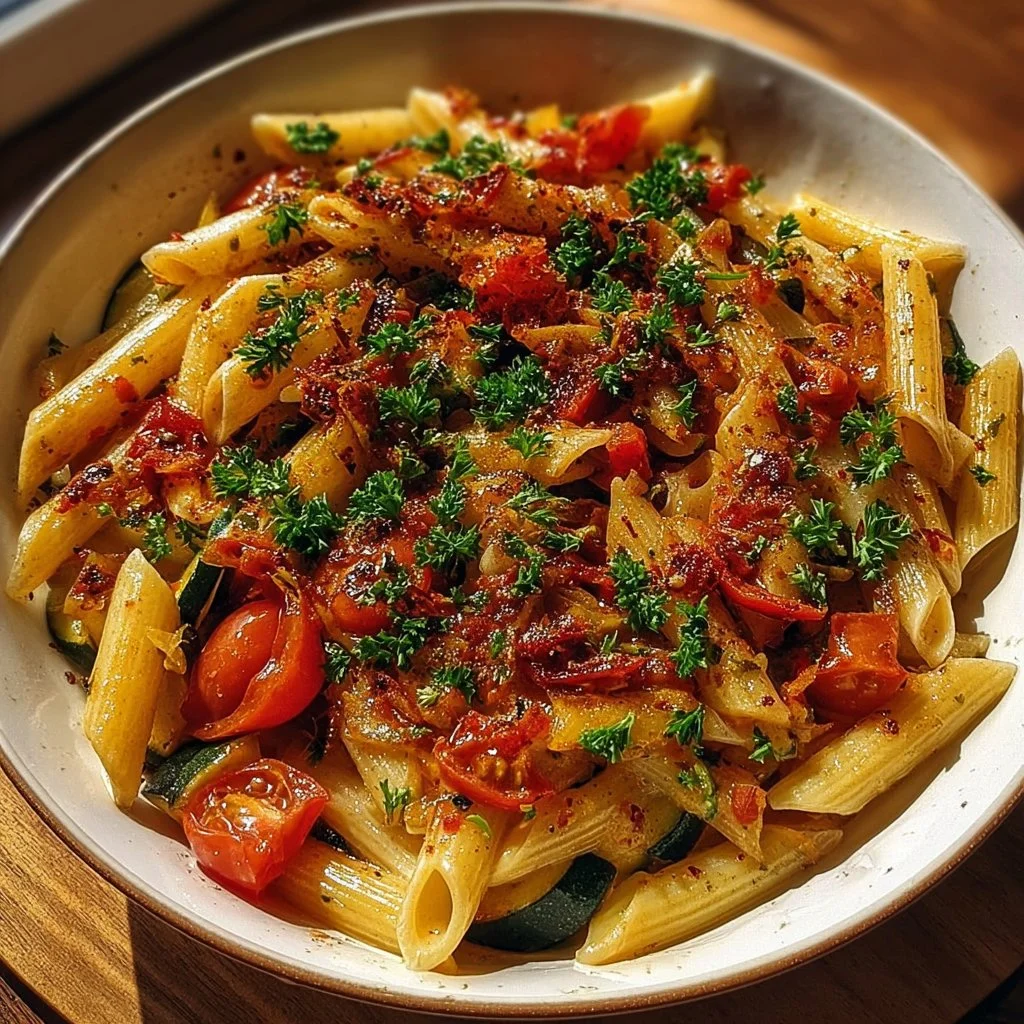
Plate the Turkish Pasta while hot and finish with a generous sprinkle of chopped fresh parsley for brightness. Serve immediately so the texture stays ideal.
Pro Tip: The parsley should look vibrant and add a fresh green contrast; the dish should steam gently when served.
Expert Tips for Turkish Pasta
– Use well-salted pasta water to season from the inside out; it’s the easiest way to boost flavor without extra salt later.
– Cook pasta slightly under al dente if you plan to finish it in the sauce; it will absorb liquid and reach perfect texture.
– For silky sauce, reserve and gradually add pasta water; the starch helps emulsify olive oil and tomato sauce.
– Watch the garlic closely — it goes from fragrant to bitter in seconds. Keep heat moderate while sautéing.
– Use a wide skillet or sauté pan so you can toss pasta and sauce without spilling; a large nonstick or enameled cast-iron pan works best.
– If your sauce is too acidic, stir in a pinch of sugar or a small knob of butter to balance brightness.
– To avoid a watery mix, simmer tomatoes down well before adding pasta; you want a sauce that coats, not floods, the noodles.
– Common mistake: overcrowding the pan with vegetables. Cook in batches if needed so each piece caramelizes rather than steams.
Storage & Freezing for Turkish Pasta
Fridge storage: Cool to room temperature quickly, then store in an airtight container for up to 3–4 days. Use shallow containers to cool faster and keep texture consistent.
Freezer storage: Freeze portions in freezer-safe containers or heavy-duty freezer bags for up to 2 months. Press out excess air from bags and label with date and contents.
Thawing: Thaw in the refrigerator overnight for best texture. For quicker use, reheat from frozen gently on the stove with a splash of water to loosen the sauce.
Reheating: Reheat in a skillet over medium-low heat with a splash of reserved pasta water or broth to restore silkiness. Microwaving works for single portions; stir halfway to ensure even heating and add a little liquid if it dries out.
Variations & Substitutions for Turkish Pasta
Add protein: Stir in cooked shredded chicken, crumbled feta, or browned ground lamb to make it heartier. This will add savory depth and turn the pasta into a complete meal.
Make it creamy: Finish the sauce with a swirl of Greek yogurt or a splash of cream for a richer texture. The result is a silkier mouthfeel and a milder, more indulgent flavor.
Spicy version: Add red pepper flakes or a pinch of Aleppo pepper while simmering for heat with a slightly fruity spice. The dish becomes more assertive and pairs well with tangy yogurt on top.
Green-focused: Swap tomato sauce for a light lemon-herb olive oil finish and increase zucchini and bell pepper quantities, plus add spinach at the end. This yields a fresher, brighter plate with less tomato dominance.
Frequently Asked Questions About Turkish Pasta
Q: Is Turkish Pasta traditionally made with pasta or dumplings?
A: This modern Turkish Pasta recipe is inspired by yalancı mantı, which is sometimes translated as “fake dumplings,” but many viral versions use pasta for speed and convenience. Using penne or fettuccine keeps the cooking simple while echoing the comforting flavors of the original.
Q: Can I make Turkish Pasta vegan?
A: Yes. The base ingredients here are plant-forward. Use olive oil, skip any dairy finishes, and ensure any store-bought tomato sauce contains only plant ingredients. Add roasted chickpeas for extra protein if desired.
Q: How do I prevent the vegetables from becoming mushy?
A: Sauté vegetables over medium heat and avoid overcrowding the skillet. Cook in batches if necessary and stop cooking them just before they reach your preferred tenderness because they will continue to soften slightly when combined with the warm sauce and pasta.
Q: Can I prepare Turkish Pasta ahead of time for meal prep?
A: You can prepare the sauce and cooked pasta separately and combine them before serving. Store sauce and pasta in separate containers in the fridge for up to 3 days. Reheat together in a skillet with a splash of water for best texture.
Q: What spices can I use if I don’t have turmeric or cumin?
A: If you’re out of turmeric and cumin, substitute with a mix of smoked paprika and a pinch of ground coriander for warmth and slight smokiness. The color and flavor profile will shift, but the pasta will still be delicious.
Final Thoughts on Turkish Pasta
If you want to explore the viral origins and tweaks from popular creators, check out this detailed version on Turkish Pasta (The Viral Anna Paul Recipe) – Foolproof Living for one take. For another popular spin and step photos, see Anna Paul’s Viral Turkish Pasta – Healthy Fitness Meals. Ambitious Kitchen offers helpful plating and ingredient notes in their write-up at The Viral Turkish Pasta Recipe – Ambitious Kitchen. If you’re interested in the yalancı mantı background and traditional context, read the Kitchn’s guide at Turkish Pasta Recipe (Yalancı Mantı) – The Kitchn. For another approachable home-cook adaptation, see Anna Paul’s Turkish Pasta – Sugar and Soul. Please leave a star rating in the recipe card below and pin this recipe to Pinterest if you enjoyed it.
Turkish Pasta
Ingredients
Method
- Bring a large pot of salted water to a rolling boil and cook the pasta according to package instructions until al dente. Reserve one cup of the pasta cooking water, then drain the pasta.
- Warm olive oil in a large skillet over medium heat. Add minced garlic and chopped onion, stirring until the onion is translucent.
- Add chopped bell peppers and sliced zucchini and cook until softened.
- Stir in diced tomatoes, tomato sauce, turmeric, cumin, salt, and pepper. Simmer for about 10 minutes.
- Add the drained pasta to the skillet and toss until well coated with the sauce.
- If needed, add reserved pasta water until the sauce evenly coats the pasta.
- Serve hot with a sprinkle of chopped fresh parsley.