
Start here with a quick hook: a simple weeknight pasta that tastes far fancier than it takes to make.
Bright basil, garlicky olive oil, and perfectly seared shrimp come together in minutes.
This recipe is one of those pantry-saver dinners that cooks up fast and impresses every time.
If you like fast, flavorful meals, you’re in the right place — and you can adapt it many ways for the season.
Why You’ll Love This Shrimp and Basil Pasta
– Fast to make in about 20 minutes.
– Uses minimal, fresh ingredients for maximum flavor.
– Light but satisfying — great for spring and summer.
– Flexible: easy to swap proteins or pasta shapes.
– Family-friendly and elegant enough for guests.
– Little cleanup if you cook the shrimp and toss in one skillet.
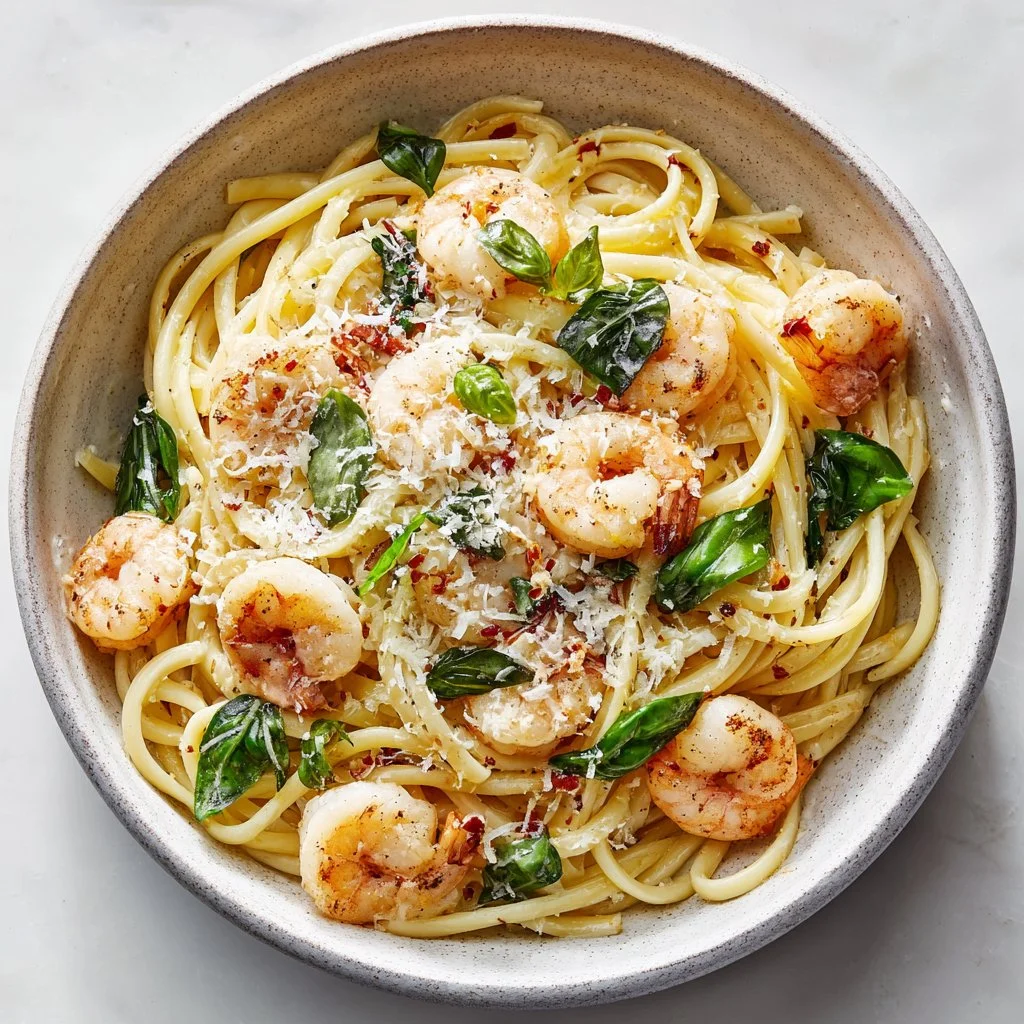
The taste is bright and herbal from fresh basil, garlicky from olive oil, and mildly sweet and briny from the shrimp. The texture contrast between al dente pasta and tender shrimp gives each bite an ideal balance. The final dusting of Parmesan adds salty umami that ties everything together.
"Five stars — restaurant-quality at home, 20 minutes flat. I loved the basil brightness and tender shrimp." — A satisfied reader
Key Ingredients for Shrimp and Basil Pasta
Shrimp — Fresh or properly thawed wild-caught shrimp deliver the best texture and flavor. Choose medium to large shrimp, peeled and deveined, for even cooking and an attractive bite. If you substitute frozen shrimp, thaw gently in the fridge and pat completely dry to avoid steaming instead of searing.
Pasta (spaghetti or linguine) — Long strands like spaghetti or linguine cling to the basil and oil, creating a silky mouthfeel. Buy bronze-cut pasta if you want slightly rougher texture that holds sauce better. If you swap to penne or fusilli, know the sensation changes to a more sauce-caught bite rather than the silky strand experience.
Fresh basil — Fresh leaves provide essential fragrance and a bright, peppery lift that dried basil cannot match. Pick vibrant green leaves without brown spots and store them loosely wrapped in a damp paper towel in the fridge until use. Substituting dried basil will give you flavor but lack the aromatic freshness and will require careful timing so it doesn’t taste stale.
Garlic and olive oil — Garlic gives savory depth while olive oil is the flavor carrier, coating pasta and shrimp. Use extra-virgin olive oil for flavor; if you substitute with butter, expect a richer, creamier finish but a less herbaceous result.
Full Ingredient List for Shrimp and Basil Pasta
– 8 ounces pasta (spaghetti or linguine)
– 1 pound shrimp, peeled and deveined
– 2 tablespoons olive oil
– 3 cloves garlic, minced
– 1 cup fresh basil, chopped
– Salt and pepper to taste
– Grated Parmesan cheese for serving
Step-by-Step Instructions for Shrimp and Basil Pasta
Step 1: Cook the pasta until al dente
Bring a large pot of well-salted water to a rolling boil and add the pasta. Cook according to package instructions but stop a minute or two before fully soft — you want al dente so the noodles have bite once tossed with shrimp. Reserve one cup of the starchy pasta water before you drain; this liquid will help marry the oil and basil to the pasta.
Pro Tip: Look for a slight resistance when you bite the pasta; it should feel springy and not floppy.
Step 2: Warm the olive oil and scent it with garlic
While the pasta is cooking, heat 2 tablespoons of olive oil in a large skillet over medium heat. Add the minced garlic and sauté for about 1 minute until fragrant and pale golden. Be careful not to let the garlic brown, which brings bitterness.
Pro Tip: The smell of fresh garlic should bloom without burning; it should scent the kitchen but not darken.
Step 3: Sear the shrimp until pink and opaque
Add the peeled and deveined shrimp to the skillet in a single layer. Season lightly with salt and pepper. Cook for about 3–4 minutes total, flipping once, until the shrimp are pink, slightly curled, and opaque through the center. Remove from heat just as they finish to avoid rubberiness.
Pro Tip: The shrimp should curl into a loose “C” shape and feel firm but springy to the touch.
Step 4: Toss pasta with shrimp and fresh basil
Return the drained pasta to the large skillet with the shrimp. Add chopped basil and a splash of the reserved pasta water. Toss gently over low heat until the pasta is evenly coated and the basil releases its aroma. Adjust seasoning with salt and pepper.
Pro Tip: The sauce should look glossy and lightly cling to each strand — not soupy or dry.
Step 5: Serve hot with grated Parmesan
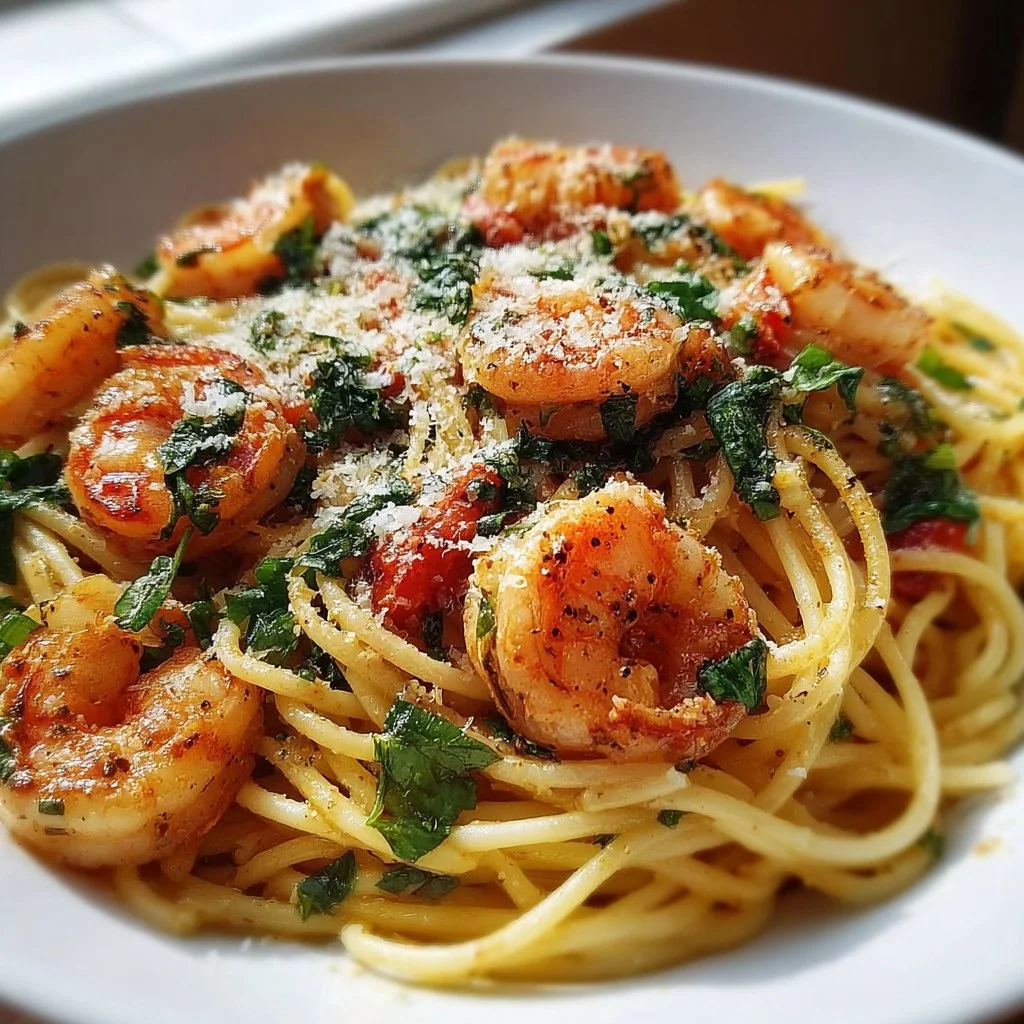
Plate the pasta immediately and finish with a generous grating of Parmesan cheese. A final drizzle of olive oil or a few whole basil leaves makes a pretty, flavorful finish. Serve while hot so the cheese melts slightly into the strands.
Pro Tip: The finished dish should steam gently and give off a warm basil-garlic fragrance.
Expert Tips for Shrimp and Basil Pasta
– Temperature tips: Keep the skillet at medium heat so garlic softens without burning and shrimp cook through quickly.
– Shrimp texture troubleshooting: If shrimp turn rubbery, they were overcooked; remove from heat as soon as they are opaque.
– Pasta texture troubleshooting: If pasta feels mushy, next time reduce boil time by a minute and finish cooking in the skillet with pasta water.
– Equipment tips: Use a large, flat skillet or sauté pan for easy tossing and even heat distribution.
– Salt and finish: Taste before adding Parmesan; the cheese adds salt, so adjust seasoning sparingly.
– Fresh basil timing: Add chopped basil at the final toss to preserve its bright color and aroma.
– Common mistake: Crowding the pan with shrimp causes steaming; cook in batches if needed for a good sear.
– Visual cues: Look for glossy, emulsified sauce formed by oil and pasta water binding — that sheen means enough starchy water was added.
Storage & Freezing for Shrimp and Basil Pasta
Fridge storage: Cool the pasta quickly and store in an airtight container for up to 2 days. Use a shallow container to speed cooling and avoid bacterial growth.
Freezer storage: Shrimp and basil pasta is best frozen without the basil and Parmesan. Freeze in a heavy-duty freezer container for up to 1 month. The texture of shrimp can degrade over longer freezing.
Thawing: Thaw overnight in the fridge. If pressed for time, reheat from frozen gently in a covered skillet with a splash of water or broth to steam and loosen the sauce.
Reheating: Reheat on the stove over low heat with a tablespoon or two of olive oil and a splash of the reserved pasta water (or regular water) to revive the sauce. Avoid microwaving at high power, which can make shrimp rubbery.
Variations & Substitutions for Shrimp and Basil Pasta
Tomato addition: Stir in a cup of halved cherry tomatoes when adding the pasta for a juicy, acidic lift. The tomatoes will soften but keep their freshness, turning the dish slightly more summery and colorful.
Creamy basil shrimp pasta: Add 1/4 to 1/2 cup heavy cream or a dollop of mascarpone when tossing the pasta. The result is a richer, silkier sauce that clings to noodles for a comfort-food feel.
Spicy chili twist: Sauté a pinch of red pepper flakes with the garlic to introduce heat. This creates a lively counterpoint to the basil and works well with the sweetness of shrimp.
Vegetable-forward swap: Add wilted spinach or sautéed zucchini along with the shrimp. The vegetables add bulk and nutrients, making the pasta more of a full meal and extending servings.
Frequently Asked Questions About Shrimp and Basil Pasta
Q: How should I thaw frozen shrimp for this pasta quickly?
A: Place frozen shrimp in a sealed plastic bag and submerge in cold water for 20–30 minutes, changing the water once if needed. Pat dry thoroughly before cooking to prevent steaming and preserve a good sear.
Q: Can I make this shrimp and basil pasta vegetarian?
A: Yes — swap the shrimp for firm tofu cubes or sautéed mushrooms for a meaty texture. Increase seasoning and use a splash of lemon to lift the flavors in place of seafood brininess.
Q: What pasta shape works best if I don’t have spaghetti or linguine?
A: Long strands are ideal, but medium shapes like penne or farfalle work fine. Choose a shape with ridges or cups to trap basil and oil so each bite remains flavorful.
Q: How do I prevent the garlic from burning while cooking?
A: Reduce the heat to medium-low when the garlic hits the pan and watch closely; remove from heat if it begins to brown. Add shrimp promptly to cool the pan slightly and build flavor without charring.
Q: Can I prep parts of this recipe ahead of time?
A: Yes — peel and devein shrimp in advance and store covered in the fridge for a day. Mince garlic and chop basil hours ahead, but add basil at the last minute to preserve color and aroma.
Final Thoughts on Shrimp and Basil Pasta
This Shrimp and Basil Pasta is quick, fresh, and endlessly adaptable for weeknights or easy dinner parties.
If you tried it, please leave a star rating in the recipe card below and pin it to Pinterest to save it for later.
Conclusion: Shrimp and Basil Pasta
For a creamy basil shrimp twist, see this Creamy Parmesan Basil Shrimp Recipe for inspiration.
If you want a tomato-forward take, compare notes with this Shrimp Tomato Basil Pasta that uses fresh tomatoes.
Prefer a one-pan cleanup option? Try the method in One Pot Basil Shrimp Pasta for an efficient alternative.
For another classic tomato-basil pairing with technique notes, check Tomato Basil Shrimp Pasta as a comparison.
If you like a chile-butter finish, this Shrimp Pasta With Tomatoes, Basil & Chile Butter shows a spicy, buttery variation worth trying.
Additional internal reading: for an unrelated but handy weeknight slider idea, try this steak and cheese sliders recipe.
If you want another quick dinner inspiration, see this easy weeknight sliders guide.
For more tips on quick proteins for pasta, check this weeknight protein ideas.
Looking for plating and hosting tricks, this simple hosting checklist helps keep service smooth.
For a basic guide to pairing sides with quick pasta, review this side-dish pairing tips.
Shrimp and Basil Pasta
Ingredients
Method
- Bring a large pot of well-salted water to a rolling boil and add the pasta. Cook until al dente, ensuring to reserve one cup of pasta water before draining.
- Pro Tip: Look for a slight resistance when you bite the pasta; it should feel springy and not floppy.
- While the pasta is cooking, heat olive oil in a skillet over medium heat. Add minced garlic and sauté until fragrant, being careful not to let it brown.
- Pro Tip: The garlic should scent the kitchen without burning.
- Add the shrimp to the skillet in a single layer, seasoning lightly with salt and pepper. Cook for 3-4 minutes, flipping once until they are pink and opaque.
- Pro Tip: The shrimp should curl into a loose 'C' shape.
- Return the drained pasta to the skillet with the shrimp, add chopped basil and a splash of reserved pasta water. Toss gently over low heat.
- Pro Tip: The sauce should look glossy and not soupy.
- Plate the pasta and finish with grated Parmesan cheese, adding a drizzle of olive oil or basil for garnish if desired.
- Pro Tip: Serve while hot for the best flavor and texture.