
A bowl of slow-simmered lamb, salty bacon, sweet carrots, and wine-scented broth can feel like a warm kitchen on a cold night.
This version follows Gordon Ramsay’s method so the lamb is tender and the flavors are deep without fuss.
Short prep, long simmer, and a few smart techniques deliver restaurant-depth richness at home.
Serve with crusty bread and a pint, and you’ve got a meal that becomes an instant favorite.
Why You’ll Love This Gordon Ramsay’s Irish Lamb Stew
– Deep, meaty flavor from slow-simmered lamb and beef stock.
– Umami boost and mouthfeel from crispy diced bacon.
– Velvety stew body from a light flour dusting and long simmer.
– Simple, pantry-friendly ingredients with big payoff.
– Comforting, shareable one-pot dinner that improves with rest.
– Flexible for weeknight or weekend cooking.
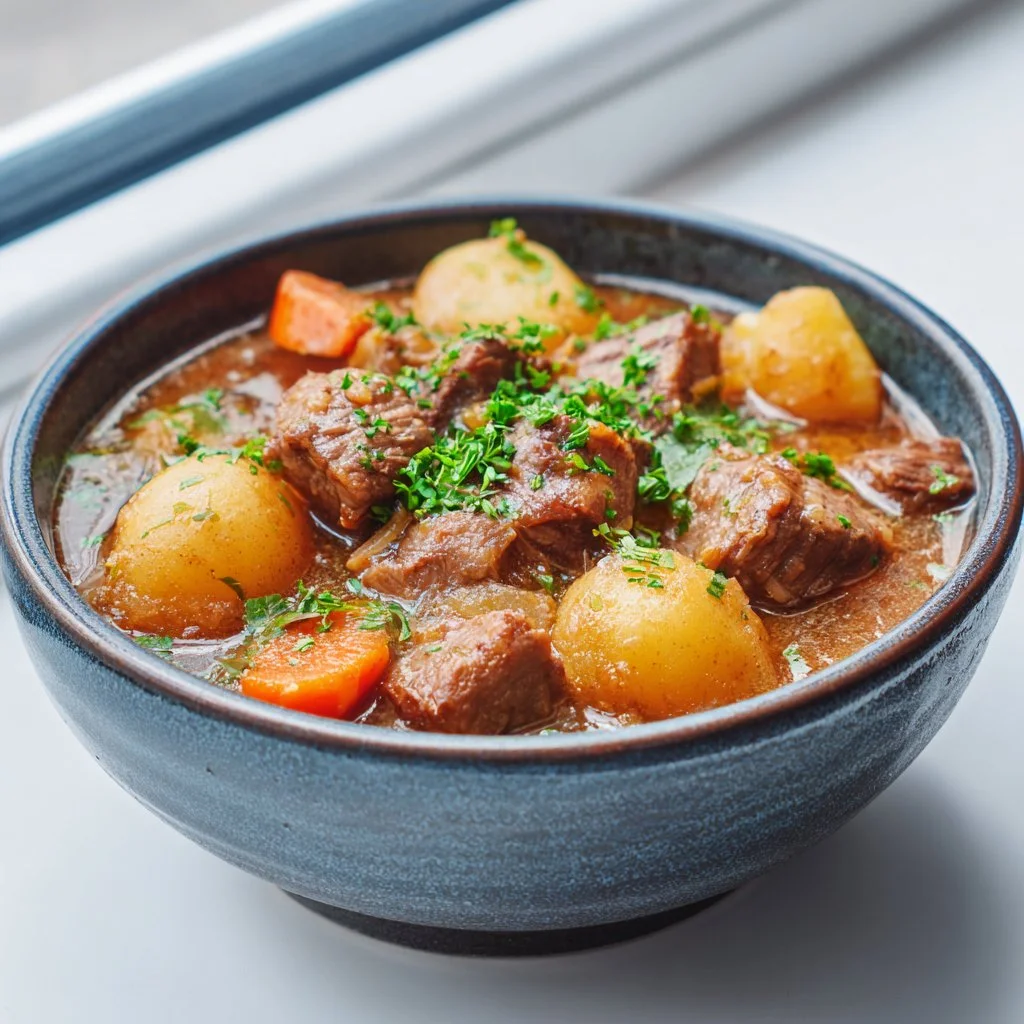
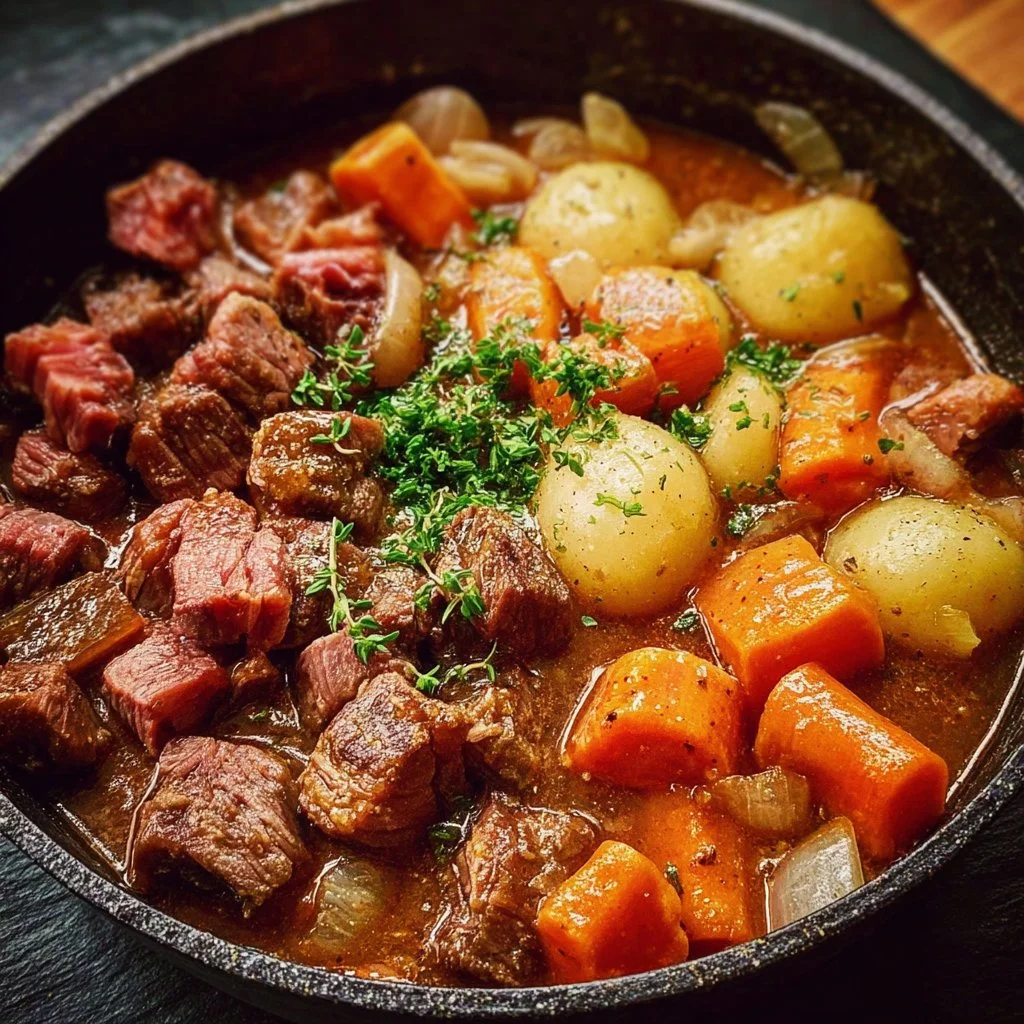
The taste is rich and savory with a clear lamb backbone balanced by sweet carrots and onions. The texture combines fork-tender lamb, soft unpeeled potatoes, and carrots that hold their shape, all suspended in a glossy, wine-brightened broth.
"Five stars. I made this for my family and everyone went back for thirds. The lamb fell apart and the bacon gave it the perfect savory edge — restaurant quality at home."
Key Ingredients for Gordon Ramsay’s Irish Lamb Stew
Pick the best primary elements and the stew responds. Here are the top players.
-
Lamb shoulder (2.7kg, cut into cubes)
Lamb shoulder has the connective tissue and fat that melt into tender, flavorful meat during a long simmer. Choose pieces with visible marbling; avoid lean cuts like loin which dry out. If substituted with beef, expect less lamb flavor and adjust cooking time only slightly for similar tenderness. -
Diced bacon (680g)
Bacon renders fat and adds smoky, salty complexity that layers beneath the lamb. Buy thick-cut smoked bacon for the best render; trim excess rind if present. If you swap pancetta, you’ll keep the fat but lose some smoky notes—add a touch of smoked paprika to mimic the flavor. -
Beef stock (960ml) + dry white wine (240ml)
Stock builds body and depth while wine adds acidity and aromatics that brighten the dish. Use low-sodium beef stock to control salt and choose a crisp, dry wine you’d drink. If you replace wine with more stock, add a tablespoon of apple cider vinegar or lemon juice toward the end to add needed brightness. -
Potatoes (3 cubed, unpeeled) and carrots (600g diced)
Unpeeled potatoes add rustic texture and the skins help them hold shape; carrots bring sweetness. Use waxy potatoes if you want more structure, starchy ones for creamier body. Sweet root swaps (parsnip, turnip) will alter sweetness and earthiness but still work well.
Full Ingredient List for Gordon Ramsay’s Irish Lamb Stew
– 680g diced bacon
– 2.7kg lamb shoulder, cut into cubes
– 65g plain flour
– 2.5g salt
– 2.5g black pepper
– 1 large chopped onion
– 3 minced garlic cloves
– 120ml water
– 960ml beef stock
– 10g sugar
– 600g diced carrots
– 3 cubed potatoes (unpeeled)
– 2 large onions, cut into quarters
– 240ml dry white wine
– 5g dried thyme
– 2 bay leaves
Step-by-Step Instructions for Gordon Ramsay’s Irish Lamb Stew
Step 1: Render the bacon and reserve the fat
Heat a large Dutch oven over medium-high heat and add the diced bacon. Cook until crispy, then remove and set aside, leaving the fat in the pot.
Pro Tip: The bacon should be deeply golden and crackly; the fat left behind will look clear and shimmer.
Step 2: Coat the lamb in flour and season
Combine lamb cubes with plain flour, salt, and black pepper in a large bowl until evenly coated. The flour creates a light crust and helps thicken the stew.
Pro Tip: The lamb cubes should have a dry, even flour dusting — not clumpy or wet.
Step 3: Sear the lamb in batches
Sear the lamb in batches in the reserved bacon fat for about 3–4 minutes until browned. Remove each batch and set aside to keep the pot from overcrowding.
Pro Tip: Look for a deep mahogany sear on the edges; if the meat steams instead of browns, increase heat slightly and work in smaller batches.
Step 4: Soften the aromatics
Lower the heat, add the chopped onion to the pot, and cook until softened. Add minced garlic and cook for an additional minute until fragrant.
Pro Tip: Onions should look translucent and be slightly golden at the edges, releasing a sweet aroma.
Step 5: Deglaze and collect fond
Pour in 120ml water and scrape the browned bits from the bottom of the pot. Those browned fond pieces are flavor gold and dissolve into the liquid.
Pro Tip: The liquid should become brown and glossy as you scrape — that’s the concentrated flavor base.
Step 6: Combine everything and add liquids
Return bacon and seared lamb to the pot. Add 960ml beef stock, 10g sugar, 600g diced carrots, cubed potatoes, quartered onions, 240ml white wine, 5g dried thyme, and 2 bay leaves. Stir gently to combine.
Pro Tip: The pot should look crowded but full of color — broth should just cover most solids; adjust stock if necessary.
Step 7: Simmer low and slow
Bring to a boil, then reduce heat and cover to simmer for 2–2.5 hours until the lamb is fork-tender. Keep the lid slightly ajar if the stew is boiling too hard, and stir occasionally.
Pro Tip: The lamb should be fall-apart tender when pierced with a fork and the broth should be glossy with a slightly reduced volume.
Step 8: Finish and serve
Remove bay leaves, adjust seasoning to taste, and serve hot with crusty bread.
Pro Tip: The aroma should be rich and wine-tangy; the finished stew should coat a spoon and leave a thin film on the surface.
Expert Tips for Gordon Ramsay’s Irish Lamb Stew
– Temperature tip: Sear lamb on high heat to achieve Maillard browning, then drop to a low simmer for 2+ hours for collagen breakdown.
– Texture troubleshooting: If the broth is thin after simmering, mash a few potatoes in the pot or mix a small slurry of flour and water to thicken.
– Equipment tips: Use a heavy Dutch oven or enameled cast iron for even heat and better fond development.
– Salt control: Season incrementally — the bacon and stock add salt; taste and adjust near the end.
– Wine use: Add the white wine before the stock to burn off alcohol and capture acidity; use a drinkable dry white.
– Browning sequence: Don’t crowd the pan when searing lamb — crowding steams the meat and prevents color.
– Vegetables timing: Add potatoes and carrots so they’re tender but not mushy; if you prefer firmer veg, add them after the first hour.
– Common mistakes: Avoid boiling vigorously during simmering; high heat tightens collagen and can make meat tough instead of melting it.
Storage & Freezing for Gordon Ramsay’s Irish Lamb Stew
Fridge storage: Cool to room temperature, then store in airtight containers for up to 3–4 days. Use shallow containers to cool quickly and preserve texture.
Freezer storage: Freeze in heavy-duty freezer bags or freezer-safe containers for up to 3 months. Leave 1–2cm headspace if using rigid containers to allow for expansion.
Thawing: Thaw overnight in the refrigerator for best texture. For quicker thawing, use the defrost setting on a microwave then reheat on the stove.
Reheating: Gently reheat on the stovetop over low heat, stirring occasionally until steaming through. Add a splash of stock or water if the stew has thickened in storage.
Variations & Substitutions for Gordon Ramsay’s Irish Lamb Stew
– Guinness-and-mustard twist: Replace the white wine with 240ml Guinness and stir in 1–2 tablespoons of wholegrain mustard at the end. The result is darker, maltier, and slightly tangy — classic Irish depth.
– Herb-forward lamb stew: Swap dried thyme for a mix of 1 tablespoon chopped fresh rosemary and parsley added 10 minutes before serving. This brightens the stew and introduces piney, herbaceous notes.
– Root-vegetable upgrade: Add 200g diced parsnips and a turnip with the carrots for extra earthiness. Expect a sweeter, more layered root profile and slightly thicker broth as parsnips break down.
– Lighter white-wine version: Reduce bacon to 200g and use chicken stock instead of beef stock for a lighter, less fatty stew. The dish becomes brighter and less robust but still deeply satisfying.
Frequently Asked Questions About Gordon Ramsay’s Irish Lamb Stew
Q: How do I know when the lamb is done and tender?
A: Test with a fork — it should slide in easily and the meat should pull apart without resistance. If it still feels chewy, continue simmering in 20–30 minute increments and check again.
Q: Can I use lamb shoulder on the bone?
A: Yes. Bone-in shoulder adds extra collagen and flavor but increases cooking time slightly. Brown as directed and simmer until meat falls from the bone; skim any excess fat before serving.
Q: Why did my stew taste flat and how can I fix it?
A: Flatness typically means missing acid, salt, or aromatics. Finish with a splash of white wine or a teaspoon of vinegar, taste for seasoning, and add a pinch of salt if needed.
Q: Can I thicken the stew without flour?
A: Yes. Mash a portion of potatoes into the broth, or simmer uncovered to reduce and concentrate the liquid. For gluten-free options, use a cornstarch slurry (1 tbsp cornstarch + 1 tbsp cold water) toward the end.
Q: How far in advance can I make this stew for a dinner party?
A: You can make it 1–2 days ahead; flavors often improve with rest. Reheat gently and skim any congealed fat from the surface before warming to refresh the appearance and mouthfeel.
Final Thoughts on Gordon Ramsay’s Irish Lamb Stew
This stew rewards patience with deep, layered flavors and a luxurious mouthfeel that’s perfect for sharing. Leave a star rating in the recipe card below and pin this dish to Pinterest if you loved it.
Conclusion: Gordon Ramsay’s Irish Lamb Stew
If you want a step-by-step comparison and a slightly different take, check this detailed guide to Gordon Ramsay Mutton Stew – Rich Flavor & Easy Steps. For technique tips on using lamb shoulder and braising times, this Lamb Stew Recipe: How to Make Lamb Shoulder Stew – MasterClass article is a solid resource. For a well-tested home cook’s version and serving ideas, see this practical recipe page on Lamb Stew (Irish Stew) – Spend With Pennies.
Irish Lamb Stew
Ingredients
Method
- Heat a large Dutch oven over medium-high heat and add the diced bacon. Cook until crispy, then remove and set aside, leaving the fat in the pot.
- Combine lamb cubes with plain flour, salt, and black pepper in a large bowl until evenly coated.
- Sear the lamb in batches in the reserved bacon fat for about 3–4 minutes until browned, then remove each batch and set aside.
- Lower the heat, add the chopped onion to the pot, and cook until softened. Add minced garlic and cook for an additional minute.
- Pour in 120ml water and scrape the browned bits from the bottom of the pot.
- Return bacon and seared lamb to the pot. Add beef stock, sugar, diced carrots, cubed potatoes, quartered onions, white wine, thyme, and bay leaves. Stir gently.
- Bring to a boil, then reduce heat and cover to simmer for 2–2.5 hours until the lamb is fork-tender.
- Remove bay leaves, adjust seasoning to taste, and serve hot with crusty bread.