
Start your morning with a simple, protein-rich twist on a breakfast classic. These cottage cheese pancakes brown beautifully and stay tender inside.
They’re quick to whip up and forgiving if your batter is a little lumpy. Small curds from the cottage cheese give a pleasant texture and extra moisture.
Serve them with fruit, syrup, or a dollop of yogurt for a filling, balanced meal. This recipe stretches well and makes a great recipe to double for company.
Why You’ll Love This Cottage Cheese Pancakes
– High in protein for sustained energy.
– Tender inside with golden, slightly crisp edges.
– Fast to mix — no long resting or complicated steps.
– Uses pantry staples you likely already have.
– Flexible: easily sweetened, spiced, or made savory.
– Kid-friendly size and texture.
– Keeps well for reheating and freezes cleanly.
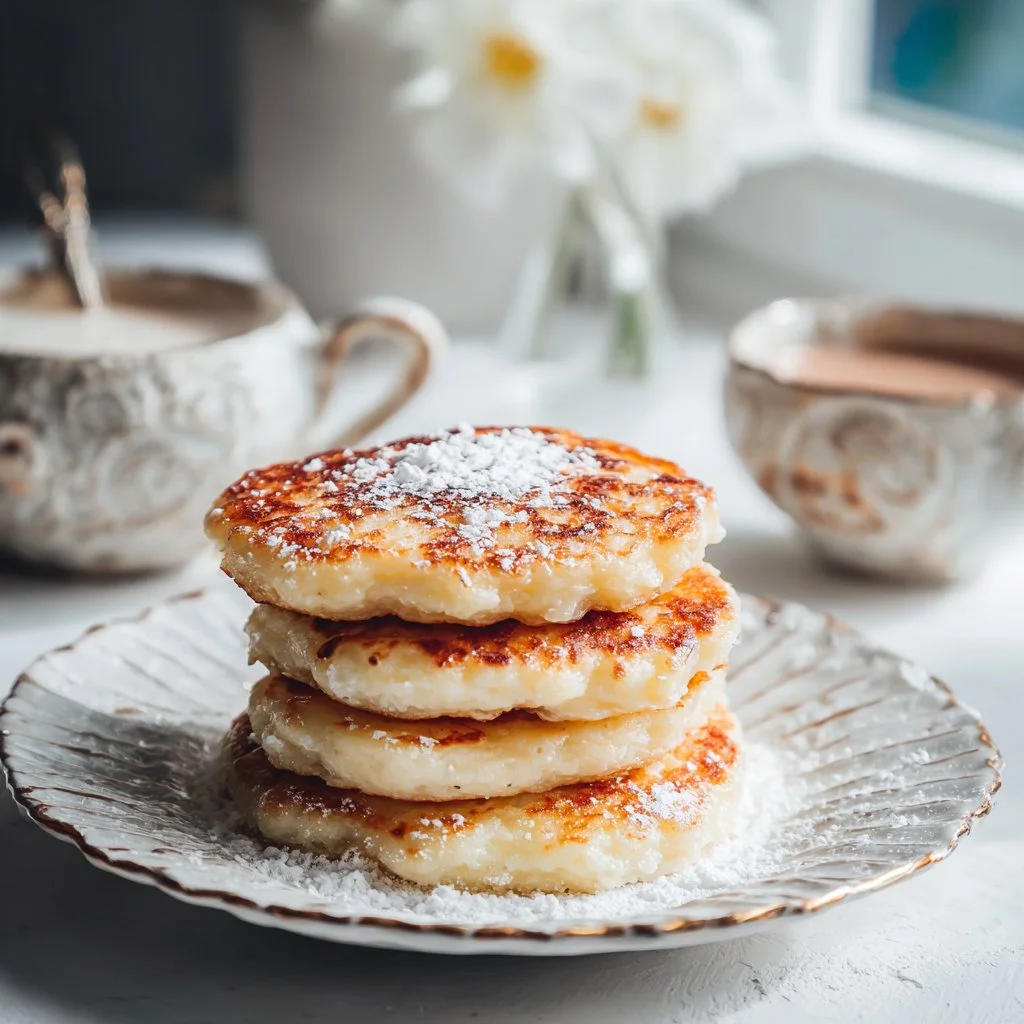
These pancakes taste mildly tangy from the cottage cheese with a subtle eggy richness. The texture is soft and slightly pillowy, with small curds that give a pleasant, cottage-cheese bite, and the exterior browns to a thin, buttery crust.
“I made these on a hectic Saturday morning and they turned out fluffy with just a hint of tang. My kids loved them and asked for seconds — five stars!”
Key Ingredients for Cottage Cheese Pancakes
Cottage cheese
Cottage cheese is the star: it adds moisture, tang, and concentrated protein that keeps pancakes tender rather than dense. Choose small-curd fresh cottage cheese for the most delicate texture; full-fat gives richer flavor and better browning. If you substitute ricotta, expect a drier batter that may need a splash of milk; Greek yogurt will be thicker and tangier.
Eggs
Eggs bind the batter and provide lift and structure while contributing to golden color. Use large eggs at room temperature when possible to incorporate more evenly and to help the batter emulsify. If you replace eggs, mashed banana or a commercial egg replacer can work but will alter texture and sweetness.
All-purpose flour
All-purpose flour supplies gluten for structure and browning in the crust. Sift lightly or whisk to remove lumps; overworking the batter can lead to tougher pancakes. If you swap half the flour for whole wheat, expect a nuttier flavor and denser texture; adjust liquid slightly if needed.
Baking powder
Baking powder provides a gentle rise and lift so pancakes stay light despite the dense cottage cheese. Make sure it’s fresh — expired baking powder yields flat results. If omitted, the pancakes will be heavier and less tender; a small amount of baking soda plus an acid (yogurt or buttermilk) can be an alternative.
Full Ingredient List for Cottage Cheese Pancakes
– 1 cup cottage cheese
– 1 cup all-purpose flour
– 2 eggs
– 1 tbsp sugar
– 1/2 tsp salt
– 1/2 tsp baking powder
– Butter or oil for frying
Step-by-Step Instructions for Cottage Cheese Pancakes
Step 1: Combine wet and dry ingredients
In a mixing bowl, add the cottage cheese, flour, eggs, sugar, salt, and baking powder. Stir until mostly smooth; it’s okay to leave small curds of cottage cheese visible — they add texture and moisture to the pancakes.
Pro Tip: The batter should be thick but spoonable; you’ll still see small curds and a glossy sheen when it’s ready.
Step 2: Heat your skillet and test
Heat a skillet over medium heat and coat it with butter or oil. Test the temperature with a small drop of batter — it should sizzle gently and spread slightly without burning immediately.
Pro Tip: Look for a steady shimmer on the fat and a faint wispy smoke from butter; when batter sizzles and forms bubbles within 20–30 seconds, the pan is right.
Step 3: Spoon and cook pancakes
Spoon 1–2 tablespoons of batter onto the skillet for small pancakes. Cook until bubbles form on the surface and the edges set, then flip and brown the other side for another minute or so.
Pro Tip: The top will be dotted with bubbles and the edges will look dry and matte before you flip; the bottom should be golden, not dark brown.
Step 4: Keep warm and repeat
Repeat with remaining batter, spacing pancakes so they don’t touch. Keep cooked pancakes warm in a low oven (about 200°F / 95°C) on a baking sheet while you finish the batch.
Pro Tip: Pancakes will feel slightly springy when gently pressed and should be pale-golden on the inside when torn open.
Step 5: Serve hot with your favorite toppings
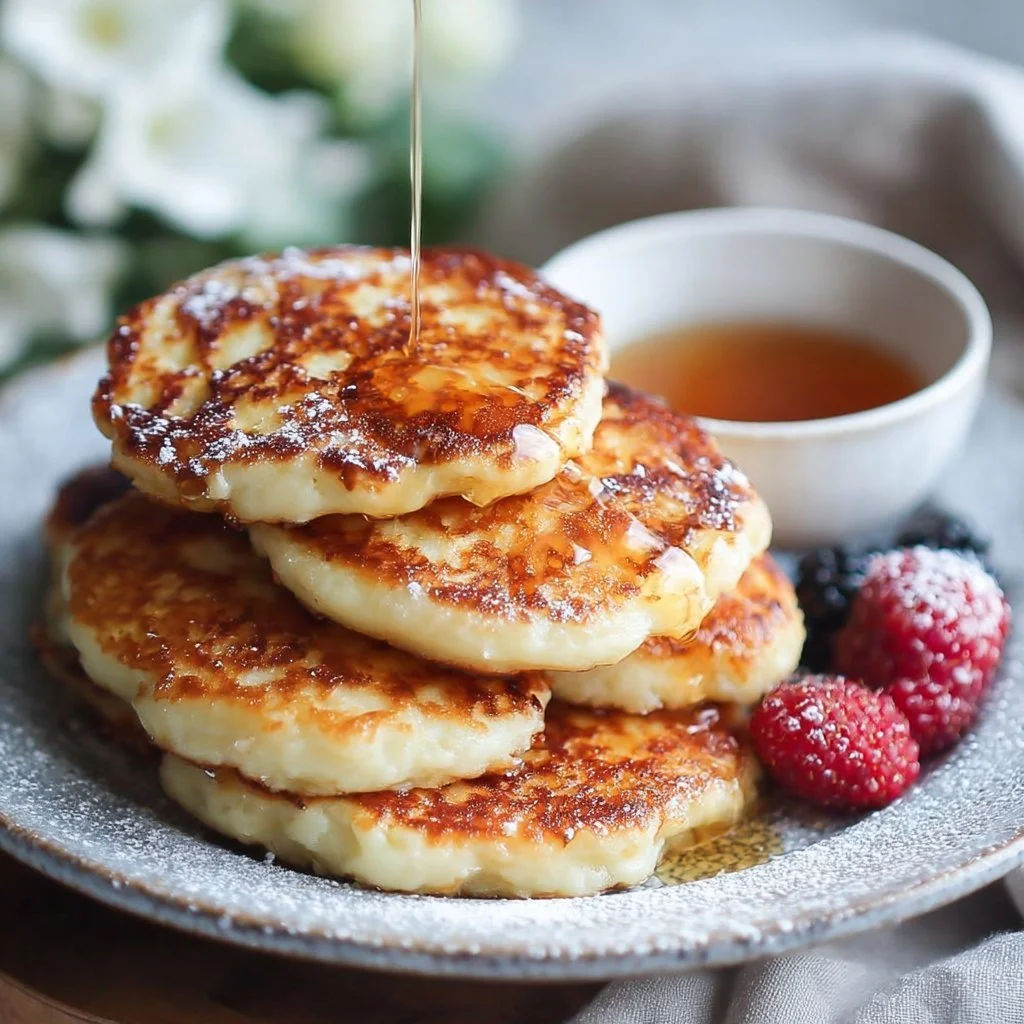
Serve hot with toppings like maple syrup, fresh fruit, yogurt, or a pat of butter. These pancakes pair well with lemon zest, honey, or a berry compote.
Pro Tip: Plate when just warm from the oven; the aroma should be buttery with a hint of sweet tang from the cottage cheese.
Expert Tips for Cottage Cheese Pancakes
– Use room-temperature eggs to help the batter come together smoothly and to avoid chilled batter that cooks unevenly.
– Preheat the skillet well; too-hot fat will burn the exterior before the center cooks, and too-cool a pan yields pale, flat pancakes.
– If the batter seems too thick, add 1–2 tablespoons of milk or water to loosen it; too thin and pancakes will spread and be dense.
– For even browning, use a nonstick skillet or a well-seasoned cast-iron pan and a light coating of butter plus a touch of oil to prevent burning.
– To test doneness: look for small, evenly spaced bubbles on the surface and dry-looking edges before flipping.
– Avoid overmixing the batter; stir just until combined. Overworked flour develops gluten and makes pancakes chewy.
– Make mini pancakes for breakfast-for-little-hands by using a teaspoon measure — they cook quickly and are great for dipping.
– Cool briefly on a wire rack if stacking; this prevents steam from sogging the bottom pancakes.
Storage & Freezing for Cottage Cheese Pancakes
Fridge storage: Cool completely, then store in an airtight container or a resealable bag for up to 3–4 days. For best texture, separate layers with parchment paper to prevent sticking.
Freezer storage: Arrange pancakes in a single layer on a baking sheet and freeze until solid, 1–2 hours. Transfer frozen pancakes to a freezer-safe bag or container and keep for up to 2 months.
Thawing: Thaw pancakes overnight in the fridge or reheat from frozen. Avoid leaving at room temperature more than two hours.
Reheating: Reheat in a toaster oven or skillet over low-medium heat for 1–3 minutes per side until warm and crisp. A microwave works for speed (20–40 seconds) but may make them softer; crisp them up in a skillet afterward.
Best containers: Use airtight plastic or glass containers for fridge storage and heavy-duty freezer bags for long-term freezing to reduce freezer burn.
Variations & Substitutions for Cottage Cheese Pancakes
– Lemon-Blueberry Cottage Cheese Pancakes: Fold 1/2 cup fresh or frozen blueberries and 1 tsp lemon zest into the batter before cooking. The blueberries add bursts of sweetness while lemon brightens the tang of the cottage cheese.
-
Savory Herb Cottage Cheese Pancakes: Omit the sugar and add 2 tablespoons chopped chives, 1 tablespoon chopped parsley, and a pinch of black pepper. Serve with smoked salmon or a dollop of sour cream for a brunch-worthy savory bite.
-
Whole-Wheat Cottage Cheese Pancakes: Replace half or all the all-purpose flour with whole-wheat flour and add 1–2 tbsp extra milk if the batter feels dense. The result is nuttier and heartier with more fiber.
-
Banana-Cottage Cheese Pancakes: Mash one ripe banana and fold it into the batter, reducing sugar slightly. The banana adds natural sweetness and moisture, producing a softer, breakable pancake with a hint of banana flavor.
Frequently Asked Questions About Cottage Cheese Pancakes
Q: Can I use low-fat or nonfat cottage cheese?
A: Yes, low-fat or nonfat cottage cheese will work and reduce calories. Expect a slightly less rich flavor and potentially a drier crumb; compensate with a teaspoon of melted butter or a splash of milk if needed.
Q: Why are my pancakes turning out flat or dense?
A: Flat pancakes often come from overmixing, expired baking powder, too-thin batter, or a cold pan. Mix just until combined, verify your baking powder is fresh, keep batter spoonable but not watery, and preheat the pan to medium.
Q: Can I make the batter ahead of time?
A: You can mix the batter and refrigerate it for up to 24 hours. Note that the baking powder’s leavening action will be somewhat reduced over time, so expect a slightly denser result; you can add a pinch more baking powder before cooking if desired.
Q: How do I keep pancakes from sticking when cooking?
A: Use a quality nonstick skillet or a well-seasoned cast-iron pan with a thin film of butter plus a touch of neutral oil. Don’t flip too early; let bubbles form and edges set first. Wiping excess butter between batches prevents burning.
Q: Are these pancakes good for meal prep or freezing?
A: Yes, they freeze and reheat well. Flash-freeze on a sheet, then store in freezer bags for up to 2 months. Reheat in a skillet or toaster oven for best texture; microwaving is faster but less crisp.
Final Thoughts on Cottage Cheese Pancakes
These Cottage Cheese Pancakes are an easy, protein-packed twist on a classic that work for quick breakfasts and make-ahead meals. Try them plain or dress them up with fruit, herbs, or a savory topping.
Please leave a star rating in the recipe card below and pin this recipe to Pinterest if you enjoyed it. For another quick variation and user-tested tips, see this Momsdish Cottage Cheese Pancakes, a simple three-ingredient version at The Kitchn’s Cottage Cheese Pancakes (Only 3 Ingredients!), and a flavorful take at Jar Of Lemons Cottage Cheese Pancake Recipe.
Cottage Cheese Pancakes
Ingredients
Method
- In a mixing bowl, combine cottage cheese, flour, eggs, sugar, salt, and baking powder. Stir until mostly smooth; a few curds are fine.
- The batter should be thick but spoonable.
- Heat a skillet over medium heat and coat with butter or oil. Test with a small drop of batter; it should sizzle.
- Spoon 1–2 tablespoons of batter onto the skillet and cook until bubbles form on the surface. Flip and brown for another minute.
- Repeat with remaining batter, keeping pancakes warm in a low oven.
- Serve hot with toppings like maple syrup, fresh fruit, or yogurt.